
How Your Roof Affects Energy Bills in El Paso
Many homeowners think of their roof as simply a barrier that protects their home from rain, wind, and the elements. While that is certainly one of its most important functions, your roof also plays a major role in your home’s energy efficiency.
In El Paso, where summer temperatures frequently exceed 100°F and sunshine is abundant throughout the year, the condition and performance of your roof can have a significant impact on your monthly utility bills. In fact, an aging or poorly ventilated roof may be forcing your air conditioning system to work much harder than necessary.
Understanding how your roof affects energy consumption can help you make informed decisions that improve comfort, reduce energy costs, and protect your investment.
Why El Paso Homes Face Unique Challenges
El Paso homeowners face a unique set of environmental conditions that can place significant stress on roofing systems.
Some of the most common challenges include:
- Intense sunlight throughout the year
- Extreme summer temperatures
- Strong winds and dust storms
- Occasional hail and severe weather events
- Large temperature fluctuations between day and night
These conditions accelerate wear and tear on roofing materials and can reduce the overall efficiency of your home if roofing systems are not properly maintained.
How Heat Moves Through Your Roof
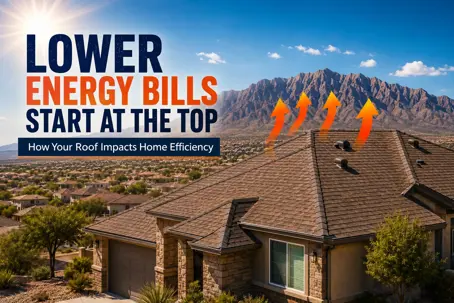
During the summer, your roof absorbs a tremendous amount of solar energy.
As roofing materials heat up, that heat transfers into the attic and eventually into the living spaces below. This process forces your air conditioning system to work harder to maintain a comfortable indoor temperature.
Several factors influence how much heat enters your home, including:
- Roofing material
- Roof color
- Ventilation quality
- Attic insulation
- Overall roof condition
When one or more of these components are compromised, energy costs often increase.
Roofing Materials and Their Impact on Energy Efficiency
Not all roofing materials perform the same when exposed to El Paso’s intense heat.
Asphalt Shingles
Asphalt shingles are one of the most common roofing materials in Texas. They provide reliable protection and affordability but can absorb significant amounts of heat, particularly darker-colored shingles.
Proper ventilation becomes especially important for homes with asphalt roofing systems.
Tile Roofs
Tile roofs are known for their durability and ability to perform well in hot climates. Their design allows for natural airflow beneath the tiles, helping reduce heat transfer into the home.
Metal Roofing
Metal roofing systems have become increasingly popular due to their durability and energy-efficient properties. Many metal roofs reflect solar radiation rather than absorbing it, helping reduce cooling demands.
Cool Roof Technologies
Modern roofing products often incorporate reflective coatings and specialized materials designed to reduce heat absorption. These systems are commonly referred to as “cool roofs” and can improve energy efficiency in hot climates.
The Role of Roof Color
Many homeowners overlook the impact roof color can have on energy performance.
Dark-Colored Roofs
Dark roofing materials absorb more solar energy, causing roof temperatures to rise significantly during summer months.
Light-Colored Roofs
Lighter-colored roofing systems reflect more sunlight and may help reduce attic temperatures, potentially lowering cooling costs.
While roof color alone will not solve energy-efficiency issues, it can contribute to overall performance when combined with proper ventilation and insulation.
Why Attic Ventilation Matters
Ventilation is one of the most important components of an energy-efficient roofing system.
Without adequate airflow, heat becomes trapped inside the attic, creating temperatures that can exceed 150°F during the summer.
This excessive heat can:
- Increase cooling costs
- Reduce roof lifespan
- Damage roofing materials
- Create uncomfortable indoor temperatures
- Place additional strain on HVAC systems
Signs of Poor Ventilation
Homeowners should watch for:
- Extremely hot attic spaces
- Uneven temperatures throughout the home
- Rising energy bills
- Premature roof deterioration
- Excess moisture accumulation
Benefits of Proper Ventilation
A properly ventilated attic can:
- Improve energy efficiency
- Extend roof lifespan
- Reduce cooling costs
- Improve indoor comfort
- Help prevent moisture-related issues
Warning Signs Your Roof May Be Costing You Money
Many roofing issues develop gradually and may not be immediately obvious.
Some common indicators include:
- Increasing utility bills
- Rooms that are difficult to cool
- Damaged or aging shingles
- Missing ventilation components
- Water stains or moisture issues
- Excessive attic heat
If you notice any of these signs, it may be time for a professional inspection.
Can a Roof Inspection Improve Energy Efficiency?
Absolutely.
A professional roof inspection can identify hidden issues that may be affecting your home’s energy performance.
During an inspection, roofing professionals may evaluate:
- Shingle condition
- Ventilation systems
- Flashing and seals
- Attic airflow
- Storm-related damage
- Areas of potential energy loss
Early detection of problems often helps homeowners avoid costly repairs while improving overall efficiency.
How El Paso Homeowners Can Reduce Cooling Costs
There are several steps homeowners can take to improve roof performance and reduce energy consumption.
- Schedule Regular Roof Inspections
Routine inspections help identify issues before they become major problems.
- Address Repairs Promptly
Even minor roofing damage can impact efficiency if left untreated.
- Maintain Proper Ventilation
Ensure vents remain unobstructed and functioning properly.
- Evaluate Attic Insulation
Adequate insulation works together with ventilation to improve overall energy performance.
- Consider Energy-Efficient Roofing Materials
When replacing a roof, ask about products designed to reflect heat and improve efficiency.
Frequently Asked Questions
Can a new roof lower my electric bill?
In many cases, yes. New roofing materials, improved ventilation, and proper installation can contribute to better energy efficiency and lower cooling costs.
How often should I have my roof inspected in El Paso?
Most homeowners should schedule a professional inspection at least once per year and after significant storms.
Does roof color really matter?
Yes. Lighter-colored roofs generally reflect more sunlight and may help reduce heat absorption.
Can damaged shingles increase cooling costs?
They can. Damaged roofing systems may affect ventilation and overall thermal performance, causing HVAC systems to work harder.
Protect Your Home and Your Budget
Your roof does much more than protect your home from the weather. It plays a critical role in energy efficiency, indoor comfort, and monthly utility costs.
With El Paso’s intense heat and year-round sun exposure, maintaining an efficient roofing system can make a significant difference in your home’s performance and long-term value.
If you’re concerned about rising energy bills or the condition of your roof, consider scheduling a professional roof inspection with Mighty Dog Roofing. Identifying potential issues early can help improve comfort, reduce costs, and extend the life of your roofing system.