
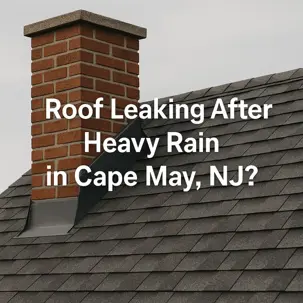
Why Is My Roof Leaking After Heavy Rain in Cape May, NJ?
A Cape May Homeowner FAQ Guide to Heavy Rain Roof Leaks
Cape May homes are uniquely exposed to coastal weather, wind-driven rain, salt air, and prolonged moisture. As a result, roof leaks during heavy rain are one of the most common issues homeowners face—even when there’s no obvious storm damage.
Many homeowners notice their roof leaking after heavy rain, not during short storms. This FAQ guide explains why that happens, what it means for your roofing system, and how to protect your home from long-term damage.
Heavy Rain Roof Leak FAQs for Cape May Homes
Why does my roof leak only during heavy rain?
Prolonged rain allows water more time to find weak points in the roofing system. In Cape May homes, water intrusion often occurs at flashing, roof vents, or the roof deck rather than through shingles alone.
Is a small roof leak after heavy rain a serious problem?
Yes. A small roof leak can still cause significant water damage, mold growth, and structural damage if ignored. Small leaks often turn into long-term problems.
What causes roof leaks during heavy rain in Cape May?
Common causes include failing metal flashing, deteriorated chimney flashing, worn seals around roof vents, clogged gutters, and aging roofing material.
Why do Cape May homes experience more rain-related roof leaks?
Coastal humidity, salt air corrosion, and frequent rain accelerate wear on flashing, fasteners, and underlayment, increasing leak risk over time.
Can roof vents leak during heavy rain?
Yes. Roof vents rely on rubber boots and sealants that degrade faster in coastal climates, allowing water to enter the roof deck during heavy rain.
Are chimneys a common source of roof leaks?
Very common. Chimney flashing failures are a leading cause of roof leaks in Cape May, especially during prolonged rain events.
Can flashing fail without visible damage?
Yes. Flashing can loosen or corrode underneath shingles, allowing water intrusion without obvious exterior signs.
How fast can water damage spread from a roof leak?
Water can spread quickly beyond the affected area, traveling along rafters and insulation, leading to water stains, mold and mildew, and hidden structural damage.
Can roof leaks cause mold growth?
Yes. Moisture trapped inside walls or attics creates ideal conditions for mold growth, especially in humid coastal environments.
Can clogged gutters cause roof leaks?
Absolutely. Overflowing gutters push water under shingles and into fascia boards, leading to roof leaks and wood rot.
Does humidity make roof leaks worse?
Yes. High humidity slows drying and worsens water damage, increasing the risk of mold and long-term deterioration.
Can water stains appear days after the rain?
Yes. Water may travel inside the roofing system before becoming visible as a ceiling water stain.
Can a roof leak be confused with a burst pipe?
Yes. A burst pipe or plumbing issue can mimic roof leak symptoms. A professional roof inspection helps identify the true source.
How do I know if I need roof repair or replacement?
Recurring leaks, widespread water damage, and aging roofing systems often indicate the need for repairs or replacements rather than patchwork fixes.
Will my insurance company cover a roof leak from heavy rain?
Insurance coverage depends on the cause. Sudden storm damage may qualify for insurance claims, while wear-and-tear issues usually do not.
Should I document roof leaks for insurance purposes?
Yes. Photos, videos, and written notes help support insurance claims and demonstrate the extent of water damage.
Can repeated roof leaks lead to structural damage?
Yes. Long-term water intrusion can weaken framing, rot the roof deck, and compromise the integrity of the entire roofing system.
Are older Cape May homes more vulnerable to roof leaks?
Older homes often lack modern waterproofing materials and may have outdated flashing details.
How often should Cape May homeowners inspect their roofs?
At least once per year and after major rain events. Routine inspections help identify potential issues early.
Is tarping a roof a long-term solution?
No. Tarping is a temporary emergency measure and should be followed by professional roof repair.
Can preventative maintenance reduce heavy rain roof leaks?
Yes. Regular inspections, gutter maintenance, and flashing checks help protect your home and prevent long-term damage.
What is included in a professional roof inspection?
A professional roof inspection evaluates flashing, roof vents, chimney areas, roofing material, roof deck condition, and drainage performance.
How soon should I act after noticing a roof leak?
Immediately. Early action limits water damage, reduces mold risk, and prevents significant damage.
Are coastal building standards different in Cape May?
Yes. Coastal homes are subject to stricter standards to address moisture, wind, and storm exposure.
Can minor roof leaks become major problems?
Yes. Minor leaks often expand into costly structural repairs if left unresolved.
When should I contact a roofing professional?
Any time you notice roof leaks, water stains, or signs of water intrusion—especially after heavy rain.
Final Thoughts for Cape May Homeowners
If your roof is leaking after heavy rain, it’s not something to ignore. Cape May homes face unique coastal challenges, and addressing roof leaks early helps protect your home, prevent mold and mildew, and avoid long-term structural damage.
A professional roof inspection is the best first step to identify the cause and determine the right solution.