
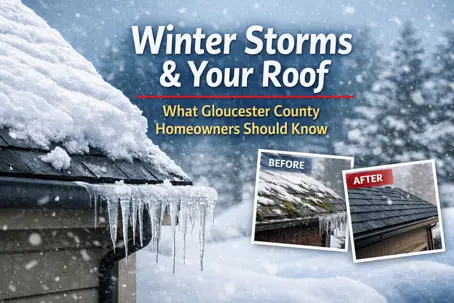
What South Jersey and Gloucester County Homeowners Should Know
With a Winter Storm Watch issued for Gloucester County and surrounding South Jersey communities, homeowners in areas such as Deptford, Washington Township, Sewell, and nearby towns are preparing for heavy snow, sleet, and freezing rain.
While winter storms are common in the Northeast, South Jersey roofs often face unique risks because snow events here are frequently followed by ice accumulation and rapid freeze-thaw cycles. This FAQ-style guide explains how winter weather impacts residential roofs, what warning signs to watch for, and when a professional inspection is recommended.
How Does Heavy Snow Affect a Residential Roof?
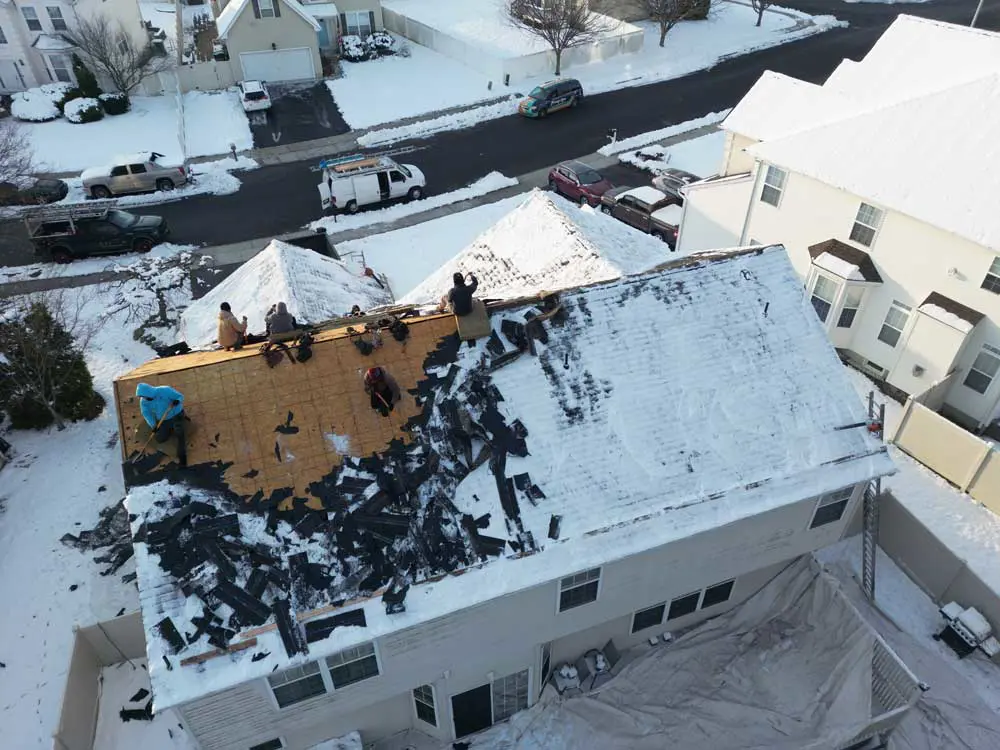
Heavy snow adds weight to a roof, and problems increase when snow becomes saturated with rain or topped with ice.
In South Jersey, roofs are most stressed when:
- Snow accumulates quickly
- Sleet and freezing rain add extra weight
- Ice prevents proper drainage
- The roof already has age-related wear
Older homes throughout Gloucester County are especially vulnerable when prolonged snow cover meets fluctuating temperatures.
What Is the Biggest Roof Risk During Snow and Ice Storms?
The greatest risk is ice buildup that traps melting snow.
Heat escaping from the attic melts snow higher on the roof. As the water flows downward, it refreezes near the eaves, creating ice that blocks drainage. Water can then back up beneath shingles and into the home.
This is one of the most common causes of winter roof leaks in South Jersey.
Can Freezing Rain Damage Shingles?
Yes. Freezing rain coats shingles in ice, which can:
- Exploit small cracks or lifted edges
- Freeze and expand existing weaknesses
- Loosen aging or brittle shingles
Homes in shaded areas of Deptford and neighboring towns often experience this type of damage after repeated freeze-thaw cycles.
Are Roof Leaks Always Immediate After a Winter Storm?
No. Many winter-related leaks appear days or even weeks later.
Water may enter during melting periods and travel along decking or framing before becoming visible inside the home. This delayed response often catches homeowners off guard.
What Are Warning Signs of Roof Damage After a Winter Storm?
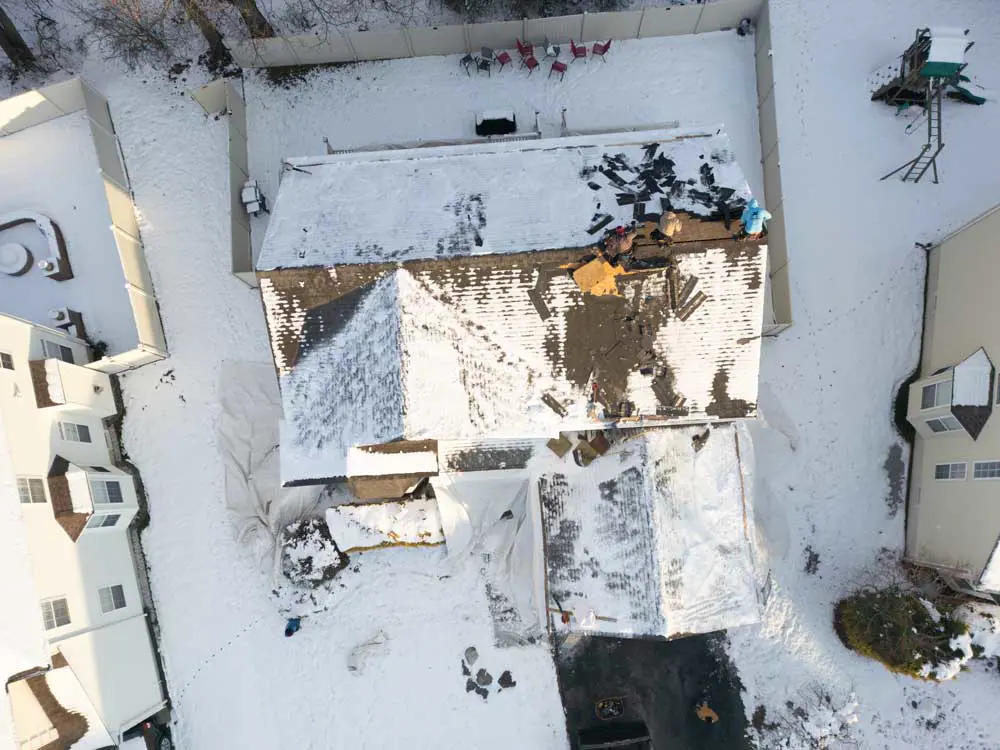
After snow or ice events, homeowners in Gloucester County should watch for:
- Water stains on ceilings or walls
- Damp attic insulation
- Sagging gutters or ice-heavy eaves
- Missing or lifted shingles visible from the ground
- Drafts or cold spots indoors
These signs often indicate moisture intrusion caused by snow or ice.
Does Roof Age Matter During Winter Storms?
Yes. Roof age plays a major role in winter performance.
Roofs over 15 to 20 years old are more vulnerable because:
- Shingles may be brittle
- Flashing and sealants may be worn
- Ventilation may be outdated
Older roofing systems are more likely to develop leaks during heavy snow and freezing rain events common in South Jersey winters.
How Does Attic Ventilation Affect Winter Roof Performance?
Attic ventilation helps regulate roof temperature and moisture levels.
When ventilation is inadequate, heat builds up in the attic, increasing snow melt and ice formation near roof edges. Balanced ventilation helps:
- Reduce ice buildup
- Minimize moisture accumulation
- Extend roof lifespan
- Improve energy efficiency
Ventilation issues are a hidden contributor to many winter roof problems in Gloucester County homes.
Should Homeowners Remove Snow From the Roof?
Most homeowners should not attempt roof snow removal themselves due to safety risks and potential shingle damage.
Instead:
- Monitor interior ceilings and attic spaces
- Keep gutters and downspouts clear when safe
- Watch for excessive ice buildup along eaves
Professional evaluation is recommended if snow or ice accumulation appears severe.
When Should a Roof Be Inspected After a Winter Storm?
A roof inspection is recommended if:
- The storm produced heavy snow combined with ice
- The roof is older or has a history of leaks
- Interior moisture or exterior damage is visible
Post-storm inspections help identify small issues before they become larger problems when temperatures rise.
Why Winter Storms Are Risky for South Jersey Roofs
South Jersey experiences fewer snowstorms than northern regions, which means many roofs are not optimized for extended snow and ice conditions. When significant winter weather occurs, the combination of snow, sleet, freezing rain, and temperature swings places added stress on roofing systems.
Awareness and early action are key to preventing costly damage.
Frequently Asked Questions About Winter Storm Roof Damage
Can a roof collapse from snow in South Jersey?
Roof collapse is uncommon but possible if snow is heavy, saturated, or combined with ice—especially on older or structurally compromised roofs.
Is ice more damaging than snow?
Yes. Ice blocks drainage and forces water under shingles, increasing the risk of leaks.
How soon do winter roof leaks appear?
Leaks may appear immediately or several days after the storm as snow melts and refreezes.
Does homeowners insurance cover snow-related roof damage?
Coverage depends on the policy and cause of damage. Sudden storm damage is often covered, while pre-existing wear may not be.
Protecting Your Roof During Winter Weather in South Jersey
Winter storms don’t automatically cause roof damage, but they expose weaknesses. Monitoring your home during and after storms helps protect your roof, interior, and long-term investment.
Homeowners in Deptford, Gloucester County, and across South Jersey benefit most from early awareness and timely inspections following snow and ice events.