
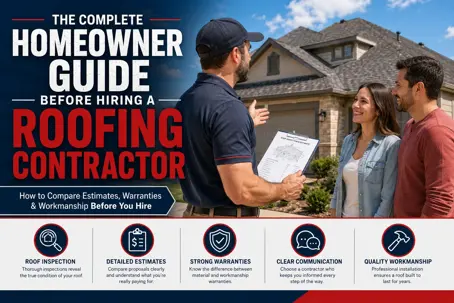
How to Choose the Right Roofing Contractor for Your Home
Replacing or repairing a roof is one of the most significant investments most homeowners will ever make.
Unlike remodeling a kitchen or repainting a room, roofing projects directly protect everything beneath them—your family, your belongings, and the structural integrity of your home.
Choosing the right roofing contractor isn’t simply about finding the lowest estimate.
It’s about selecting a company that will properly diagnose your roof’s condition, recommend the appropriate solution, use quality materials, communicate honestly, and stand behind its workmanship long after the project is complete.
Unfortunately, many homeowners only discover the importance of choosing the right contractor after something goes wrong.
Poor installation, inadequate ventilation, improper flashing, low-quality materials, or incomplete repairs may not become apparent until months—or even years—later.
The good news is that most of these problems are entirely preventable.
By understanding what professional roofing contractors do, what qualifications matter, and what questions to ask before signing a contract, you can make a confident decision and avoid many of the common mistakes homeowners regret.
Whether you need a small repair, a complete roof replacement, or a storm damage inspection, this guide will help you evaluate roofing companies with confidence.
Why Choosing the Right Roofing Contractor Matters
A roof is much more than shingles.
It is a complete system of components working together to protect your home from water, wind, heat, and severe weather.
Even the highest-quality roofing materials can fail prematurely if they are installed incorrectly.
Professional installation often has a greater impact on long-term performance than the brand of roofing material itself.
Choosing an experienced contractor helps ensure that every component of the roofing system—from underlayment and flashing to ventilation and drainage—is installed according to industry standards and manufacturer specifications.
The result is a roof that performs reliably for decades rather than requiring premature repairs.
Your Roofing Contractor Affects More Than Your Roof
The company you hire influences:
- Roof lifespan
- Warranty eligibility
- Energy efficiency
- Water protection
- Home value
- Insurance documentation
- Storm resistance
- Future maintenance costs
- Overall project experience
The right contractor doesn’t simply install roofing materials—they help protect one of your home’s most valuable investments.
Quick Take
Choosing the right roofing contractor is one of the most important decisions you’ll make during any roofing project. Quality workmanship today can prevent years of future repairs.
What Does a Professional Roofing Contractor Actually Do?
Many homeowners assume roofing contractors simply replace shingles.
In reality, professional roofing companies provide a much broader range of services.
A qualified contractor evaluates the entire roofing system and recommends solutions based on the condition of the roof—not just the visible problem.
Professional roofing services often include:
Roof Inspections
Comprehensive evaluations of roofing materials, flashing, ventilation, gutters, and structural components.
Leak Detection
Finding the true source of water intrusion, which is often located far from the visible interior stain.
Roof Repairs
Correcting localized damage caused by weather, aging materials, or normal wear.
Roof Replacement
Installing an entirely new roofing system when repairs are no longer the most effective long-term solution.
Storm Damage Assessments
Documenting hail, wind, and weather-related damage following severe storms.
Preventive Maintenance
Identifying developing issues before they become costly repairs.
Ventilation Improvements
Optimizing attic airflow to improve energy efficiency and extend roof lifespan.
Emergency Services
Providing temporary protection after severe weather to reduce additional damage until permanent repairs can begin.
Quick Take
Professional roofing contractors solve roofing problems—they don’t simply replace roofing materials.
Signs It’s Time to Call a Roofing Contractor
Many roofing issues develop gradually.
Scheduling an inspection early often prevents more extensive damage later.
Consider contacting a roofing contractor if you notice:
- Water stains on ceilings
- Missing shingles
- Curled or cracked shingles
- Granules collecting in gutters
- Sagging roof sections
- Loose flashing
- Rising energy bills
- Interior attic moisture
- Mold or mildew odors
- Storm damage
- Fallen tree limbs contacting the roof
- Your roof approaching the end of its expected lifespan
Even if your roof appears normal from the ground, professional inspections after severe storms can identify hidden damage before it leads to leaks.
Different Types of Roofing Contractors
Not every roofing company provides the same services.
Understanding these differences helps homeowners choose a contractor whose experience matches the project’s requirements.
Residential Roofing Contractors
Specialize in homes using materials such as:
- Asphalt shingles
- Metal roofing
- Tile roofing
- Slate roofing
Residential contractors focus on protecting single-family homes, townhouses, and similar properties.
Commercial Roofing Contractors
Commercial projects typically involve flat or low-slope roofing systems such as:
- TPO
- Modified Bitumen
- EPDM
- Spray Polyurethane Foam (SPF)
- Roof Coatings
Commercial roofing often requires different installation methods and specialized expertise.
Storm Restoration Specialists
These contractors focus on evaluating and restoring roofs damaged by:
- Hail
- Wind
- Heavy rain
- Falling debris
They frequently assist homeowners by documenting storm-related damage and coordinating restoration projects.
Emergency Roofing Contractors
Provide temporary protective services including:
- Emergency tarping
- Leak stabilization
- Temporary waterproofing
- Debris removal
Their goal is to prevent additional damage until permanent repairs can be completed.
Quick Take
Choose a contractor whose primary experience aligns with your specific roofing needs rather than assuming every roofing company specializes in every type of project.
What Makes a Great Roofing Contractor?
While every company is different, the best contractors tend to share several important characteristics.
Look for companies that demonstrate:
Experience
Years of successful roofing projects provide valuable knowledge that cannot be learned from manuals alone.
Communication
Professional contractors explain findings clearly, answer questions honestly, and keep homeowners informed throughout the project.
Professional Inspections
Recommendations should be based on thorough inspections—not assumptions.
High-Quality Materials
Reliable contractors use roofing systems designed to provide long-term performance rather than simply minimizing upfront costs.
Safety
Professional crews follow established safety practices that protect both workers and homeowners.
Written Warranties
Clear warranty information reflects confidence in both workmanship and materials.
Reputation
Consistent customer satisfaction, positive reviews, and completed projects often indicate a company’s commitment to quality.
Quick Take
The best roofing contractor isn’t necessarily the cheapest—it’s the one that provides the greatest long-term value through quality workmanship, communication, and professionalism.
Questions Every Homeowner Should Ask Before Hiring a Roofing Contractor
Before signing a contract, ask questions such as:
- How long have you been installing roofs?
- What roofing systems do you specialize in?
- Will you perform a complete roof inspection?
- What materials do you recommend and why?
- What warranties are available?
- How will my property be protected during construction?
- What is the expected project timeline?
- How will unexpected issues be handled?
- Will I receive written documentation?
- What maintenance do you recommend after completion?
The answers should be clear, specific, and easy to understand.
A contractor who takes time to educate you before the project is more likely to communicate effectively throughout the job.
Understanding Roofing Estimates: More Than Just a Price
One of the biggest mistakes homeowners make is comparing roofing estimates based only on the final number at the bottom of the proposal.
Two estimates may differ by thousands of dollars—not because one contractor is overcharging, but because each proposal may include a very different scope of work.
A professional roofing estimate explains exactly what work will be performed, what materials will be installed, how the property will be protected, and what warranties will be provided.
Understanding these details allows homeowners to compare proposals fairly and confidently.
What Should a Professional Roofing Estimate Include?
Every roofing company prepares estimates differently, but comprehensive proposals generally include several important components.
Roof Inspection Findings
The proposal should summarize the contractor’s observations, including:
- Overall roof condition
- Storm damage (if applicable)
- Leak locations
- Flashing condition
- Ventilation concerns
- Structural observations
- Areas requiring repair or replacement
This section explains why the recommended work is necessary.
Scope of Work
One of the most important sections of any estimate.
It should clearly describe:
- Materials being removed
- Materials being installed
- Flashing replacement
- Underlayment installation
- Ventilation improvements
- Cleanup procedures
- Disposal of old roofing materials
- Final inspection
Ambiguous language can create misunderstandings later.
Roofing Materials
The estimate should identify the products being installed, such as:
- Architectural asphalt shingles
- Standing seam metal roofing
- Clay tile
- TPO membrane
- Underlayment
- Flashing
- Ridge vents
- Fasteners
- Sealants
Knowing exactly which materials will be used helps homeowners compare proposals accurately.
Project Timeline
Professional estimates generally provide an expected schedule, including:
- Estimated start date
- Estimated completion date
- Weather considerations
- Material availability
- Inspection scheduling
While severe weather may affect construction timelines, homeowners should still receive a general project schedule.
Warranty Information
A proposal should explain the warranties associated with the project.
These may include:
- Manufacturer warranties
- Workmanship warranties
- Material coverage
- Installation coverage
Understanding warranty terms before signing a contract helps avoid future confusion.
Quick Take
A roofing estimate should explain what will be done, why it needs to be done, and what materials and warranties are included—not simply provide a total price.
Lowest Price vs. Best Long-Term Value
Every homeowner wants a fair price.
However, the lowest estimate is not always the least expensive solution over the life of the roof.
Lower proposals sometimes reduce costs by:
- Installing lower-grade materials.
- Omitting flashing replacement.
- Reusing aging components.
- Reducing ventilation improvements.
- Shortening workmanship warranties.
- Performing only partial repairs.
Higher-quality installations often reduce future maintenance costs and extend the roof’s service life.
Value Is Measured Over Decades
Instead of asking:
“Which estimate is cheapest?”
Ask:
- Which proposal protects my home the longest?
- Which contractor explained the project most clearly?
- Which estimate includes the most complete roofing system?
- Which company inspired the greatest confidence?
Red Flags When Comparing Roofing Contractors
Although every company operates differently, certain warning signs deserve careful consideration.
Watch for contractors who:
- Pressure you to sign immediately.
- Refuse to answer questions.
- Provide vague written estimates.
- Avoid discussing warranties.
- Cannot clearly explain the recommended work.
- Offer unusually low prices without explanation.
- Recommend full replacement without performing a thorough inspection.
Professional contractors welcome informed questions and explain their recommendations clearly.
Quick Take
Confidence should come from transparency—not sales pressure.
Understanding Roof Financing
Replacing a roof is a major investment.
Many homeowners explore financing options to spread the cost over time.
Depending on the contractor and financing partner, options may include:
- Monthly payment plans
- Promotional financing
- Fixed-term financing
- Deferred payment programs
Available financing varies by provider, qualification requirements, and applicable terms.
Before making a decision, review all financing documents carefully and understand the total repayment obligation.
Roofing Projects Involving Insurance Claims
Storm restoration projects often differ from standard roof replacements.
When insurance is involved, homeowners typically coordinate with:
- Roofing contractor
- Insurance adjuster
- Insurance company
- Mortgage company (when applicable)
Professional communication among these parties helps the project move forward efficiently.
Understanding Change Orders
Sometimes additional conditions become visible only after roofing materials are removed.
Examples include:
- Damaged roof decking
- Hidden moisture
- Structural deterioration
- Ventilation deficiencies
- Flashing concealed beneath older materials
When unexpected conditions are discovered, contractors may recommend a change order.
A change order documents additional work before it is performed, helping both parties understand any changes to the original scope.
Quick Take
Unexpected conditions are not always signs of poor planning—they are often hidden beneath the existing roof and cannot be evaluated until demolition begins.
What Good Communication Looks Like
One of the strongest indicators of a professional roofing company is consistent communication.
Homeowners should know:
- Who manages the project.
- When work will begin.
- What to expect each day.
- How weather delays will be handled.
- Who to contact with questions.
- When inspections are scheduled.
- When final walkthroughs will occur.
Clear communication reduces stress and helps projects stay organized.
Questions to Ask Before Accepting an Estimate
Before signing a contract, consider asking:
- Does this estimate include all required materials?
- Will flashing be replaced?
- Is attic ventilation included in the evaluation?
- What cleanup procedures are included?
- How will landscaping be protected?
- Who supervises the installation crew?
- How are unexpected issues handled?
- What warranties are included?
- How will final quality be verified?
- What maintenance do you recommend after installation?
Contractor Comparison Checklist
When comparing proposals, evaluate:
☐ Scope of work
☐ Roofing materials
☐ Inspection quality
☐ Communication
☐ Warranty coverage
☐ Timeline
☐ Cleanup procedures
☐ Company reputation
☐ Financing options
☐ Overall professionalism
Pro Tips
Pro Tip #1
Never compare roofing estimates using price alone. Compare the complete scope of work.
Pro Tip #2
Ask every contractor to explain why they recommend their proposed solution.
Pro Tip #3
A detailed written proposal often reflects an organized and professional installation process.
Pro Tip #4
Choose the contractor who provides the greatest confidence—not simply the lowest bid.
Roofing Warranties Explained: What Every Homeowner Should Understand
A new roof represents a significant investment, and one of the most valuable protections homeowners receive is the warranty.
Unfortunately, many people don’t fully understand what their warranty covers until they need to use it.
Not all roofing warranties are the same.
Some protect the roofing materials, while others cover the quality of the installation. Understanding the difference helps homeowners compare roofing contractors more effectively.
Manufacturer Warranty
A manufacturer warranty generally covers defects in the roofing materials themselves.
Depending on the product, this may include:
- Asphalt shingles
- Metal panels
- Tile products
- Underlayment
- Ridge components
- Ventilation products
Coverage varies by manufacturer and product line.
Workmanship Warranty
A workmanship warranty covers the quality of the installation performed by the roofing contractor.
This warranty may apply if problems arise due to installation errors rather than defective materials.
Examples include:
- Improper flashing installation
- Incorrect shingle placement
- Fastener issues
- Installation defects
- Ventilation installation errors
Because installation quality directly affects roof performance, workmanship warranties are often just as important as material warranties.
Quick Take
The strongest roofing projects combine high-quality materials with professional installation backed by clear written warranties.
Why Licensing and Insurance Matter
Professional roofing contractors should operate responsibly and protect both their employees and their customers.
Before hiring any contractor, homeowners should understand how licensing requirements and insurance protections apply in their area.
Insurance coverage may help protect both parties if unexpected incidents occur during construction.
Rather than assuming these protections exist, homeowners should feel comfortable asking contractors to explain the coverage they maintain.
Safety Should Never Be an Afterthought
Roofing remains one of the most physically demanding construction trades.
Professional contractors emphasize jobsite safety through:
- Fall protection
- Ladder safety
- Equipment inspections
- Crew training
- Weather monitoring
- Site organization
- Daily cleanup
Safe job sites reduce risks for workers, homeowners, neighbors, and property.
Quick Take
A professional roofing company values safety just as highly as craftsmanship.
Project Management: What Happens After You Sign the Contract?
Many homeowners focus entirely on selecting a contractor, but the overall experience also depends on how the project is managed.
Professional roofing companies typically follow a structured process from start to finish.
A well-managed project generally includes:
Pre-Construction Communication
Before work begins, homeowners should receive information regarding:
- Project schedule
- Material delivery
- Access requirements
- Vehicle placement
- Safety considerations
- Weather expectations
Material Delivery
Roofing materials should arrive in an organized manner that minimizes disruption while protecting landscaping and property whenever possible.
Installation
Throughout installation, project managers coordinate:
- Crew activities
- Material usage
- Quality control
- Safety procedures
- Daily progress
Final Inspection
Before considering the project complete, professional contractors typically perform a final walkthrough to verify:
- Installation quality
- Cleanup
- Flashing
- Ventilation
- Drainage
- Property condition
Quick Take
Good project management creates a smoother experience for homeowners and helps ensure consistent quality from beginning to end.
How to Compare Roofing Contractors Objectively
Rather than focusing on advertising or pricing alone, compare roofing companies across several important categories.
Evaluation Category | What to Look For |
|---|---|
Inspection Quality | Thorough evaluation of the complete roofing system |
Proposal Clarity | Detailed written scope of work |
Communication | Clear, timely, and professional responses |
Materials | Quality products appropriate for the project |
Warranties | Clearly explained material and workmanship coverage |
Project Management | Organized scheduling and supervision |
Safety Practices | Professional jobsite procedures |
Customer Experience | Strong reputation and consistent communication |
The goal is not to find the “perfect” contractor, but the one that provides the greatest overall value and confidence.
Decision Matrix
If your highest priority is…
Lowest Initial Cost
Look for a proposal that still includes complete system components and clearly explains any differences in scope.
Long-Term Value
Choose the contractor who demonstrates quality workmanship, thorough inspections, and comprehensive warranties.
Storm Damage Restoration
Select a contractor experienced in documenting storm damage and guiding homeowners through the restoration process.
Premium Roofing Systems
Choose a contractor with demonstrated experience installing the specific roofing material you’re considering.
Commercial Roofing
Look for contractors whose primary expertise includes commercial roofing systems rather than companies focused exclusively on residential work.
Myth vs. Reality
Myth
“The contractor with the lowest estimate is the best value.”
Reality
The lowest proposal may exclude important components, use different materials, or provide a different scope of work. Compare the complete project—not just the price.
Myth
“All roofing warranties provide the same protection.”
Reality
Warranty terms vary significantly. Understanding both manufacturer and workmanship coverage is essential.
Myth
“Every roofing company installs all roofing systems equally well.”
Reality
Many contractors specialize in certain roofing materials or project types. Experience with your specific roofing system matters.
Myth
“A roofing project ends when the last shingle is installed.”
Reality
Professional projects conclude with final inspections, cleanup, warranty documentation, and ongoing customer support.
Professional Tips
Pro Tip #1
Ask each contractor to explain why they recommend a specific roofing system—not just what they recommend.
Pro Tip #2
Review the written proposal before discussing price. Understanding the scope of work makes comparisons much more meaningful.
Pro Tip #3
Communication during the estimate process often reflects communication during the project itself.
Pro Tip #4
Choose the contractor who gives you the greatest confidence—not the one who creates the greatest pressure.
Pro Tip #5
A professional contractor should be willing to educate you throughout the decision-making process.
Homeowner Evaluation Worksheet
Score each contractor from 1–5 in the following areas:
Category | Contractor A | Contractor B | Contractor C |
|---|---|---|---|
Inspection Quality | |||
Communication | |||
Proposal Clarity | |||
Materials | |||
Warranty | |||
Professionalism | |||
Project Timeline | |||
Overall Confidence |
This simple comparison tool encourages homeowners to evaluate the overall experience rather than making a decision based solely on cost.
Frequently Asked Questions
How do I know when it’s time to hire a roofing contractor?
If you notice roof leaks, missing shingles, storm damage, sagging areas, rising energy bills, water stains, or your roof is approaching the end of its expected lifespan, it’s time to schedule a professional inspection.
Even if no obvious problems are visible, annual inspections and post-storm evaluations help identify hidden issues before they become costly repairs.
Should I repair my roof or replace it?
The answer depends on the roof’s age, the extent of the damage, previous repairs, and the overall condition of the roofing system.
A professional inspection provides the information needed to determine which option offers the greatest long-term value.
How many roofing estimates should I get?
Most homeowners benefit from comparing several professional proposals.
Rather than focusing only on price, compare:
- Scope of work
- Materials
- Warranties
- Communication
- Experience
- Overall professionalism
What should be included in a roofing estimate?
A comprehensive estimate should explain:
- Inspection findings
- Scope of work
- Roofing materials
- Timeline
- Cleanup procedures
- Warranty information
- Payment schedule
- Any assumptions or exclusions
A detailed proposal allows homeowners to compare contractors fairly.
Does the lowest estimate usually provide the best value?
Not necessarily.
Lower-priced proposals may include fewer services, different materials, or a reduced scope of work.
The best value comes from balancing quality, experience, communication, and long-term performance.
What questions should I ask before signing a roofing contract?
Some of the most important questions include:
- What materials are being installed?
- Why do you recommend this solution?
- What warranties are included?
- How long will the project take?
- How will unexpected conditions be handled?
- Who supervises the installation?
- How will my property be protected?
Why are roof inspections important before replacing a roof?
A thorough inspection identifies hidden problems that may not be visible from the ground.
This helps ensure the proposed solution addresses the underlying cause—not just the symptoms.
What is the difference between a material warranty and a workmanship warranty?
A material warranty generally covers manufacturing defects in roofing products.
A workmanship warranty covers installation performed by the roofing contractor.
Understanding both helps homeowners compare proposals more effectively.
How long does a roof replacement usually take?
Most residential roof replacements are completed within one to three days, depending on:
- Roof size
- Roof complexity
- Weather
- Material availability
- Unexpected structural repairs
Larger or more complex projects may require additional time.
Can roofing work continue during bad weather?
Safety is always the priority.
Roofing schedules may be adjusted when severe weather creates unsafe working conditions or could affect installation quality.
Should I stay home during roof replacement?
Many homeowners remain at home during installation, although roofing work can be noisy.
Contractors can explain what to expect before work begins.
How often should my roof be inspected?
Professional inspections are generally recommended:
- Once each year
- After major hailstorms
- After severe wind events
- Before buying or selling a home
Routine inspections help maximize roof lifespan.
Homeowner Hiring Checklist
Before hiring a roofing contractor, confirm that you have:
☐ Received a professional roof inspection.
☐ Compared multiple written estimates.
☐ Reviewed the proposed scope of work.
☐ Discussed roofing material options.
☐ Understood warranty coverage.
☐ Asked about project timelines.
☐ Reviewed cleanup procedures.
☐ Discussed communication during construction.
☐ Confirmed who will supervise the project.
☐ Asked about long-term maintenance recommendations.
Contractor Comparison Worksheet
Use this worksheet when evaluating different roofing companies.
Category | Contractor A | Contractor B | Contractor C |
|---|---|---|---|
Inspection Quality | |||
Communication | |||
Written Proposal | |||
Roofing Materials | |||
Warranty Coverage | |||
Project Timeline | |||
Professionalism | |||
Overall Confidence |
The contractor with the highest overall value is not always the one with the lowest price.
Final Recommendations
Before making your final decision:
- Compare complete proposals—not just pricing.
- Ask questions until you fully understand the recommendation.
- Consider long-term value instead of short-term savings.
- Review warranty information carefully.
- Choose a contractor who communicates clearly and professionally.
The quality of the installation will influence your roof’s performance for decades.
Conclusion
Hiring a roofing contractor is about more than replacing shingles.
It’s about selecting a trusted professional who will evaluate your roof honestly, recommend the right solution, install quality materials correctly, and stand behind the work after the project is complete.
Whether you’re addressing storm damage, replacing an aging roof, or planning preventive maintenance, taking time to compare contractors carefully helps protect one of your home’s most valuable investments.
An informed homeowner is far more likely to enjoy a successful roofing project and long-term peace of mind.
Ready to Choose the Right Roofing Contractor?
Whether you need a roof inspection, repair, replacement, or simply a second opinion, Mighty Dog Roofing is committed to helping homeowners make confident decisions.
Our team provides:
- Comprehensive roof inspections
- Honest recommendations
- High-quality roofing materials
- Professional installation
- Clear communication
- Reliable warranties
- Exceptional customer service
Schedule your FREE Roof Inspection today and discover why homeowners throughout El Paso trust Mighty Dog Roofing for their residential and commercial roofing needs.