
A Homeowner’s Winter Roof Guide: Causes, Risks, and Prevention
Winter weather in Burlington County, New Jersey often brings snow and ice, fluctuating temperatures, and periods of heavy snow followed by melting. These conditions can quietly lead to roof damage, especially when homeowners aren’t aware of how winter moisture behaves on a roofing system.
One of the most common winter-related concerns for Burlington County homes is ice buildup along roof edges that traps melted snow and creates standing water. This guide explains what is an ice dam, why it forms in this region, how it can cause water damage, and how homeowners can take steps to protect your home over the long term.
What Is an Ice Dam on a Roof?
So, what is an ice dam?
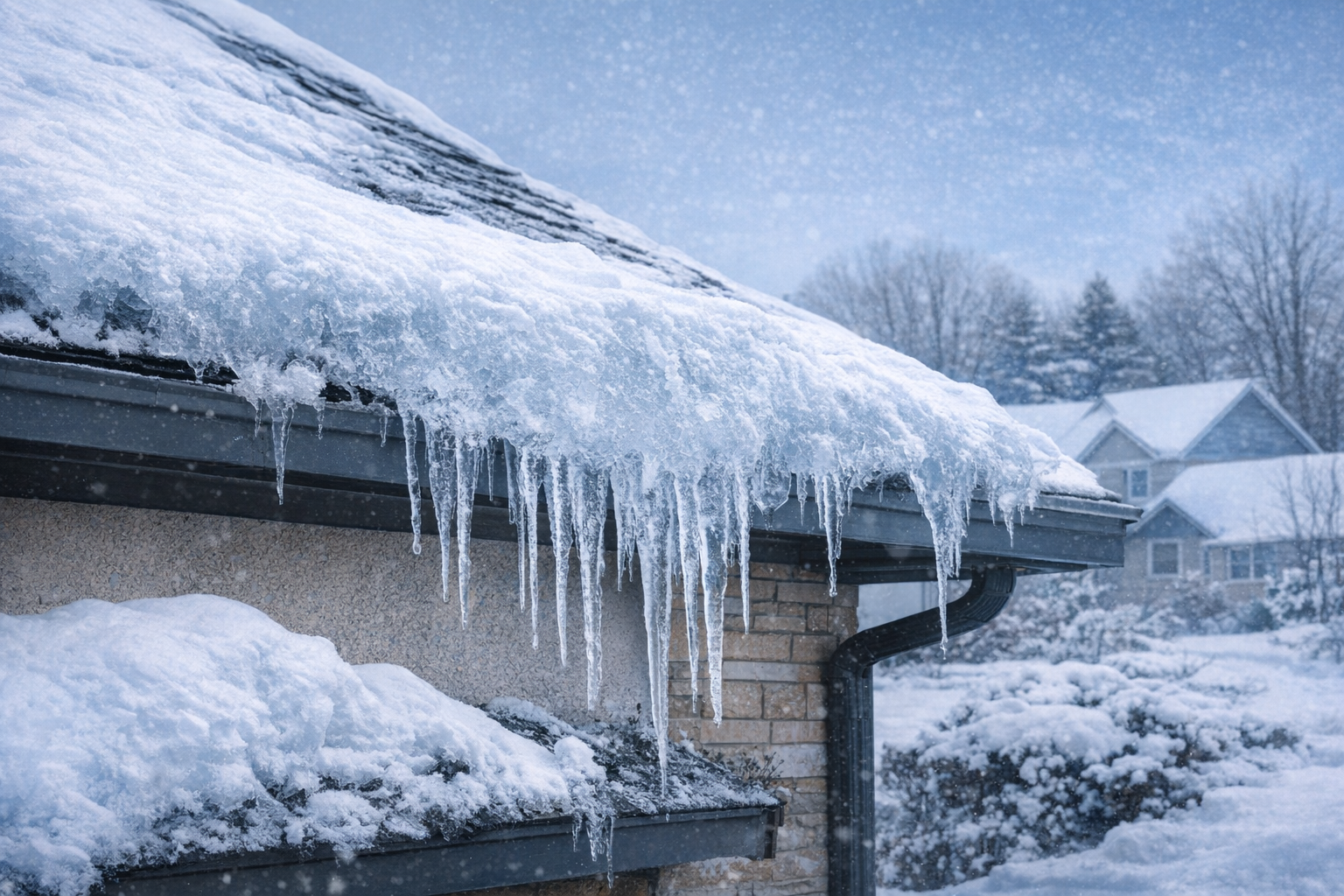
It’s a ridge of ice that forms along the lower edge of a roof when melted snow refreezes before it can drain properly. When this happens, water backs up behind the ice and can seep beneath roofing materials.
This process is known as ice dam formation, and it often occurs even when shingles appear to be in good condition. Once water gets underneath the roof surface, it can lead to roof leaks, damaged insulation, and interior moisture problems.
Why Ice Dams on Roofs Are Common in Burlington County
Ice dams on roofs are not caused by snow alone. They form because of uneven roof temperatures, which are common during New Jersey winters.
In Burlington County, an ice dam forms when:
- Heat loss from the home warms the upper roof
- Melted snow flows downward
- Roof edges remain cold and refreeze the water
- Repeated freeze-thaw cycles trap water behind the ice
Many local homes were built before modern attic insulation and ventilation standards. Older insulation allows warm air to escape upward, increasing the chance that winter moisture refreezes at the roof edge.
How Ice Dams Can Cause Roof and Interior Damage
Once water is trapped, the risk shifts from the roof surface to the interior of the home.
Common issues include:
- Roof damage beneath shingles
- Interior water stains on ceilings or walls
- Mold and mildew growth inside insulation or drywall
- Deterioration of roof decking and structural components
- Damage to asphalt shingles and flashing
Because this moisture often enters slowly, damage may not be visible until weeks later. Over time, repeated exposure can lead to long-term deterioration of the roofing material and surrounding components.
Signs Your Roof May Be Experiencing Ice-Related Damage
Homeowners should watch for:
- Icicles forming repeatedly along gutters
- Ice buildup near roof edges after snowstorms
- Interior water stains or bubbling paint
- Damp attic insulation
- Musty odors indicating mold or mildew
- Dripping water during freezing temperatures
These signs often point to a developing roof leak, even if the exterior roof looks intact.
How to Prevent Ice Dams Before Winter Weather Hits
Understanding how to prevent ice dams starts with addressing heat and airflow.
Effective prevention focuses on:
- Improving attic insulation to reduce heat loss
- Sealing air leaks that allow warm air into the attic
- Ensuring proper attic ventilation
- Keeping gutters clear so water can drain
- Removing excess snow near roof edges when safe
These steps help prevent ice from forming by keeping roof temperatures consistent and reducing the amount of water that can refreeze.
Is Ice Dam Removal Safe to Do Yourself?
Ice dam removal should be approached carefully.
Climbing onto a frozen roof or chipping ice with tools can damage shingles and increase the risk of injury. Improper removal can worsen roof damage instead of fixing it.
Safer short-term steps include:
- Using a roof rake from the ground to remove snow
- Creating drainage channels with approved ice-melting products
- Monitoring interior areas for moisture
If ice buildup is severe or recurring, professional removal is the safest option.
When a Roof Inspection Makes Sense
A professional roof inspection may be helpful if:
- Ice buildup formed during winter storms
- Interior moisture or stains appear
- Your home has experienced winter roof issues before
- The roof is older or nearing replacement age
Inspections can identify hidden moisture, insulation gaps, and ventilation problems before they cause long-term damage.
Does Home Insurance Cover Ice-Related Damage?
Many homeowners ask whether insurance cover ice dam damage.
In general:
- Home insurance may cover sudden water damage caused by ice-related roof leaks
- Coverage depends on the policy and cause of damage
- Pre-existing wear or lack of maintenance may not be covered
Homeowners should document damage carefully and contact their insurance company promptly. Understanding your insurance coverage and how insurance claims work can make the process smoother if repairs are needed.
Why Prevention Matters for Burlington County Homes
Winter conditions in South Jersey often include snow followed by rain, freezing nights, and mild daytime temperatures. This cycle increases the likelihood of water refreezing along roof edges.
By addressing insulation, ventilation, and roof maintenance, homeowners can reduce risk and protect your home from repeated winter issues.
Frequently Asked Questions
Can ice dams cause water damage even if shingles look fine?
Yes. Water can travel under shingles and cause damage without visible exterior signs.
Are ice dams a roofing problem or an insulation problem?
Often both. Ice dam formation usually points to heat loss and airflow issues rather than shingle failure alone.
Will ice dams go away on their own?
They may melt, but the damage caused can remain hidden.
Should I contact a roofing contractor after winter storms?
If you notice leaks, stains, or recurring ice buildup, a qualified roofing contractor can help evaluate the situation.
Final Thoughts for Burlington County Homeowners
Ice-related roof issues are common during New Jersey winters, but they don’t have to lead to serious damage. Early awareness, proper maintenance, and timely inspections help reduce risk.
If your home experienced snow and ice buildup this winter or you’re noticing signs of moisture, addressing the issue sooner rather than later can help avoid larger repairs in the future.
If you’re concerned about winter roof performance, a professional roof inspection can help identify potential problem areas before spring weather arrives.