
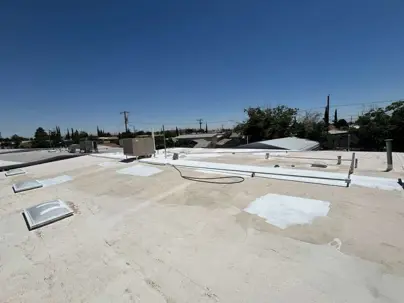
When homeowners hear the words roof coating or roof restoration, many imagine a contractor simply showing up and applying a white coating across the roof surface. While the final coating is certainly important, it is often the preparation work underneath that determines whether a roof will perform for years or begin leaking again after the next storm.
In El Paso, flat and low-slope roofing systems are common on both residential and commercial properties. These roofs face intense UV exposure, extreme summer temperatures, occasional heavy rain events, and years of expansion and contraction caused by temperature swings. Because of these conditions, applying a coating without proper preparation is one of the fastest ways to waste money on roofing repairs.
Here’s what most property owners never see—and why it matters.
A Roof Coating Is Only as Good as the Surface Beneath It
Think of a roof coating like paint on a wall.
If the wall is dirty, cracked, or damaged underneath, the paint may look good for a short period, but eventually the underlying issues will reappear.
The same principle applies to roofing systems.
Before any coating is installed, roofing professionals must identify and correct existing problems such as:
- Cracks and splits in the roofing membrane
- Failed seams
- Previous patch failures
- Ponding water areas
- Damaged flashing
- Open penetrations around pipes and equipment
- UV deterioration
- Mechanical damage from foot traffic
If these issues are not addressed first, the coating simply covers the problem instead of solving it.
Step 1: A Complete Roof Inspection
Every successful roof restoration project begins with a thorough inspection.
Experienced roofing professionals evaluate:
- Existing roof condition
- Previous repairs
- Areas with visible wear
- Drainage patterns
- Signs of water intrusion
- HVAC and equipment penetrations
- Roof edge conditions
The goal is to determine whether the roof is a good candidate for restoration or if more extensive repairs are needed first.
Skipping this step often results in hidden leaks remaining active beneath the coating system.
Step 2: Cleaning the Roof Surface
One of the most overlooked steps in roof restoration is cleaning.
Dust, dirt, oxidation, loose material, biological growth, and old coating residue can prevent proper adhesion.
A roof coating needs direct contact with a sound substrate in order to bond correctly.
Professional crews typically remove:
- Dirt accumulation
- Loose debris
- Dust
- Oils and contaminants
- Failing previous coatings
Without a clean surface, even premium roofing products may fail prematurely.
Step 3: Repairing Cracks, Seams, and Vulnerable Areas
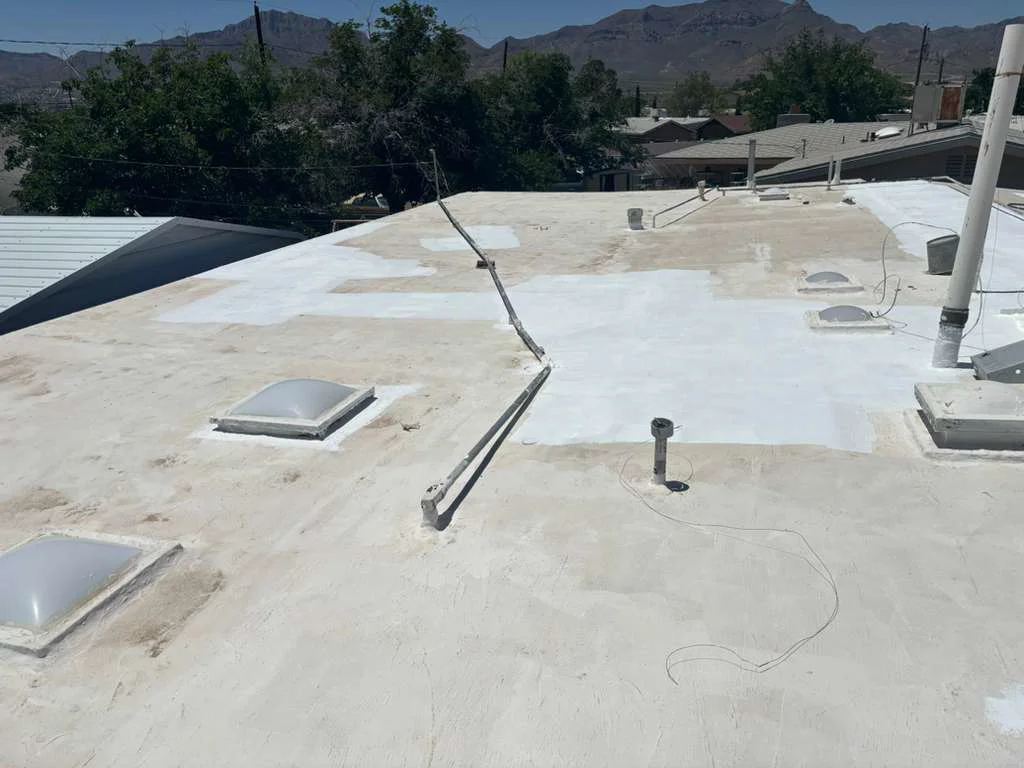
Most roof leaks begin at transitions and penetrations—not in the middle of the field of the roof.
Common problem areas include:
- Pipe penetrations
- Vent stacks
- HVAC curbs
- Skylights
- Expansion joints
- Flashings
- Roof-to-wall transitions
These locations experience movement throughout the year and are often the first areas to develop failures.
Before applying a coating, professional contractors repair and reinforce these critical points to create a watertight foundation.
Step 4: Reinforcing High-Risk Areas
Many restoration systems include reinforcement materials at vulnerable locations.
This reinforcement helps the roofing system withstand:
- Thermal movement
- Wind uplift
- Water intrusion
- Long-term stress
Rather than relying solely on liquid coatings, professionals often strengthen seams and transitions to provide additional durability.
This step is particularly important in climates like El Paso where roofing materials experience significant expansion and contraction during the year.
Step 5: Addressing Drainage Issues
A roof coating is not a substitute for proper drainage.
If water remains on the roof for extended periods, coating performance can be reduced over time.
Professional roofing contractors evaluate:
- Drain locations
- Slope conditions
- Water flow paths
- Areas where ponding occurs
In many cases, drainage improvements are made before the coating system is applied.
Managing water correctly helps extend the life of both the roof and the coating.
Step 6: Applying the Reflective Coating System
Only after repairs and preparation are completed does the final coating application begin.
Reflective roof coatings provide several benefits:
Reduced Heat Absorption
White reflective coatings help reduce surface temperatures by reflecting sunlight rather than absorbing it.
Improved Energy Efficiency
Lower roof temperatures can reduce cooling demands during El Paso’s long summer season.
Additional Waterproofing Protection
When properly installed, roof coatings create an additional protective barrier against moisture.
Extended Roof Life
By reducing UV damage and weathering, coatings can help extend the service life of an existing roofing system.
Why Cheap Roof Coating Jobs Often Fail
One of the biggest mistakes property owners make is comparing roof coating projects solely by price.
Lower-priced proposals often reduce costs by eliminating critical preparation steps.
Warning signs include:
- No roof inspection
- Minimal cleaning
- No seam reinforcement
- No repairs before coating
- No attention to drainage
- Extremely fast project timelines
A coating may initially look identical from the ground, but its performance can be dramatically different after one or two years.
The preparation work is often invisible when the project is complete, yet it is the most important part of the entire process.
What Property Owners Should Ask Before Hiring a Contractor
Before approving a roof coating project, ask these questions:
- Will the roof be inspected before coating?
- How will cracks and seams be repaired?
- What preparation work is included?
- Will penetrations and flashing be reinforced?
- How will drainage issues be addressed?
- What coating system will be used?
- Is the roof a good candidate for restoration?
A reputable contractor should be able to explain each step clearly and provide documentation of the work being performed.
The Bottom Line
Most successful roof coating projects are built on preparation, not paint.
The inspection, cleaning, repairs, reinforcement, and drainage corrections completed before the coating is applied are what ultimately determine the performance and longevity of the system.
If a contractor arrives and immediately begins applying coating without addressing the roof’s underlying condition, you are not receiving a roof restoration—you are simply getting a layer of paint on a roof.
A professional roof restoration should solve problems, protect your property, improve energy efficiency, and extend the life of your roofing system for years to come.
If you’re considering a roof coating project in El Paso, make sure you’re evaluating the preparation work just as carefully as the coating itself.