
Essential Roof Parts Every South Jersey Homeowner Should Know
When you look at a roof, it’s easy to see shingles and maybe a few vents—but the system protecting your home is far more complex. Each layer works together to keep moisture, wind and heat from damaging the structure beneath. In South Jersey, roofs must also stand up to coastal storms, high humidity, salt air and seasonal extremes. Understanding the parts of your roof helps you communicate with contractors, spot problems early and choose the right materials when it’s time for repairs or replacement. Here’s a South Jersey‑focused guide to roof anatomy and why each component matters.
Why Knowing Your Roof Matters in South Jersey
The Garden State’s coastal counties experience diverse weather—from nor’easters and hurricanes to hot, humid summers. This mix of high winds, heavy rains and lingering moisture puts extra stress on your roof. When you know how decking, underlayment, flashing and ventilation work together, you’re better equipped to protect your investment. Familiarity with roof anatomy also helps you compare quotes, ask informed questions and recognize when something looks off. Even simple maintenance like cleaning gutters and trimming branches can prolong your roof’s life.
The Main Parts of a Roof System
Roof Decking (Sheathing)
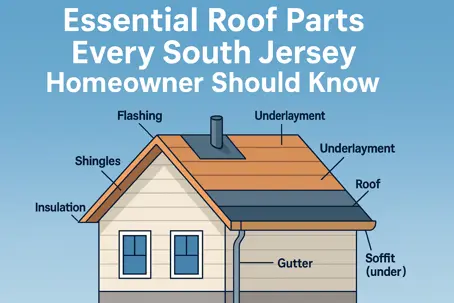
The roof deck (also called sheathing) is the foundation layer that everything else attaches to. Typically made of plywood or oriented strand board (OSB), it’s nailed directly to your home’s framing and provides structural support for shingles, underlayment and flashing. The decking distributes the roof’s weight evenly and acts as the base for fastening materials. In coastal areas like Cape May and Atlantic County, moisture from sea air and wind‑driven rain can seep beneath damaged shingles. When water reaches the decking, it can rot, warp or sag. Regular inspections help you catch soft spots before they lead to costly repairs.
Underlayment
Installed directly on top of the decking, underlayment acts as a waterproof shield that blocks moisture before it reaches the wood. It’s your roof’s secondary line of defense. Traditional underlayment consists of asphalt‑saturated felt; modern options include synthetic products that are lighter and more tear‑resistant. Underlayment also provides a smooth surface for shingle installation and adds a layer of fire resistance. In humid South Jersey, where summer humidity regularly exceeds 80 percent, high‑quality underlayment helps prevent moisture intrusion and mold growth.
Shingles or Roof Covering
Shingles (or other roofing materials) are the most visible element, but they’re more than decoration. Asphalt shingles remain the dominant choice for homes in Camden and Burlington counties because they’re cost‑effective and reliable. However, metal, tile and composite materials are becoming popular for their long life and storm resistance. Shingles deflect rain and UV rays, protect underlying layers and contribute to curb appeal. Over time, granules wear away, shingles curl, or wind can lift edges. Inspect your roof after strong storms and replace missing shingles promptly to avoid leaks.
Flashing
Flashing is thin metal (usually aluminum or steel) that seals joints and transitions where water is likely to penetrate—around chimneys, skylights, roof valleys and vent pipes. Flashing directs water away from vulnerable areas and prevents leaks even when shingles are intact. Rusted, loose or cracked flashing is a common source of roof leaks. Given South Jersey’s frequent thunderstorms, it’s important to check flashing around skylights and roof edges and replace it as needed.
Ridge and Hip Caps
At the highest point of your roof where two slopes meet (the ridge) and along diagonal joints (hips), special cap shingles provide a finished look and protect seams. Ridge and hip caps add protection against wind and rain at roof peaks and help improve attic ventilation. For homes in windy Atlantic and Ocean counties, ensuring that ridge caps are properly secured prevents uplift during nor’easters.
Ventilation System
Adequate attic ventilation is crucial yet often overlooked. A balanced system allows air to flow from intake vents along the soffits to exhaust vents near the ridge or gables. Proper airflow controls temperature and moisture in the attic. Without ventilation, heat and humidity build up, leading to mold, warped decking and shorter shingle life. South Jersey’s humid summers make ventilation especially important. Ridge vents combined with soffit intake vents help maintain stable attic conditions year‑round.
Drip Edge and Gutters
The drip edge is a thin metal strip installed along the roof edges to guide water into your gutters rather than down the fascia. Gutters and downspouts then channel water safely away from your foundation. Drip edges and gutters prevent water damage to siding and fascia boards and protect your landscaping. In South Jersey, where heavy rain can fall quickly, keeping gutters clear ensures water flows freely. Clogged gutters can cause water to back up and rot fascia boards.
Insulation and Attic Barrier
Insulation plays a major role in regulating indoor temperatures and preventing heat transfer. Combined with ventilation, insulation keeps your home comfortable, reduces heating and cooling costs and prevents condensation in attic spaces. Spray foam or radiant barriers offer greater energy savings than standard fiberglass batts. In South Jersey’s climate, proper insulation helps control humidity and keeps energy bills in check.
Maintenance Tips for South Jersey Roofs
Understanding roof anatomy makes maintenance easier. Here are practical tips tailored to South Jersey’s climate:
- Inspect twice a year. Look for missing shingles, rusted flashing, sagging gutters and debris buildup. Schedule inspections after major storms.
- Trim nearby trees. Branches can scratch shingles or deposit leaves that trap moisture. Pine needles and oak leaves are common culprits in suburban Camden and Gloucester counties.
- Clean gutters regularly. Ensure water flows freely to prevent foundation and fascia damage. Consider gutter guards to reduce maintenance.
- Check attic ventilation. Poor airflow can cause heat damage or mold growth. Make sure soffit vents aren’t blocked by insulation and that exhaust vents are working.
- Address small leaks quickly. Even tiny water spots on ceilings indicate roof issues that need attention. Prompt repairs prevent rot and mold.
Local Expertise for South Jersey Homeowners
Roofs in South Jersey face unique challenges: salty ocean air corrodes metal, humid summers encourage algae growth and winter storms bring wind‑driven rain. Partnering with a local roofing company ensures your contractor understands county permitting requirements and regional weather patterns. Mighty Dog Roofing of South Jersey offers free roof assessments, clear explanations and customized recommendations for everything from shingle replacement to ventilation upgrades. Investing in quality materials and proper installation now can prevent costly damage during the next nor’easter.
Frequently Asked Questions About Essential Roof Parts
What is the most important part of my roof? Every component plays a role, but the roof deck is the foundation. Without a solid, dry decking layer, shingles and underlayment can’t perform effectively.
How often should I replace underlayment? Underlayment typically lasts as long as your shingles. During a roof replacement, your contractor should inspect and replace any worn or damaged underlayment to maintain moisture protection.
Do I need ridge vents if I already have gable vents? A balanced ventilation system usually combines intake (soffit) and exhaust (ridge) vents. Relying solely on gable vents may leave hot air trapped in corners, so ridge vents often improve airflow.
How can I tell if my flashing needs replacement? Look for rust, cracks or gaps around chimneys, skylights and wall intersections. Properly sealed flashing prevents leaks even when shingles are intact.
What type of insulation is best for South Jersey homes? While fiberglass batts are common, upgrading to spray foam or a radiant barrier can improve energy efficiency and humidity control—especially beneficial in South Jersey’s humid climate.
Your roof is more than a layer of shingles—it’s a complete system designed to keep your home dry, comfortable and energy‑efficient. By understanding the purpose of each component and how they work together, South Jersey homeowners can make smarter decisions about maintenance and replacement. Regular inspections, proper ventilation and high‑quality materials not only extend the life of your roof but also protect your home from coastal weather extremes. If you’re unsure about the condition of any roof part, schedule a professional assessment. Knowing your roof’s anatomy today can save you from headaches tomorrow.