When the weather turns cold in Rogers, most of us think about keeping heat in. So it can sound backwards when a roofer tells you your attic needs to let air out all winter long. But attic ventilation is one of the most overlooked parts of a roof, and it has a lot to do with how long your shingles last and how comfortable your home feels.
Our crew at Mighty Dog Roofing of Bentonville looks into a lot of attics across Rogers and the rest of NWA, and poor ventilation is behind more problems than most homeowners would guess. Here is how it works, what to look for and when it is worth having someone take a closer look.
How Attic Ventilation Works
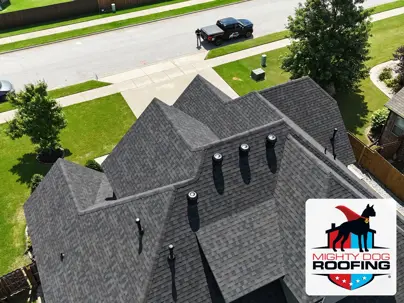
A healthy attic breathes from the bottom up. Cool outside air comes in through intake vents, usually in the soffits under the eaves. As that air warms, it rises and leaves through exhaust vents near the top of the roof, like a ridge vent running along the peak or box vents and turbines higher up the slope.
That steady flow does two jobs. In summer it pulls hot air out so your attic isn't baking your shingles from underneath. In winter it carries out the warm, moist air that rises from your living space, so it doesn't sit in the attic and condense on cold wood.
The key is balance. You want roughly as much intake at the bottom as exhaust at the top. Too little intake, and the exhaust vents struggle to pull air through. Mixing different exhaust types on the same roof, like a ridge vent next to a power fan, can even cause one vent to suck air in through the other and skip the attic entirely.
Why Winter Is Hard on a Poorly Vented Attic
Every home puts moisture into the air. Showers, cooking, laundry, even breathing all add up, and some of that warm, damp air works its way into the attic. If it can't get out, it hits the cold underside of the roof deck and turns into frost or water droplets.
Over a winter, that can lead to:
- Damp or stained roof decking. Plywood or OSB that stays wet can soften, delaminate and eventually need replacing.
- Mold and mildew. You might notice dark spots on the rafters or a musty smell when you open the attic hatch.
- Wet insulation. Damp insulation loses much of its ability to hold heat, which shows up on your energy bill.
- Ice dams. When a warm attic melts snow on the upper roof, the water refreezes at the colder eaves. NWA doesn't get heavy snow every year, but one good ice event is enough to push water back under the shingles.
- Shorter shingle life. Heat and moisture trapped under the roof can age shingles faster, and many manufacturers expect proper ventilation for their warranty to apply.
Signs Your Attic Isn't Venting Well
You don't have to be a roofer to spot most of these. A flashlight and a few minutes in the attic will tell you a lot. Please be careful up there and only step on the joists.
- Frost or water droplets on the underside of the roof deck or on nail tips on a cold morning
- Dark staining or spotty mold on the decking or rafters
- Insulation that looks matted, damp or pushed into the soffit area so air can't get through
- Icicles or ice buildup along the gutters after a cold snap
- Rooms upstairs that are hard to keep comfortable, or a sharp jump in heating costs
- Peeling paint on the soffits or fascia
If you see any of these, it doesn't always mean a big repair. Sometimes it's as simple as blocked soffit vents or a bathroom fan that's venting into the attic instead of outside.
What We Check During an Inspection
When we look at ventilation, we start outside with the intake and exhaust vents and how they are laid out. Then we head into the attic to check airflow paths, insulation, the condition of the decking and where bath and kitchen fans actually vent. We'll let you know what's working, what isn't and the most affordable way to fix it.
If you are planning a roof replacement, this is the best time to get ventilation right. Adding or correcting a ridge vent, opening up soffit intake and removing mismatched vents is far easier while the old shingles are off. On every replacement, we look at ventilation as part of the roof system, not an afterthought.
Simple Things You Can Do Now
- Make sure bathroom and kitchen exhaust fans vent all the way outside, not into the attic.
- Keep insulation from covering the soffit vents. Baffles at the eaves help hold it back.
- Seal gaps around attic hatches, light fixtures and plumbing that let warm air leak up.
- Keep gutters clear so melting snow and ice can drain off the roof.
Get a Free Ventilation Check in Rogers
A roof that breathes right lasts longer, keeps your attic dry and helps your home stay comfortable all winter. If you're not sure how your attic is holding up, we're happy to take a look. Mighty Dog Roofing of Bentonville serves homeowners in Rogers, Bentonville, Bella Vista, Centerton, Springdale and across NWA. Call us at 479-315-0543 to schedule a free inspection.
Your Roof Needs to Breathe, Even in WinterA quick attic ventilation guide for Rogers and NWA homeowners.