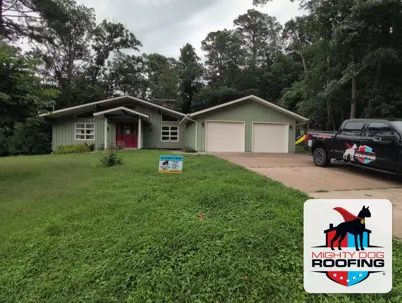
Ask anyone why they love living in Bella Vista and the trees usually come up fast. Tall oaks, hickories and pines shade most of the neighborhoods around the lakes and golf courses, and they make the place feel like home. They are also the biggest thing working against your roof once winter shows up.
Our crew at Mighty Dog Roofing of Bentonville spends a lot of time on wooded lots in Bella Vista, and we see the same handful of problems every winter. Here is what to look for now, what to do after an ice storm, and when it makes sense to call us.
Why Wooded Lots Are Harder on a Roof
Trees affect your roof all year, but winter stacks the deck. Shaded roofs stay damp longer, so moss and algae get a head start. Leaves and pine needles pile up in valleys and behind chimneys, where they hold water against the shingles. And when NWA gets freezing rain, every branch over your house picks up extra weight it was never built to carry.
Anyone who lived here through the 2009 ice storm remembers what that weight can do. You don't need a storm that big to have a problem, though. One heavy limb coming down on the wrong part of a roof can crack decking, tear shingles loose and let water into the attic before you even know it happened.
What to Check Before Winter
You can handle a lot of this from the ground with a good pair of eyes or binoculars. Please leave the climbing to a pro, especially on steep or damp roofs.
- Limbs over the roof. Look for branches hanging directly over the house, especially dead ones or ones with cracks where they meet the trunk. Anything within a few feet of the shingles should come back before ice season.
- Branches touching the shingles. Limbs that brush the roof in the wind wear through the granules and can lift shingle edges over time.
- Valleys and roof-to-wall spots. These are where leaves and needles collect. A clogged valley sends water sideways under the shingles instead of down to the gutter.
- Gutters and downspouts. On a wooded lot they can fill up more than once in a single fall. Gutter guards help a lot here, but they still need an occasional look.
- Moss and dark streaks. Moss holds moisture against the roof and can lift shingles as it grows. Dark streaks are usually algae and are mostly cosmetic, but they tell you that part of the roof stays damp.
- Chimneys and vents. Check that flashing is tight and sealant isn't cracked. Pipe vent boots on older roofs often split from years of sun and should be replaced before a freeze.
If you have a large tree that looks unhealthy or leans toward the house, call a licensed tree service. Trimming is a lot cheaper than a roof repair, and they have the equipment to do it safely.
After an Ice Storm or Heavy Wind
When the ice finally melts, take a slow walk around the house before you do anything else.
- Stay safe first. Keep clear of downed lines and hanging limbs. Don't get on an icy roof for any reason.
- Look for obvious damage. Broken branches on the roof, dented gutters, missing shingles, or shingle pieces in the yard are all signs to get a closer look.
- Check inside. Look at ceilings, especially near exterior walls and under valleys, and take a peek in the attic if you can get up there safely. Water stains or damp insulation mean water is getting in somewhere.
- Take photos. Pictures of the damage, the limb, and anything inside the house will help if you end up filing an insurance claim.
- Get it covered quickly. If a limb broke through or shingles are missing, a temporary tarp can keep more water out until a permanent repair is done.
A Quick Word on Insurance
Damage from a tree falling on your house is often covered by homeowners insurance, but every policy is different. Coverage for removing the tree itself, deductibles and what counts as preventable damage all vary. Call your agent to find out what your policy covers before you assume either way. If you do file a claim, we can inspect the roof and give you clear photos of the damage to share with your insurance company.
When to Call Us
Give us a call if you notice any of these:
- A limb has hit the roof, even if it looks minor from the ground
- Missing, cracked or lifted shingles
- New stains on a ceiling or wet spots in the attic
- Gutters pulling away from the fascia
- Moss spreading across a section of the roof
We offer free roof inspections across Bella Vista, Bentonville, Rogers, Centerton and the rest of NWA. We'll get on the roof, show you photos of what we find and give you a straight answer on whether you need a small repair, a bigger fix, or nothing at all. Most of what we find on wooded lots in the fall is simple and affordable to take care of, and fixing it now beats dealing with a leak in January.
Call our office at 479-315-0543 to schedule your free inspection before the first freeze.