
A roof replacement in Denver covers everything from Victorian-era mansions in Capitol Hill to mid-century ranches in Harvey Park to new construction in Central Park. Denver's 715,000 residents span over 150 years of housing stock across the only consolidated city-county in Colorado. The 2025 Denver Building Code creates requirements unlike any neighboring city, including three wind speed zones that determine your shingle rating based on address. East Denver (115 mph), central Denver (125 mph), and west Denver (140 mph) each demand different products. Denver also allows two layers of asphalt shingles, does not require ice and water shield, and processes permits through its e-permits system. This guide covers every aspect of replacing a roof in the state capital.
Ready for a new roof in Denver, CO?
Call Mighty Dog Roofing of Downtown Denver at (720) 702-1572 for a free estimate.
Visit our Denver service page or contact us online.
Signs Your Denver Roof Needs Replacement
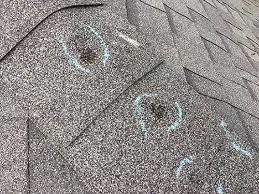
UV radiation at Denver's Mile High elevation degrades roofing roughly 20 percent faster than at sea level. Denver averages over 300 sunny days per year. Standard asphalt shingles last 17 to 22 years. Architectural shingles last 20 to 25 years. Repeated hail exposure along the Front Range shortens these lifespans. The National Weather Service in Boulder tracks storms through the Denver metro. The May 2024 storm caused $1.9 billion in metro-wide damage. The 2017 supercell caused $2.3 billion.
Curling tabs, cracked shingles, exposed fiberglass mat, granule accumulation in gutters, and interior water stains all signal end of life. On Denver's older homes in Capitol Hill, Five Points, Whittier, and Congress Park, look for sagging deck lines that indicate structural deterioration beneath the surface. On 1950s through 1970s homes in Harvey Park, Mar Lee, and Athmar Park, check for multiple layers of shingles that mask underlying problems. Schedule a free roof inspection to assess remaining life and determine your wind zone rating.
Roofing Materials by Denver Wind Zone
| Material | Zone 1 (115 mph) | Zone 2 (125 mph) | Zone 3 (140 mph) |
|---|---|---|---|
| Standard Architectural | $9,000 - $16,000 | $9,500 - $16,500 | $10,000 - $17,500 |
| Class 4 Impact-Resistant | $11,000 - $20,000 | $11,500 - $20,500 | $12,000 - $22,000 |
| Standing Seam Metal | $16,000 - $30,000 | $16,500 - $31,000 | $17,000 - $32,000 |
| Synthetic Composite | $12,000 - $23,000 | $12,500 - $23,500 | $13,000 - $24,000 |
The UL 2218 impact test rates Class 4 at the highest hail resistance. All shingles must comply with ASTM D 7158 at or above your zone's minimum. The Colorado Division of Insurance provides information on 15 to 28 percent premium discounts for Class 4. Products certified by the Cool Roof Rating Council offer tested performance at altitude. Visit our roof replacement page for material options.
Get a free roof replacement estimate with wind zone verification for your Denver home.
Call (720) 702-1572 or visit our Denver service page.
Reach us by phone, email, or through our online contact form.
Tear-Off vs. Overlay: Denver's Two-Layer Decision
Denver allows up to two layers of asphalt shingles. This creates a decision point that cities requiring mandatory tear-off eliminate. Adding a second layer saves $1,500 to $3,000 in tear-off labor and disposal. The tradeoff: overlaying masks deck damage, adds weight to the structure, can void manufacturer warranties, and makes future leak detection harder. When two layers already exist, Denver requires full tear-off to the deck.
We recommend full tear-off regardless of layer count. The deck inspection that tear-off enables reveals moisture damage, delamination, rot, and structural issues that overlaying hides. On Denver's older housing stock (pre-1960s), the original 1x board decking may have gaps exceeding the code maximum of 1/2 inch. Tear-off is the only way to verify and correct these conditions. The long-term performance difference between a clean tear-off installation and an overlay justifies the upfront cost difference on homes you plan to keep.
The Replacement Process in Denver
Wind Zone Verification and Material Selection
We inspect your roof and verify your wind speed zone (115, 125, or 140 mph) by address. We recommend materials rated for your zone with hail resistance. The U.S. Department of Energy recommends verifying insulation and ventilation during every replacement. Our residential roofing page covers full service details.
e-Permits, Tear-Off, and Installation
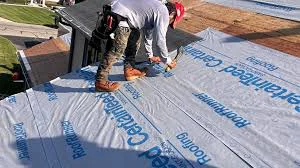
We file the permit through Denver's e-permits system. We strip existing material to the deck. We inspect every section, replace damaged sheathing (addressing gaps exceeding 1/2 inch on older 1x board decking), and install underlayment, drip edge at eaves and rakes, and zone-rated shingles per manufacturer specifications and ASTM D 7158. On pre-1980s homes, we coordinate asbestos inspection per CDPHE requirements when applicable.
Inspection and Documentation
We schedule the city inspection. Denver inspectors verify wind zone compliance, drip edge, underlayment, and shingle installation. You receive permits, inspection results, material warranties, and our workmanship warranty. We handle gutter repair and installation as part of complete projects.
Insurance and Home Value in Denver
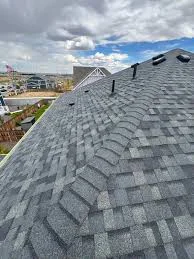
Denver's three wind speed zones affect claim scope. Replacements in Zone 3 (140 mph) require higher-rated products than Zone 1 (115 mph), and claims must reflect the correct zone pricing. Adjusters unfamiliar with Denver's variable zones may underprice Zone 2 and Zone 3 claims. Class 4 shingles reduce premiums 15 to 28 percent regardless of zone. Denver's diverse housing market ranges from $400,000 bungalows to $2,000,000+ historic homes. A new roof with documented city inspections, zone-rated materials, and transferable warranties adds measurable value across every price point. The EPA ENERGY STAR program recommends R-49 insulation for Climate Zone 5.
Denver Neighborhoods We Serve
We handle replacements across all of Denver. Zone 1 (115 mph, east of Federal): Capitol Hill, Cherry Creek, Washington Park, Congress Park, Hilltop, Park Hill, Central Park, Montbello, Green Valley Ranch, Five Points, RiNo, Whittier, Bonnie Brae. Zone 2 (125 mph, Federal to Sheridan): Highland, Sunnyside, Berkeley, Sloan Lake, West Colfax, Barnum, Mar Lee, Ruby Hill, Athmar Park. Zone 3 (140 mph, Sheridan to Kipling): Harvey Park, Bear Valley, Marston. We also serve LoDo, Union Station area, the DU campus area, and every community across the state capital. Visit our Denver service page.
Best Time to Replace a Denver Roof
The ideal replacement window in Denver runs from late March through early November. Late spring (April through May) finishes before peak hail season, though both the 2017 and 2024 storms hit in May. Late summer (August through September) takes advantage of warm conditions after the worst storms. Fall (October through early November) protects your home before winter. Denver's e-permits system processes permits year-round. On older Denver homes, schedule asbestos testing well in advance. CDPHE requires certified inspection on pre-1980s homes when roof removal may disturb asbestos-containing materials. This testing adds lead time that contractors unfamiliar with Denver's requirements overlook.
Asbestos Awareness on Pre-1980s Denver Homes
Denver's housing stock includes tens of thousands of homes built before 1980. These properties may contain asbestos in roofing materials, flashing compounds, or underlayment. The Colorado Department of Public Health and Environment (CDPHE) requires a certified asbestos inspection before work that may disturb these materials. If asbestos is found, licensed removal must occur before the replacement proceeds. This adds cost and time, but it is a legal requirement. Contractors who skip asbestos testing on pre-1980s Denver homes expose homeowners to health risks and legal liability. We coordinate CDPHE-compliant testing as part of every pre-1980s project.
Frequently Asked Questions: Roof Replacement in Denver, CO
How much does replacement cost in Denver?
Standard asphalt: $9,000 to $17,500 depending on zone. Class 4: $11,000 to $22,000. Metal: $16,000 to $32,000. Zone 3 products cost more than Zone 1.
Should I tear off or overlay?
Denver allows two layers. Overlay saves $1,500 to $3,000 upfront but masks deck damage. We recommend full tear-off for long-term performance. Two existing layers require tear-off.
How do I know my wind zone?
East of Federal: 115 mph. Federal to Sheridan: 125 mph. Sheridan to Kipling: 140 mph. We verify your zone by address before specifying materials.
Are Class 4 shingles worth it in Denver?
Yes. Front Range hail corridor. 15-28% insurance discounts. Payback: four to eight years. Class 4 rated for Zone 3 (140 mph) provides the strongest combined protection.
How long does replacement take?
One to four days. Victorian homes with dormers take longer than ranch homes. e-permits processes electronically. Full replacements require a permit.
Protect your Denver home with zone-rated materials built for the state capital's unique code.
Call Mighty Dog Roofing of Downtown Denver at (720) 702-1572
Visit mightydogroofing.com to request your free estimate with wind zone verification.
Contact us by phone, email, or online form.
A roof replacement in Denver requires wind zone verification, zone-rated materials, and a contractor who knows the 2025 Denver Building Code. Contact Mighty Dog Roofing of Downtown Denver today.