
Denver is Colorado's capital city and its only consolidated city-county, with approximately 715,000 residents at the Mile High elevation of 5,280 feet. The city spans from the western neighborhoods bordering Lakewood and Wheat Ridge to the eastern plains communities near Aurora. Denver is home to Union Station, the RiNo Art District, Cherry Creek, Washington Park, Coors Field, Empower Field at Mile High, the Denver Art Museum, and dozens of distinct neighborhoods from Victorian-era Capitol Hill to the master-planned Central Park development. Denver operates under the 2025 Denver Building Code based on the 2024 International Codes with extensive local amendments. The most significant Denver-specific feature for roofing is the city's three wind speed zones: 115 mph east of Federal Boulevard, 125 mph between Federal and Sheridan, and 140 mph west of Sheridan to Kipling. No other city in this series has variable wind zones within its borders. Denver does not require ice and water shield and allows up to two layers of asphalt shingles.
Need roof repair in Denver, CO?
Call Mighty Dog Roofing of Downtown Denver at (720) 702-1572 for a free inspection.
You can also reach us online at mightydogroofing.com
Denver's Three Wind Speed Zones: The Code Feature No Other City Shares
Denver is divided into three wind speed zones that determine what shingle rating your home requires. This is the most distinctive roofing code feature in the entire campaign. All asphalt shingles must be tested and labeled to ASTM D 7158 at or above your zone's minimum. Using shingles rated below your zone fails inspection.
| Zone | Geographic Boundary | Min. Wind Rating | Neighborhoods |
|---|---|---|---|
| Zone 1 | East of Federal Blvd | 115 mph | Capitol Hill, Cherry Creek, Wash Park, Park Hill, Central Park, Montbello, Green Valley Ranch |
| Zone 2 | Federal Blvd to Sheridan Blvd | 125 mph | Highland, Sunnyside, Berkeley, Sloan Lake, West Colfax, Barnum, Mar Lee |
| Zone 3 | Sheridan Blvd to Kipling St | 140 mph | Harvey Park, Bear Valley, Marston, west Denver neighborhoods bordering Lakewood |
The wind rating increases as you move west toward the foothills, reflecting the Chinook and downslope wind patterns that accelerate through the western neighborhoods. A homeowner in Capitol Hill (Zone 1, 115 mph) requires different shingle specifications than a homeowner in Harvey Park (Zone 3, 140 mph). Your contractor must verify your zone before specifying materials. The National Weather Service in Boulder tracks wind events along the Front Range.
Common Roof Repair Problems in Denver
Hail Damage at the Mile High Elevation
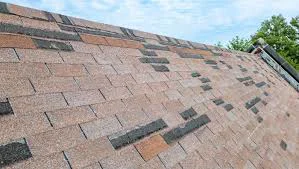
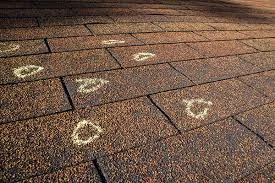
Denver sits at 5,280 feet in the heart of the Front Range hail corridor. Colorado saw nearly 800 reports of hail over one inch in 2023. The May 2024 storm caused $1.9 billion in metro-wide damage with hail striking Denver neighborhoods directly. The 2017 supercell tracked through the northwest metro causing $2.3 billion. Hail dislodges granules, fractures the fiberglass mat, and creates soft spots that develop into leaks. Hail resistance is tested against UL 2218 standards. On Denver homes, hail damage combined with the wrong wind zone rating creates compounding vulnerability.
Wind Damage Across Three Zones
Denver's three wind zones reflect documented wind patterns. Western neighborhoods between Sheridan and Kipling face the strongest Chinook and downslope events at 140 mph design speed. Central neighborhoods between Federal and Sheridan face 125 mph exposure. Eastern neighborhoods face 115 mph. Wind lifts shingle tabs, tears ridge caps, bends flashing, and drives rain under gaps. The U.S. Department of Energy recommends proper ventilation to reduce wind-driven moisture stress.
UV Degradation and Denver's 300+ Sunny Days
Denver averages over 300 sunny days per year at 5,280 feet. UV radiation degrades roofing roughly 20 percent faster than at sea level. Standard asphalt shingles last 17 to 22 years in Denver. Architectural shingles last 20 to 25 years. Products certified by the Cool Roof Rating Council resist UV degradation better than standard materials.
Aging Housing Stock Across Diverse Neighborhoods
Denver's neighborhoods span over 150 years of construction. Victorian-era homes in Capitol Hill and Five Points face different challenges than 1950s ranch homes in Harvey Park or 2000s construction in Central Park. Older homes with 1x decking boards, outdated ventilation, and multiple repair layers require thorough assessment during any repair. Asbestos-containing materials may be present on pre-1980s homes and require certified inspection per Colorado Department of Public Health and Environment requirements.
Spotted damage on your Denver roof? Your wind zone determines your repair specifications.
Call (720) 702-1572 or visit our Denver service page to schedule your free roof inspection.
We also respond to email and online contact forms on our website.
Denver's Roofing Code: The 2025 Denver Building Code
The Denver Community Planning and Development handles all permits through the e-permits system. Denver adopted the 2025 Denver Building Code based on the 2024 International Codes with extensive Denver-specific amendments.
| Requirement | Denver Specification | How It Differs |
|---|---|---|
| Code base | 2025 Denver Building Code (2024 ICC + amendments) | Denver writes its own code amendments |
| Wind speed zones | Three zones: 115, 125, 140 mph | Only city with variable wind zones |
| Ice and water shield | NOT required at eaves/rakes | Matches several neighboring cities |
| Shingle layers | Two layers allowed; tear off at two | More flexible than full-tear-off cities |
| Permit threshold | >10% of roof area or >2 squares (under 25K sf) | Percentage-based threshold |
| Mid-roof inspection | Tile at 30%; others if pre-inspection flags | Conditional mid-roof |
| Drip edge | Required at eaves and rakes | Standard requirement |
| Green Buildings Ordinance | Applies to buildings 25K+ sf | Denver-specific sustainability |
| Asbestos | CDPHE inspection may be required | Pre-1980s homes particularly |
| Permit system | e-permits (online) | Digital-first process |
Denver's consolidated city-county structure means there is no separate county jurisdiction. City and county codes are the same. The three wind speed zones, conditional mid-roof inspection, two-layer allowance, and percentage-based permit threshold create a code environment distinct from every other city in this series.
What to Expect During a Roof Repair in Denver
Step 1: Free Inspection and Wind Zone Verification
We perform a comprehensive roof inspection. We verify your wind speed zone (115, 125, or 140 mph) based on your address relative to Federal Boulevard and Sheridan Boulevard. We photograph all findings and provide a written report for insurance claims.
Step 2: Estimate with Denver Code Specifications
We deliver a detailed estimate specifying shingles rated for your wind zone, drip edge, underlayment, and material options. We identify whether your repair exceeds the 10 percent/two-square permit threshold. Visit our residential roofing page for service details.
Step 3: Permit (if Required), Repair, and Inspection
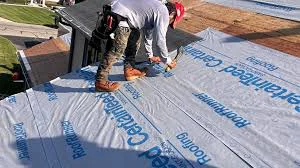
We file the permit through Denver's e-permits system when required. We complete the repair using zone-rated shingles per ASTM D 7158. We schedule the inspection. You receive all documentation. We handle gutter repair and installation and full replacements when repairs are extensive.
Insurance Claims for Denver Roof Repair
The Colorado Division of Insurance provides resources for homeowners. Denver's three wind speed zones affect claim scope. Repairs in Zone 3 (140 mph, west Denver) require higher-rated shingles than Zone 1 (115 mph, east Denver), and claims must reflect the correct zone pricing. The EPA ENERGY STAR program recommends R-49 insulation for Denver's Climate Zone 5. Review your policy before storm season. Class 4 shingles rated for your wind zone reduce premiums 15 to 28 percent.
Seasonal Maintenance for Denver Roofs
Spring (March through April)
Schedule a professional inspection before hail season. Denver's 300+ sunny days mean UV damage compounds year-round. Document your roof's condition for insurance baseline.
Summer (May through September)
Peak hail season runs April through July. The May 2024 storm hit Denver directly. After every storm, photograph indicators from the ground. Check gutters and downspouts after heavy rain.
Fall (October through November)
Clean gutters before winter. Check flashing sealant around pipes, vents, and skylights. Verify attic insulation and ventilation. Western Denver neighborhoods (Zone 3) face the strongest fall Chinook events.
Winter (December through February)
Watch for ice buildup at eaves, especially on north-facing slopes. Denver does not require ice shield, so adequate insulation and ventilation are the primary ice dam defenses. Chinook events create rapid freeze-thaw cycles.
Denver Neighborhoods We Serve
We provide roof repair across all of Denver's diverse neighborhoods: Capitol Hill, Cherry Creek, Washington Park, Congress Park, Hilltop, Park Hill, Central Park, Montbello, Green Valley Ranch (Zone 1); Highland, Sunnyside, Berkeley, Sloan Lake, West Colfax, Barnum, Mar Lee, Five Points, RiNo (Zone 2); Harvey Park, Bear Valley, Marston, and all western neighborhoods (Zone 3). We also serve LoDo, Union Station area, the DU campus area, Ruby Hill, Athmar Park, and every community from the eastern plains to the western foothills border. Visit our Denver service page for details.
Frequently Asked Questions: Roof Repair in Denver, CO
How much does roof repair cost in Denver?
Minor repairs: $400 to $1,800. Larger repairs: $1,800 to $6,500. Three wind zones affect shingle specifications and pricing. Permits required above 10%/2-square threshold.
What are Denver's three wind speed zones?
East of Federal: 115 mph. Federal to Sheridan: 125 mph. Sheridan to Kipling: 140 mph. Shingles must be ASTM D 7158 rated for your zone.
Does Denver require ice and water shield?
No. Not required at eaves or rakes. Optional ice protection recommended for north-facing slopes and shaded areas.
What codes does Denver follow?
2025 Denver Building Code (2024 ICC + Denver amendments). Three wind zones. Two shingle layers allowed. e-permits system. Conditional mid-roof inspection.
How many shingle layers does Denver allow?
Two layers. Must tear off to deck at two existing layers. We recommend full tear-off for best long-term performance regardless of layer count.
Your Denver home sits in one of three wind speed zones. The right shingle rating for your zone protects your investment.
Call Mighty Dog Roofing of Downtown Denver at (720) 702-1572
Visit us at mightydogroofing.com
We are ready to help by phone, email, or through our online contact form.
Denver's three wind speed zones, 715,000 residents, and the state capital's own building code make roof repair here unlike any other city in this series. Contact Mighty Dog Roofing of Downtown Denver today for your free roof inspection with wind zone verification.