
Westminster's explosive 1980s growth created thousands of homes now 40+ years old. These homes sit on the US-36 hail corridor between Denver and Boulder with 3,000+ acres of open space amplifying wind exposure. When you are already replacing a 1980s roof, adding Class 4 shingles, modern ventilation, R-49 insulation, and upgraded gutters transforms a dated roof system into a hail-resistant, energy-efficient asset. The cost difference between a standard replacement and a full upgrade is small compared to the insurance savings and protection gained on the Denver-Boulder corridor.
.jpg.webp)
Thinking about upgrading your Westminster roof?
Call Mighty Dog Roofing of Downtown Denver at (720) 702-1572 for a free consultation.
Visit our service page or reach out online.
Why Westminster's 1980s Homes Need Upgrades Now
The National Weather Service in Boulder tracks storms through the US-36 corridor. Colorado saw nearly 800 reports of hail over one inch in 2023. The May 2024 storm caused $1.9 billion in metro-wide damage. Westminster's 3,000+ acres of open space near Standley Lake, Big Dry Creek, and Westminster Hills create wind corridors that amplify storm impacts.
Westminster's 1980s growth boom was one of the fastest in the country. The city grew so rapidly that officials imposed a controversial housing moratorium to manage expansion. The result is a concentrated band of homes built within a short window, all now aging at the same rate. These homes share the same vulnerabilities: 3-tab or early architectural shingles rated for wind speeds below current standards, box vents that create dead zones in the attic, R-19 insulation that falls 30 R-value points below current recommendations, and 5-inch gutters that overflow during intense storms. When a storm hits Westminster, thousands of these homes sustain similar damage at the same time, overwhelming contractors and creating long wait times. Homeowners who upgrade before the next major storm avoid the post-storm rush and get priority scheduling.
1980s Home vs. Full Upgrade in Westminster
| Component | 1980s Westminster Home | Full Upgrade |
|---|---|---|
| Shingles | Aging 3-tab or early architectural | Class 4 impact-resistant |
| Ventilation | Box vents or gable vents (1980s code) | Continuous ridge + soffit with baffles |
| Insulation | R-19 or less | R-49 (ENERGY STAR) |
| Underlayment | 15-lb felt (deteriorated) | Synthetic underlayment |
| Gutters | Original 5-inch or undersized | 6-inch with guards |
| Deck condition | 40+ years of moisture cycling | Inspected and replaced as needed |
| Insurance impact | Standard (high) rate | 15-28% premium reduction |
Class 4 for the US-36 Hail Corridor
The UL 2218 impact test rates Class 4 at the highest hail resistance. The Colorado Division of Insurance provides information on 15 to 28 percent premium discounts. On Westminster's $100,272 median household income, the investment pays back in four to seven years. Visit our roof replacement page for material options.
Ventilation Upgrades for 1980s Homes
1980s Westminster homes used box vents or gable vents meeting 1980s minimum code. These systems do not create adequate balanced airflow by modern standards. Box vents provide exhaust only at discrete points, leaving large dead zones in the attic where heat builds in summer and moisture collects in winter. Gable vents rely on cross-breeze that rarely exists when the wind is from the north or south. Upgrading to continuous ridge vent with soffit intake and rafter baffles costs $500 to $1,500. This creates balanced airflow across the entire attic, reducing peak summer temperatures by 20 to 40 degrees and eliminating the ice dam conditions that form when warm attic air melts snow on the roof surface.
The U.S. Department of Energy recommends ventilation improvements paired with insulation. Products certified by the Cool Roof Rating Council complement the upgrade. Westminster's open terrain creates wider daily temperature swings than more sheltered cities. Proper ventilation extends shingle life three to five years by reducing the thermal cycling that expands and contracts materials every day from spring through fall.
For 1980s homes, the ventilation upgrade during a replacement adds minimal incremental cost because the roof is already stripped to the deck. Installing baffles at the soffits and cutting a continuous ridge slot takes a fraction of the time it would as a standalone project. This is the single most cost-effective time to upgrade ventilation on a Westminster home.
.jpg.webp)
Want to know which upgrades make sense for your Westminster home?
Call (720) 702-1572 or visit our service page for a free assessment.
We are available by phone, email, and through our online contact form.
R-49 Insulation for Westminster's Climate Zone 5
The EPA ENERGY STAR program recommends R-49 for Climate Zone 5. Many 1980s Westminster homes have R-19 or less. Upgrading costs $1,500 to $3,000 and saves $200 to $500 per year. Proper insulation works with ventilation to stabilize attic temperatures, prevent ice dams in winter, and reduce cooling loads in summer. Westminster's open terrain creates wider temperature swings than cities shielded by elevation changes or dense urban development.
Gutter Upgrades for Open Space Wind Corridors
Westminster's 3,000+ acres of open space create wind corridors that drive heavy storm runoff. Homes near Standley Lake, Big Dry Creek, and Westminster Hills face the most intense drainage during severe events. Original 5-inch gutters from 1980s construction often cannot handle the volume. Six-inch gutters with guards prevent overflow, protect foundations, and eliminate debris accumulation. Westminster's preserved open spaces also mean more organic debris (leaves, grass clippings, seeds) landing on roofs and in gutters. Nonclogging gutter guards paired with larger downspouts handle both volume and debris. See our gutter repair and installation page. Schedule a free inspection to assess your needs.
Open Space Wind Corridors: The Upgrade Most Westminster Homeowners Miss
Westminster is proud of its 3,000+ acres of preserved open space. These areas add property value, recreation, and quality of life. They also create wind corridors. When severe thunderstorms push through the US-36 corridor, open spaces act as funnels, accelerating wind across adjacent homes. Properties bordering open space face 10 to 20 percent higher wind loads than properties in dense residential blocks. Enhanced wind-rated shingles (130+ mph rating), 6-nail fastening patterns, and reinforced drip edge protect these exposed homes. The cost adds $300 to $800 to a standard replacement and prevents the lifted tabs and torn ridge caps that open-space-adjacent homes experience repeatedly.
ROI Timeline for Westminster Upgrades
Class 4 Shingles
$2,000 to $4,000 more than standard architectural. Colorado insurers offer 15 to 28 percent premium discounts for Class 4 installations. On a Westminster home with a $2,600 annual premium and a 20 percent discount, you save $520 per year. Payback takes four to seven years. The shingles then continue saving money for the remaining 20+ years of their lifespan. Over the full life of a Class 4 roof, cumulative insurance savings typically exceed $10,000.
Ventilation
$500 to $1,500. Extends shingle life three to five years by reducing thermal stress. At $10,000 to $17,000 per replacement, extending life by even three years represents $1,000 to $1,700 per year of value. Eliminates ice dam repairs averaging $1,500 to $4,000 per event. Reduces summer cooling costs by lowering peak attic temperatures 20 to 40 degrees.
R-49 Insulation
$1,500 to $3,000. Saves $200 to $500 per year on heating and cooling. Payback takes three to seven years. Improves comfort immediately. Reduces the temperature differential that drives ice dam formation. Supports the ventilation upgrade by maintaining consistent attic conditions.
6-Inch Gutters with Guards
$1,200 to $3,000 for a typical Westminster home. Prevents foundation damage costing $5,000 to $15,000 per event. Eliminates seasonal gutter cleaning ($150 to $300 per visit, two to three times per year). Handles the storm volume that Westminster's US-36 corridor and open space terrain produce.
Westminster Neighborhoods Where Upgrades Deliver the Most Value
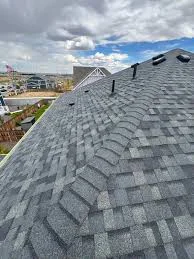
Standley Lake area homes face open-space wind exposure and benefit from enhanced wind-rated shingles. The Big Dry Creek Trail corridor benefits from gutter and drainage upgrades. Westminster Hills and Hyland Hills benefit from ventilation and insulation upgrades on 1980s stock. Downtown Westminster properties near the redevelopment benefit from curb appeal and resale value. The US-36 corridor neighborhoods benefit most from Class 4 for direct hail exposure. Properties near Orchard Town Center benefit from the complete upgrade package.
Frequently Asked Questions: Roof Upgrades in Westminster, CO
Are Class 4 shingles worth it in Westminster?
Yes. US-36 corridor. 3,000+ acres of open space amplify wind. Insurance discounts of 15 to 28 percent. Payback: four to seven years.
Why upgrade a 1980s home?
40+ year old materials, minimum-code ventilation, R-19 insulation. These systems were not built for the hail exposure Westminster faces today.
How does open space affect my roof?
3,000+ acres create wind corridors. Standley Lake, Big Dry Creek, and Westminster Hills amplify storm impacts on adjacent homes.
What insulation level should my attic have?
R-49 per EPA ENERGY STAR. Many 1980s homes have R-19 or less. Saves $200 to $500/year.
What is the ROI timeline?
Class 4: four to seven years. Ventilation: extends life three to five years. Insulation: $200 to $500/year. Combined: three to six years.
Upgrade your Westminster roof for the US-36 hail corridor. Your 1980s home deserves 2020s protection.
Call Mighty Dog Roofing of Downtown Denver at (720) 702-1572
Visit mightydogroofing.com for more information.
Contact us by phone, email, or through our online form.
Westminster's 1980s housing stock on the US-36 corridor needs upgrades now. Contact Mighty Dog Roofing of Downtown Denver today.