
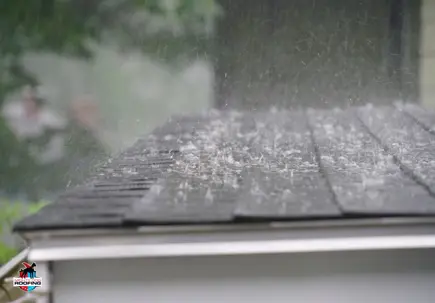
February marks the tail end of the cold season — yet for your rooftop, the harm has already accumulated. Most Chester County homeowners neglect inspecting their covering until moisture appears inside. At that point, a minor issue has transformed into a costly repair. At Mighty Dog Roofing, we help you get ahead of it before March delivers the first heavy spring downpours.
Why Late February Is the Best Time to Check Your Roof
Winter roof damage Pennsylvania residents encounter accumulates silently across several months. Ice, snow, and sub-zero temperatures place stress on roofing materials in ways that stay hidden until spring precipitation arrives. When the thaw commences, moisture will exploit every vulnerable point that the cold season produced. Therefore, identifying problems now translates to more affordable, quicker solutions before minor concerns escalate.
Key Reasons to Inspect Now:
- Spring precipitation will penetrate every crack, gap, and lifted shingle from seasonal stress
- Contractor availability remains favorable before the spring surge overwhelms schedules
- Early discovery prevents expensive emergency interventions during peak demand
- Material pricing frequently increases as requests multiply in late spring
Additionally, a roof check before spring provides time to allocate funds for any required work. Taking action now places you in command rather than scrambling when March storms hit. Mighty Dog Roofing recommends that you schedule a roof inspection in late February to secure the best availability.
Look for Missing or Lifted Shingles
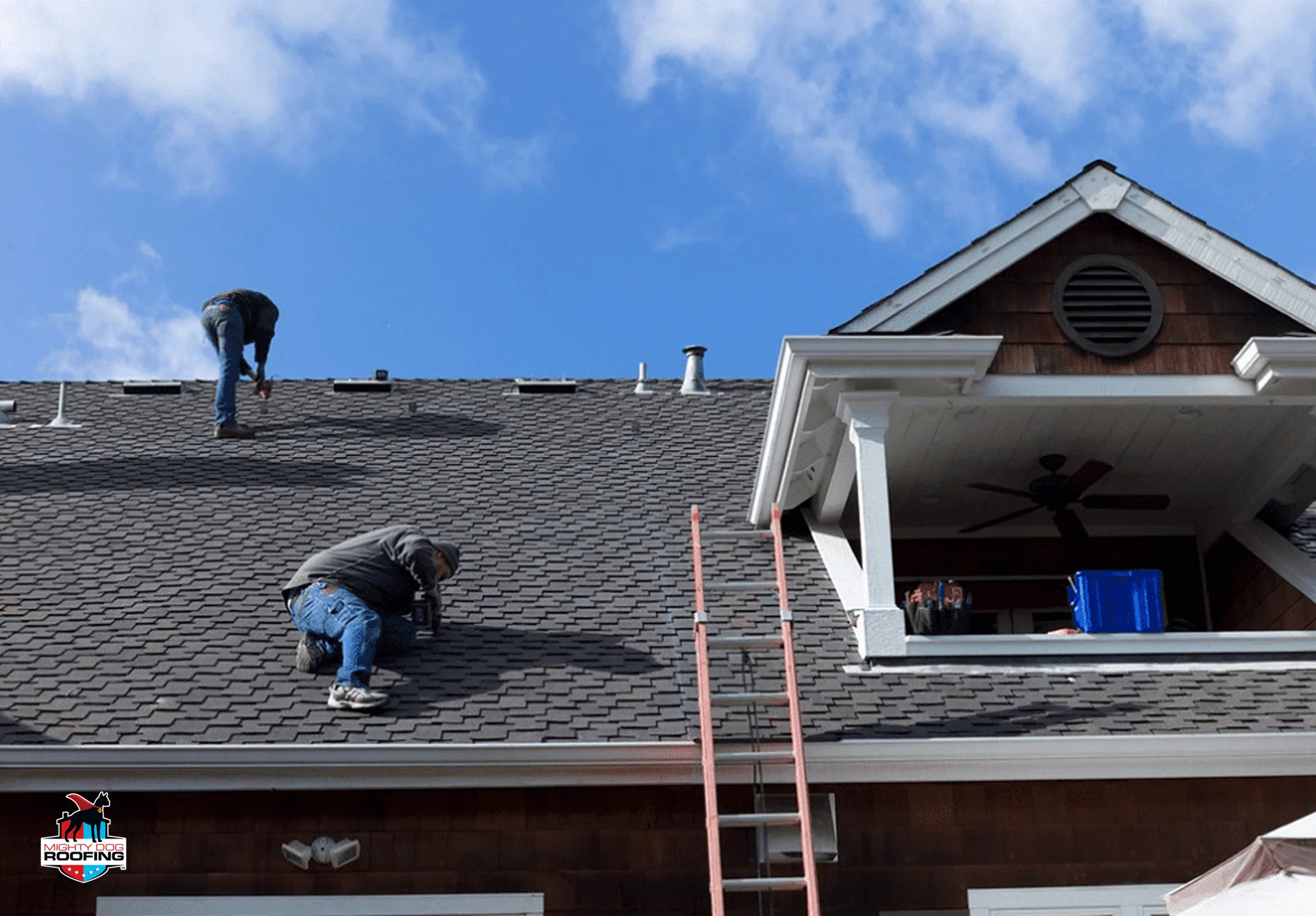
Continuous freezing and thawing weakens shingle adhesive throughout the cold months. Each temperature swing permits moisture to seep beneath the surface, then expand upon freezing again. Meanwhile, gusty storms lift edges and compromise the seal that keeps shingles flat. Watch for curling, cupping, and bare patches where granules have eroded away.
Grab binoculars and examine from the ground on a bright day. Concentrate on the ridge line, valleys, and eaves where deterioration appears most frequently. Search for color variations, lifted edges, or gaps in the shingle arrangement. If you notice obvious issues or anything questionable, contact a local roofing contractor for a thorough professional evaluation.
Check Your Gutters for Damage and Separation
Signs of Ice Damage on Gutters
Ice accumulation generates tremendous weight that gutters weren't engineered to support. Search for sagging sections and visible separation from the fascia board. Examine for split seams and rust patches that emerged under seasonal stress. Additionally, bent or absent hangers suggest the hardware has failed and requires replacement before spring storms arrive.
What to Look for Without a Ladder
You can evaluate gutter condition from ground level during and following a rainstorm. Observe how moisture flows through the system and document any overflow locations. Staining on siding directly beneath gutters indicates persistent overflow issues that have been happening undetected.
Ground-Level Warning Signs:
- Moisture cascading over gutter edges instead of flowing toward downspouts
- Vertical staining or algae growth on siding beneath gutter sections
- Pooling moisture near the foundation following moderate rainfall
- Visible gaps between gutter segments when observed from below
Compromised gutters intensify spring precipitation problems because moisture dumps directly against your foundation and fascia. Consequently, what begins as a gutter concern rapidly becomes a covering, siding, and foundation dilemma.
Inspect Your Attic for Moisture Signs
What the Attic Reveals That the Roof Surface Hides
Your attic exposes the truth about the condition overhead. Search for frost accumulation and moisture stains on rafters and decking — both signal moisture penetration. Daylight visible through the decking represents an immediate warning sign demanding urgent attention. Furthermore, compressed or saturated insulation indicates ongoing leaks that have been absorbing moisture for weeks or months.
How to Do a Quick Attic Check Safely
Bring a flashlight and wear a dust mask before entering your attic space. Concentrate on areas beneath valleys, around penetrations, and along the edges. Fresh stains appear darker than aged ones, and active leaks may display dampness or dripping. However, if you observe structural sagging or extensive deterioration, stop immediately and contact certified roofing professionals instead.
Look for Water Stains on Ceilings and Walls
Where Roof Leaks First Show Up Inside the Home
Leaks typically manifest on ceilings below the attic floor and along exterior walls. Stains from cold months often go unnoticed because they develop gradually in seldom-observed areas. The distinction between an aged stain and an active one matters considerably — aged stains have defined boundaries while active leaks display expanding perimeters and dampness.
What to Do If You Find a Stain
Document everything with photographs before touching anything, as this evidence assists during insurance claims and contractor evaluations. Position buckets or plastic sheeting for temporary interior protection if moisture persists. For spreading stains or visible dripping, arrange for an urgent inspection. Otherwise, schedule a routine appointment with a residential roofing company near you.
Clear Debris from Roof Valleys and Gutters
Why Valleys Are the Highest-Risk Zones on Any Roof
Valleys channel all precipitation from two converging planes into a single pathway. This concentrated flow renders valleys susceptible to deterioration from compacted debris that traps moisture against shingles and underlayment. Consequently, blockage here triggers leaks faster than anywhere else because precipitation has no alternative route.
Safe Ways to Check and Clear Without Going Up
From a ladder positioned safely at eave level, you can often observe and reach debris accumulated in lower valley sections. However, avoid overextending or working on steep sections. For significant accumulation or elevated valleys, arrange for professional debris removal. In Chester County, this maintenance should happen at minimum twice annually — following leaf fall and after the cold season concludes.
When to Call a Professional Instead of DIYing
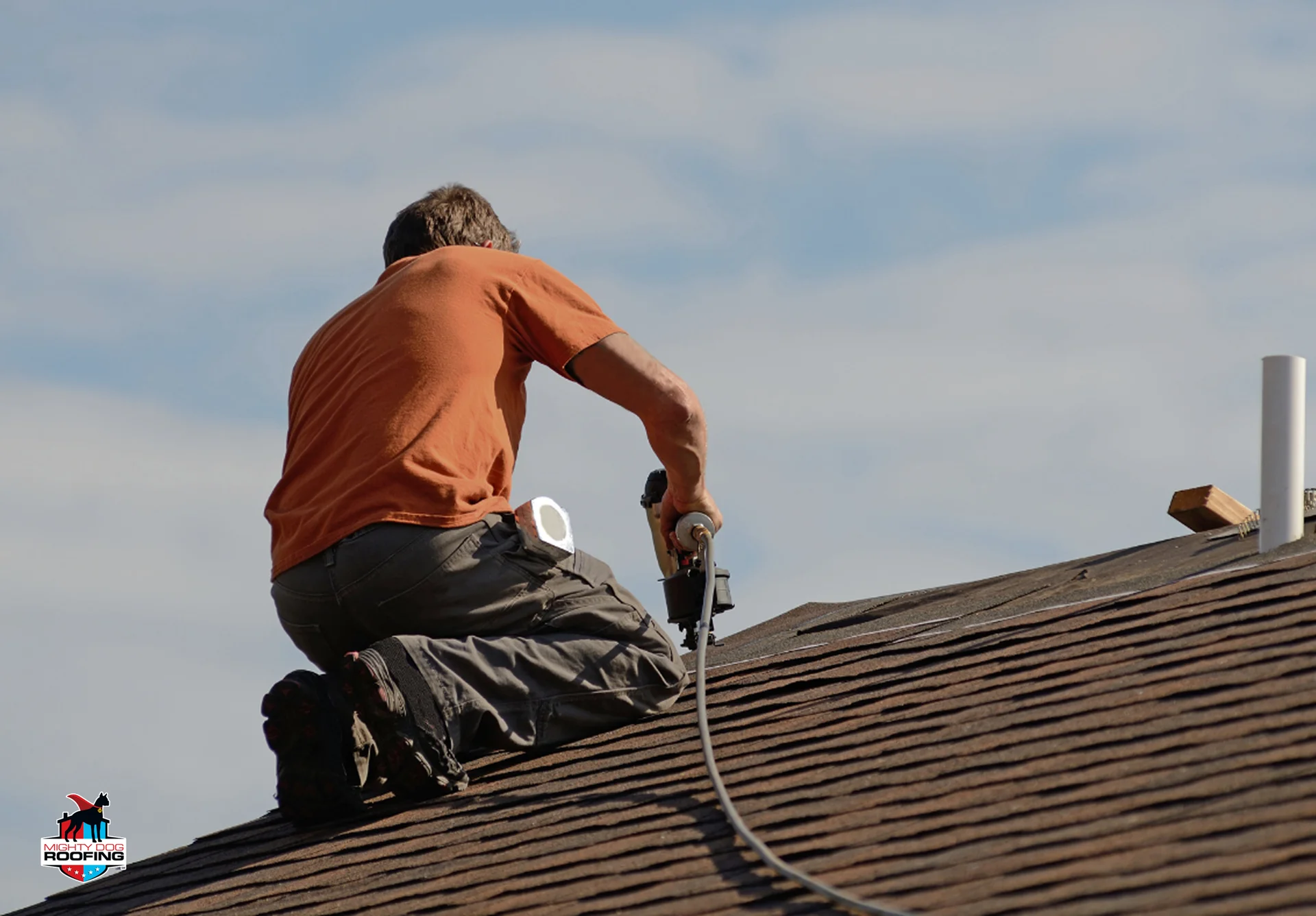
Professional inspectors identify problems invisible to untrained eyes. Flashing failures around chimneys, vents, and skylights frequently escape detection from ground level. Hidden decking rot beneath surface shingles demands close examination to uncover. Additionally, ventilation problems that generate moisture accumulation require expertise to diagnose properly. A thorough roof inspection checklist addresses all these areas systematically.
DIY vs Professional Inspection Comparison:
Inspection Area | DIY Capability | Professional Capability |
Surface shingle deterioration | Partial (from ground) | Complete (on-structure) |
Flashing condition | Limited | Thorough |
Decking integrity | Not possible | Full assessment |
Ventilation function | Not possible | Measured analysis |
Thermal anomalies | Not possible | Infrared imaging |
Post-season inspections catch deterioration that summer evaluations miss because cold-weather stress creates unique failure patterns. Mighty Dog Roofing uses thermal imaging and close-up inspection tools to uncover these hidden issues before they cause interior deterioration.
What Mighty Dog Roofing Covers During an Inspection
Our comprehensive spring roof inspection Chester County homeowners depend on includes a 25-point evaluation covering structure, surface, and gutters. You receive a documented report with prioritized findings so you understand precisely what demands attention now versus later. Schedule your inspection before the spring surge begins — contact Mighty Dog Roofing today to reserve your appointment.
Don't Wait for the First Leak
Spring precipitation is approaching, and the question is whether your home is prepared for it. Roof damage after winter frequently conceals itself until moisture penetrates inside. A quick evaluation now — or a call to a roofing contractor near you — could preserve thousands in Chester County roof repair expenses before the season transitions. Don't delay until the first leak reveals that the cold months exacted their toll.