
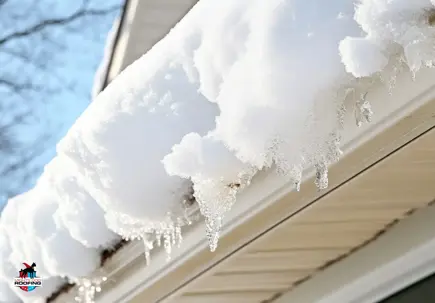
That thick ridge of frozen buildup sitting along your roofline might appear to be a normal part of winter. However, something harmful is happening behind it. Water backs up, pushes under your shingles, and pulls your gutters apart—one freeze-thaw cycle at a time. February marks peak season for these formations in Chester County, and the team at Mighty Dog Roofing wants you to understand what's actually going on.
What Is an Ice Dam — and Why Does It Form?
The Simple Science Behind Ice Dams
The process originates in your attic. Heat escaping through inadequate insulation warms the surface above and causes snow to melt. This meltwater then travels down toward the eaves, where temperatures remain below freezing. Once it reaches that cold edge, the water solidifies again. With every freeze-thaw cycle, the ridge expands and becomes increasingly destructive.
Why Chester County Homes Are Especially Prone
February ice dams Pennsylvania homeowners encounter tend to be particularly severe. The region experiences dramatic temperature fluctuations during this month, often climbing above freezing during daylight hours and plunging back down overnight. Older homes throughout Chester County frequently lack sufficient attic insulation, which creates optimal conditions for formation.
Factors That Elevate Your Risk:
- Residences constructed before 1980 with original insulation
- Rooftops with complex valleys and multiple slope changes
- North-facing sections that receive minimal direct sunlight
- Properties surrounded by mature trees that create shade
The longer winter persists, the more these issues compound. Each storm deposits another layer of snow, and each warm day triggers another melt cycle. By late February, many homeowners discover that ice dam gutter damage Chester County properties suffer has accumulated over weeks of repeated freezing.
What Ice Dams Are Doing to Your Gutters Right Now
The Weight Problem
Frozen gutters carry tremendous weight. A single foot of frozen channel can exceed 20 pounds, and that load multiplies with every passing day. This sustained pressure gradually pulls gutters away from fascia boards. Meanwhile, seams separate and aluminum sections crack under the constant stress. Gutter damage winter conditions cause often goes unnoticed until the thaw finally arrives.
The Water Problem
Downspouts clog first, trapping water behind the growing barrier. That backed-up water has nowhere to travel except under your shingles and behind your siding. When temperatures finally climb and the frozen mass melts, compromised gutters often cannot drain properly. Standing water then accelerates corrosion and establishes conditions for the following winter's problems.
The Hidden Damage Behind the Ice
What's Happening at the Roof Edge
Ice dam roof damage extends far beyond what you can observe from the ground. Water wicks under shingles at the eave line through capillary action, saturating the underlayment beneath. Once moisture reaches your decking, rot begins developing without delay.
Signs of Eave Line Problems:
- Shingle granules accumulating in gutters
- Curling or lifting at the first row of shingles
- Dark staining visible on the surface near eaves
- Interior water stains on ceilings near exterior walls
A single winter of severe buildup can shorten your system's lifespan by several years. Mighty Dog Roofing recommends inspecting eave edges as soon as conditions permit safe access. Early detection prevents minor issues from becoming major repairs.
What's Happening Behind the Gutter
Fascia board rot develops completely out of sight. Water seeping behind gutters enters wall cavities and saturates attic insulation. This hidden moisture creates ideal conditions for mold growth. Consequently, the real harm often appears weeks after the thaw—sometimes manifesting as interior staining, sometimes as a musty odor in upstairs rooms. If you notice these warning signs, consulting a residential roofing company near you can help identify the source before damage spreads further.
What You Can (and Shouldn't) Do Right Now
Safe DIY Options
The calcium chloride sock method offers a safe approach to ice dam prevention. Fill a tube sock with calcium chloride and position it perpendicular across the frozen ridge—this creates a channel for meltwater to escape. Rakes allow you to clear snow before buildup forms, though you should only operate them from ground level. Never climb onto a slippery surface yourself.
What to Avoid
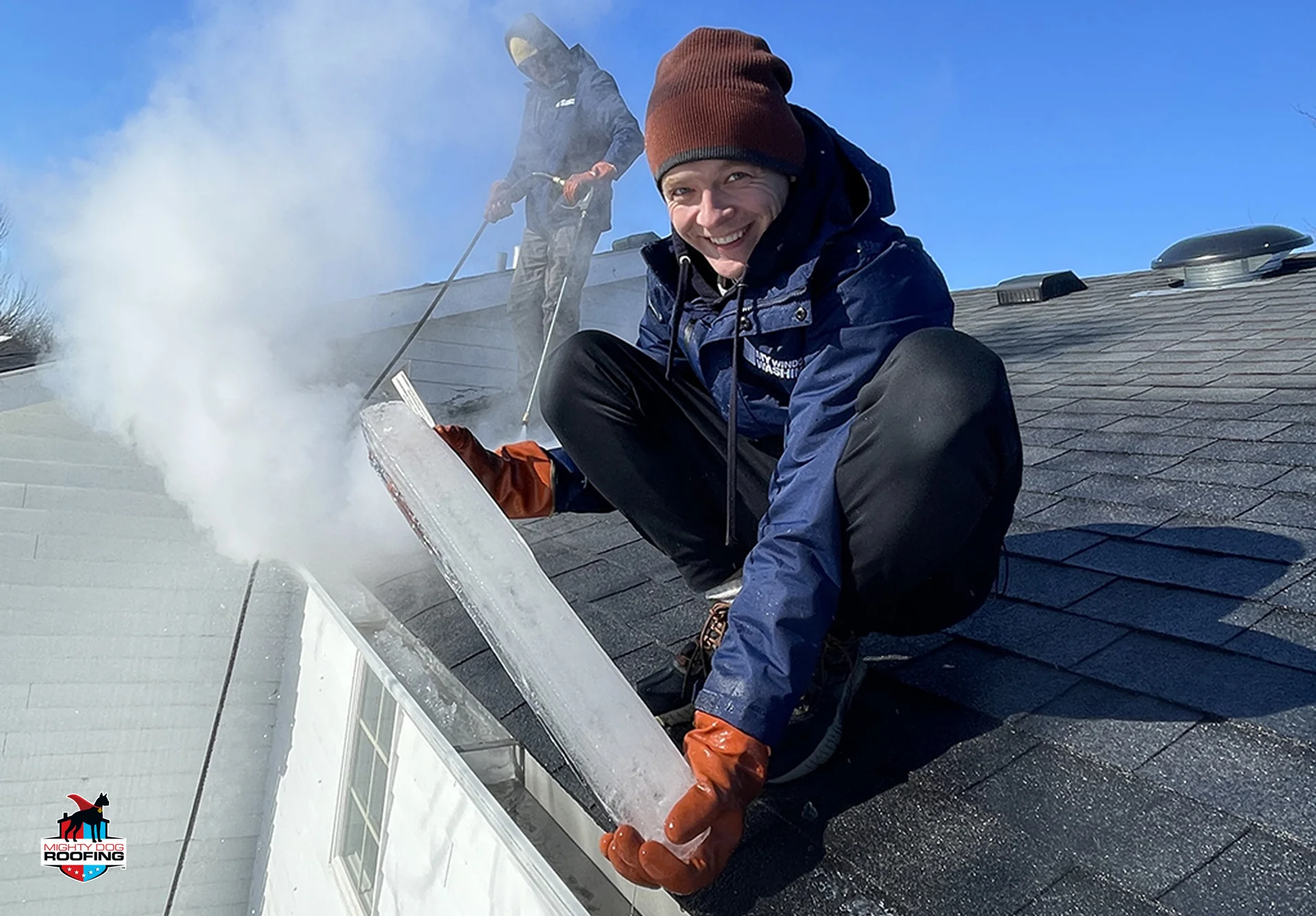
Chipping frozen buildup with a pick or shovel causes more harm than the obstruction itself. Each strike risks cracking shingles or puncturing the membrane beneath. Similarly, pressure washing forces water directly under shingles, virtually guaranteeing leaks. When the problem extends beyond the gutter line or when you notice interior water stains, the situation clearly requires a local roofing contractor.
The Real Fix — Stopping Ice Dams Before Next Winter
Attic Insulation and Ventilation as the Root Cause Fix
Proper ventilation maintains your entire surface uniformly cold, preventing the temperature differential that triggers frozen buildup in the first place. When cold air flows freely through soffit vents and exits through ridge vents, snow stays frozen until it melts naturally during warmer weather. This eliminates the melt-refreeze cycle entirely. An experienced roofing team can evaluate your current ventilation setup and recommend targeted improvements.
Cost Comparison: Prevention vs. Restoration
Item | Typical Cost Range |
Attic insulation upgrade | $1,500 - $3,500 |
Ventilation improvement | $500 - $1,500 |
Emergency removal service | $400 - $700 per visit |
Gutter section restoration | $300 - $800 per section |
Interior water restoration | $1,000 - $5,000+ |
Deck replacement | $2,500 - $6,000+ |
Investing in insulation and ventilation represents a one-time fix that safeguards your home for decades. Mighty Dog Roofing can assess your attic conditions and recommend the most cost-effective improvements for your specific situation.
Gutter Guards — Which Help and Which Don't
Micro-mesh and perforated aluminum guards permit drainage even when frozen material is present around them. However, solid-top guards and foam inserts can trap buildup and exacerbate problems by preventing meltwater from entering the gutter at all. Before adding guards, have a professional inspect your current system. Mighty Dog Roofing can recommend the appropriate guard type based on your pitch and local conditions.
Getting Your Gutters Checked After This Winter
What Post-Winter Gutter Damage Looks Like
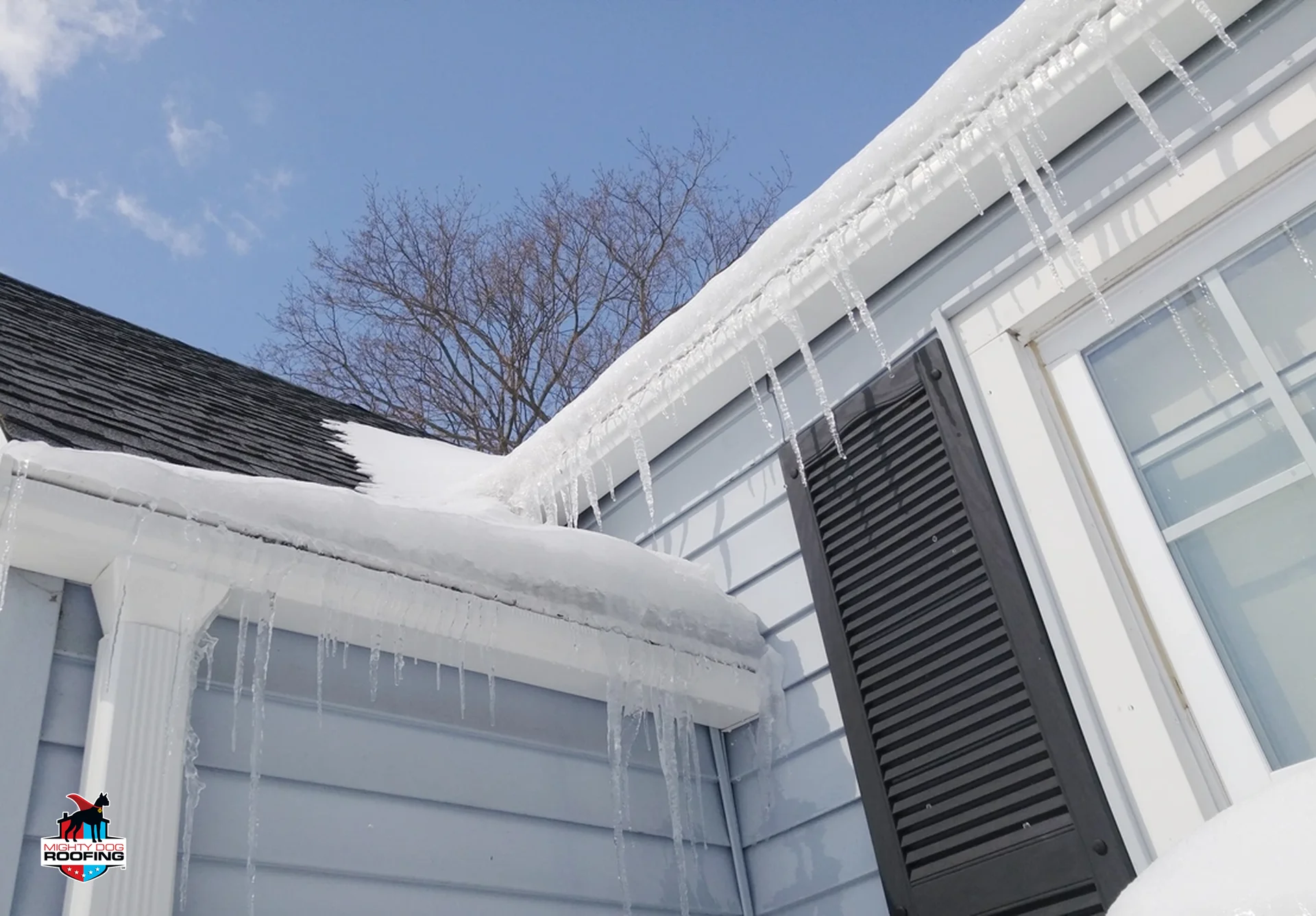
Visible separation, sagging sections, and rust spots indicate obvious problems. However, subtler signs often matter more: gutters that have shifted their pitch no longer direct water toward downspouts properly. Loose hangers permit movement during wind. Fascia staining suggests water has been running behind the gutter rather than through it.
Repair vs Full Replacement
When harm affects only one section, a targeted gutter repair Chester County professionals provide may resolve the problem completely. However, system-wide issues—including multiple failing seams, widespread corrosion, or persistent drainage problems—mean replacement makes more financial sense. Contact Mighty Dog Roofing before spring rains arrive to schedule your inspection and protect your home from winter roof damage.