
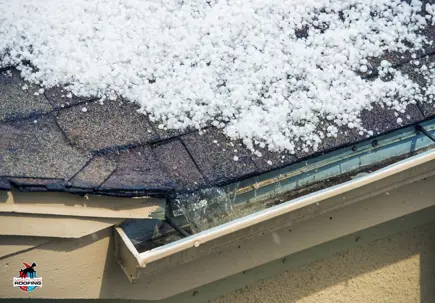
Homeowners typically schedule drainage maintenance during autumn months. Yet the obstructions forming throughout colder periods present significantly higher risks to your property. Accumulated leaves, frozen precipitation, organic matter, and roofing granules solidify into dense masses that neither drain nor shift. Once February and March thaws commence, melting snow encounters these blockages with nowhere to escape. Therefore, winter gutter clogs in Chester County demand prompt attention—and Mighty Dog Roofing stands ready to assist property owners facing this urgent challenge.
What Builds Up in Gutters Over a Pennsylvania Winter
The Layers That Form Over Winter
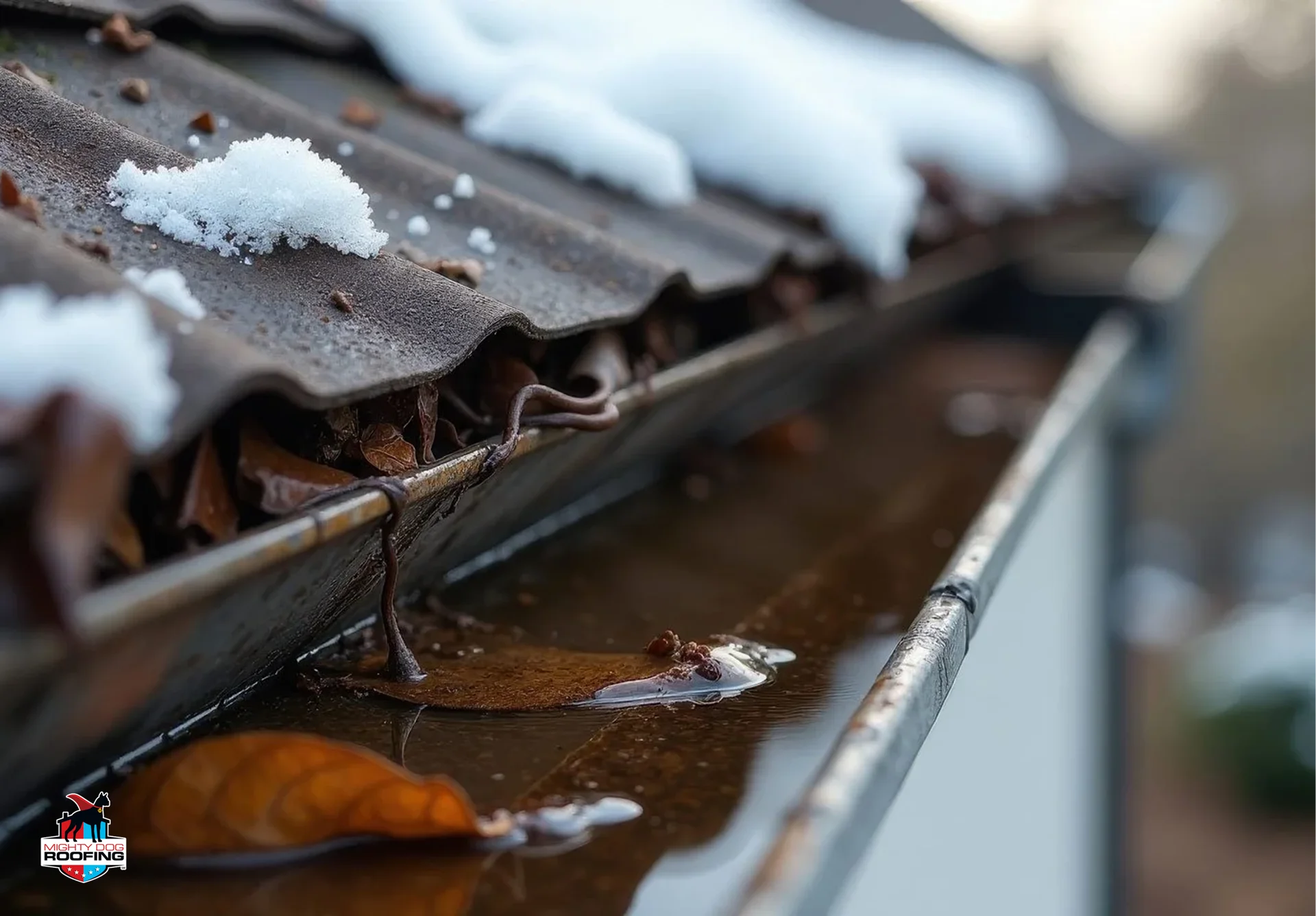
Pennsylvania's frigid season creates multiple problematic accumulation layers within drainage systems. Autumn foliage left uncollected transforms into matted, compressed, solidly frozen sheets. Frozen precipitation then encases this organic matter, cementing everything into position. Roofing granules simultaneously migrate downward during each storm event, forming dense sediment deposits beneath the solidified accumulation above.
Why This Is Different From a Regular Fall Clog
Autumn obstructions typically remain pliable and shift when precipitation flows through. Conversely, frozen blockages transform into completely immobile barriers. Furthermore, debris consolidates into concentrated spaces, producing far denser obstructions than autumn buildup generates. Conventional removal techniques frequently prove ineffective because solidified material refuses to budge under cold conditions.
Distinguishing Characteristics of Frozen Versus Autumn Blockages:
- Autumn debris shifts during precipitation flow; frozen material remains stationary
- Consolidated blockages occupy reduced space yet create total obstructions
- Ice fuses debris directly to channel surfaces, complicating extraction
- Ambient temperatures must increase before removal attempts succeed
Consequently, gutter blockage in February in Pennsylvania necessitates specialized techniques accounting for solidified conditions and compressed materials.
Why a February Clog Is More Dangerous Than a Fall One
The Snowmelt Factor
February and March thaw cycles arrive abruptly, delivering substantial volumes within compressed timeframes. Solidified blockages function as barriers, forcing melting precipitation backward toward roofing structures. This backed-up moisture infiltrates beneath shingles along roof perimeters, compromising underlayment layers and eventually penetrating interior spaces. This late winter gutter problem generates destruction far exceeding standard overflow scenarios.
The Ice Dam Connection
Obstructed drainage channels dramatically accelerate ice dam development along roof edges. Consequently, resolving the blockage represents the essential first step when addressing any ice dam scenario. The progression follows predictably: obstruction prevents drainage, backed-up moisture freezes into ridge formations, these ridges compromise roof edges, and interior seepage follows. Interrupting this sequence requires eliminating the primary obstruction.
What a Clogged Late-Winter Gutter Does to Your Home
Foundation and Basement Risk
Overflowing channels deposit moisture directly against foundation walls rather than directing it safely away. Throughout subsequent weeks, this accumulated runoff discovers pathways into basement areas via cracks and permeable concrete surfaces. Foundation moisture remediation costs reach into thousands of dollars, and complications multiply with each freeze-thaw transition. Taking measures to prevent gutter damage in winter safeguards considerably more than just the drainage infrastructure.
Fascia, Siding, and Structural Risk
Accumulated moisture within channels contributes substantial weight that progressively dislodges mounting hardware from fascia surfaces. Concurrently, fascia boards remain saturated across extended periods, accelerating decay invisibly behind the drainage apparatus. Persistent overflow additionally cascades down exterior surfaces, degrading siding materials and framing structures progressively.
Building Elements Facing Elevated Risk:
- Fascia boards deteriorating behind channels where degradation remains concealed
- Mounting hardware separating under accumulated ice and precipitation weight
- Siding surfaces staining and breaking down from sustained moisture contact
- Frame assemblies and trim elements absorbing runoff and failing progressively
Mighty Dog Roofing frequently encounters residences where gutter damage from winter conditions has propagated across numerous structural elements. Timely intervention prevents this cascading deterioration.
The Spring Melt Problem — When It All Comes at Once
How Fast Snowmelt Builds in Chester County
Temperature fluctuations during late February and March throughout Pennsylvania generate accelerated thaw scenarios. Moderate snow accumulation can yield considerable runoff within merely 24 to 48 hours when temperatures surge. As a result, the initial warm spell of the season frequently exposes harm that developed silently across preceding cold months. Frozen obstructions in Chester County escalate into critical situations during precisely these temperature shifts.
What Homeowners Typically See — and What's Causing It
Discoloration on siding surfaces, basement dampness, and oversaturated landscaping adjacent to foundations all indicate drainage system failure. Each manifestation traces directly to overflow that should have been channeled away from the structure. Regrettably, once these indicators emerge, underlying destruction has already transpired. An experienced roofing team can assist in pinpointing the origin and evaluating the complete scope of the situation.
What You Can Safely Do Right Now
Safe Ground-Level Actions
From ground level, you can evaluate visible sagging, examine downspout terminals for ice obstructions, and inspect for overflow discoloration on siding surfaces. Carefully introducing warm liquid into accessible downspouts helps determine whether drainage occurs. Self-assessment proves reasonable for preliminary evaluation, yet ascending ladders on frozen ground or attempting to extract solidified material personally introduces considerable safety hazards.
Why Frozen Clogs Need Care
Attempting to force solidified debris free using pressure or sharp implements causes structural harm—indentations, fractures, and compromised joints result from forceful extraction efforts. Removal becomes considerably safer once temperatures maintain above-freezing levels for multiple consecutive days. When conditions persist in the cold range or the obstruction appears substantial, engaging a professional for gutter repair in Chester County represents the prudent decision.
Do Gutter Guards Prevent This?
Guards That Actually Help
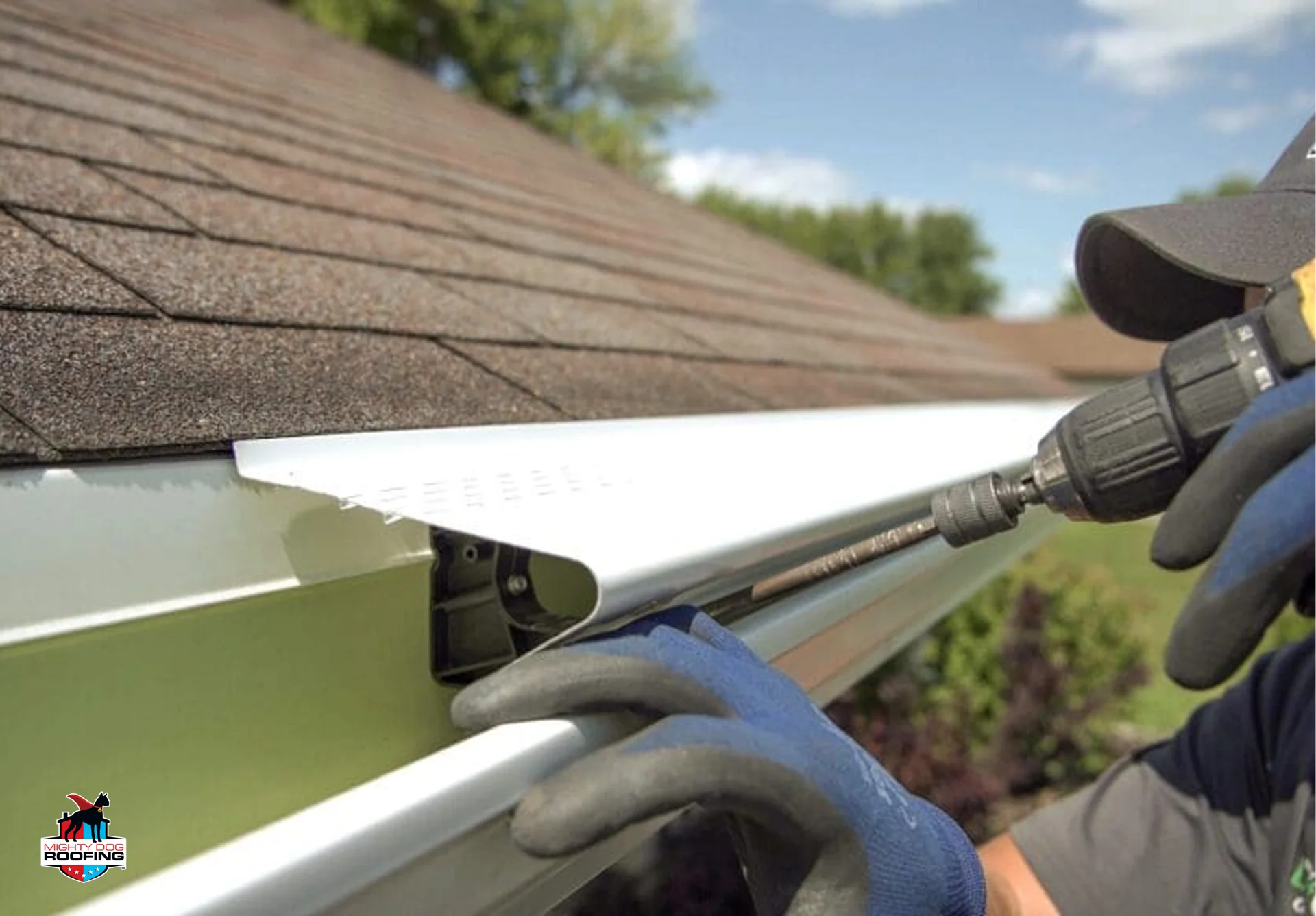
Micro-mesh protective systems permit drainage while preventing leaves, needles, and debris from entering channels. When assessing guard alternatives, prioritize small-aperture mesh construction, durable materials, and configurations validated in cold climates. Professional installation proves particularly consequential for cold-season performance since improper fitting generates openings where ice develops and debris collects.
Guards That Make Things Worse
Flat-surface guards accumulate frozen precipitation on their exterior, generating barriers that obstruct all drainage. Likewise, certain guard configurations trap debris beneath their surfaces, rendering extraction more challenging than scenarios without any protection. Inappropriate guards during cold months actually intensify complications rather than resolving them.
Protective System Comparison for Cold-Season Performance
Guard Configuration | Performance Rating | Debris Management | Recommendation |
Micro-mesh | Superior drainage, resists ice accumulation | Effectively blocks debris | Yes |
Perforated metallic | Moderate drainage, occasional ice complications | Permits fine debris passage | Conditional |
Flat-surface solid | Inadequate drainage, accumulates frozen precipitation | Deflects leaves yet creates barriers | No |
Foam insertions | Very inadequate, absorbs moisture and solidifies | Captures debris internally | No |
Mighty Dog Roofing can assess your existing protective systems or suggest appropriate alternatives based on your roof design and the particular conditions prevalent in Greater Chadds Ford.
Get Your Gutters Cleared Before the Snow Melts
Why Late February Is the Ideal Window
Addressing blockages before peak thaw prevents the most severe consequences—roof destruction, foundation moisture intrusion, and structural degradation. Professional cleaning and assessment encompasses extracting all debris, verifying mounting hardware integrity, examining seam conditions, and confirming downspout functionality. Contact a residential roofing company near you today and position yourself ahead of spring before thaw cycles commence.