
You spotted a discolored patch on your ceiling sometime in December. It doesn't appear to have expanded — at least not visibly. So you decided repairs could wait until warmer weather arrives. At Mighty Dog Roofing, we hear this story often — and here's why that choice may prove far more expensive than anticipated, and why the final weeks of winter represent the riskiest period to ignore such issues.
Why Winter Leaks Feel Less Urgent Than They Are
The It's Not Getting Worse Illusion
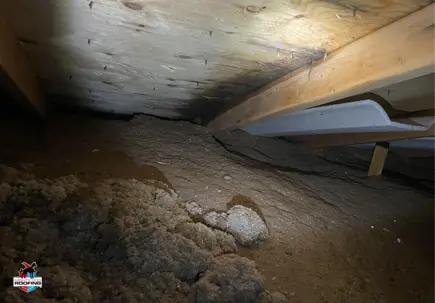
That unchanging mark on your ceiling tells a misleading story. Frigid temperatures suppress visible deterioration signs, yet moisture continues migrating through the assembly overhead. Within wall cavities and decking layers, dampness silently permeates insulation, distorts lumber, and cultivates ideal mold conditions — all while exterior appearances remain static. A roof leak winter Chester County homeowners dismiss today transforms into tomorrow's costly emergency.
How Homeowners Get Caught Off Guard in Spring
Countless property owners assume their leak "survived the cold months" only to encounter devastating failure during March's initial warm rainfall. Structures appearing stable suddenly discharge months of accumulated dampness. At Mighty Dog Roofing, we witness this scenario unfold annually throughout Pennsylvania.
Typical Spring Failure Patterns:
- Ceilings intact through January give way in early March
- Interior flooding spreads across multiple living spaces rapidly
- Minor-seeming issues demand complete decking replacement
The ignoring roof leak cost differential proves striking. Repairs priced at several hundred dollars in February frequently balloon past several thousand by April. Taking action during late winter, while circumstances remain manageable, averts this expensive progression.
What Freeze-Thaw Cycles Do to a Small Leak
How Water Expands a Small Gap Into a Large One
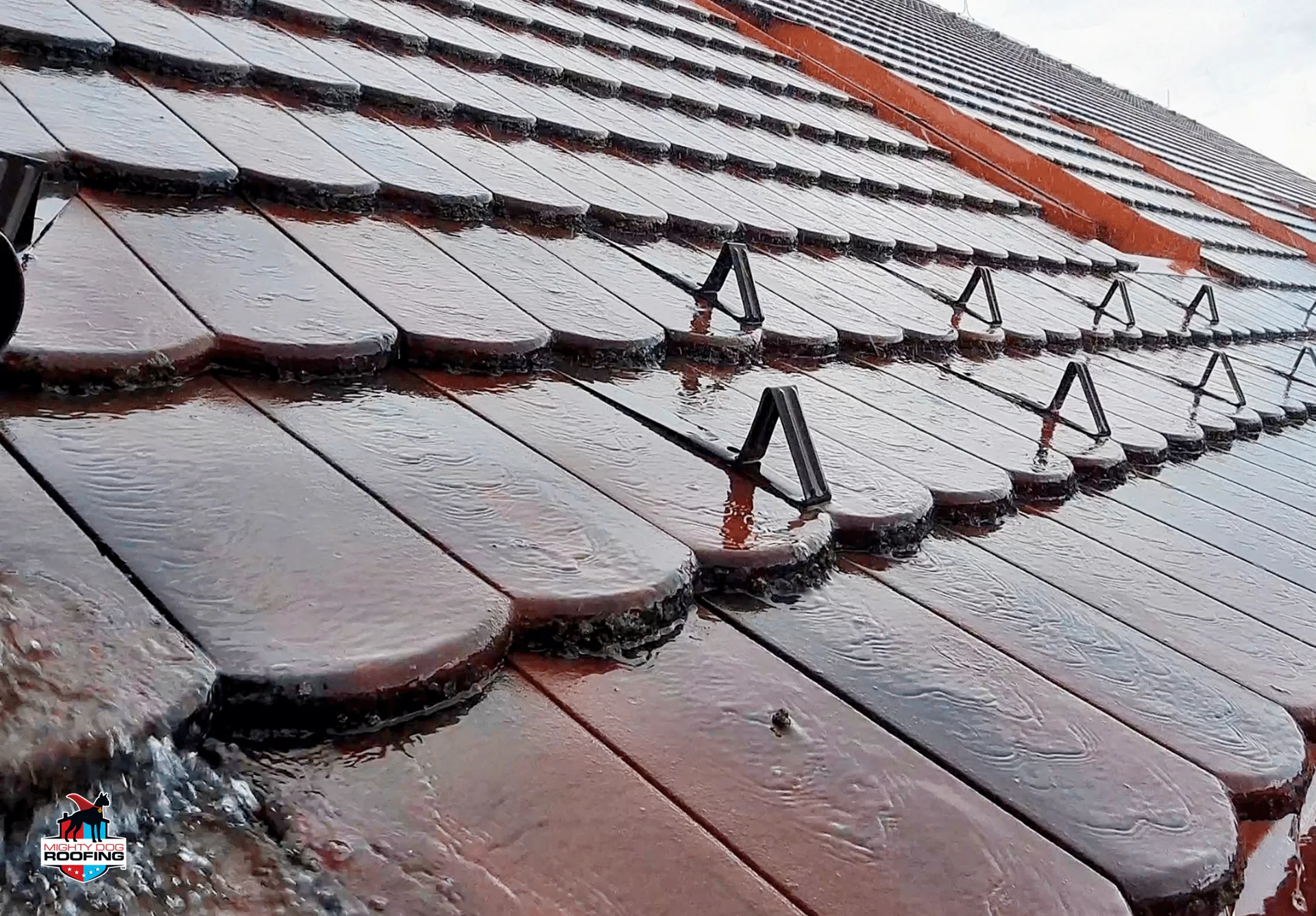
Winter roof damage Pennsylvania residents experience originates primarily from repeated freeze-thaw sequences. Moisture penetrates minor cracks, solidifies overnight, expands forcefully — physically enlarging the opening. Every subsequent cold period through February and March perpetuates this destructive cycle. Therefore, an initial pinhole evolves into a substantial breach before temperatures stabilize.
The Compounding Timeline
Deterioration from leaks follows an exponential pattern rather than linear progression. Initial weeks see minor cracks permitting slight moisture penetration. By the second month, decking and insulation layers begin absorbing accumulated dampness. Month three introduces mold colonization alongside emerging structural compromise. Reaching month four, an originally straightforward $400 fix has compounded into a $4,000+ restoration undertaking.
Leak Damage Progression Timeline
Timeframe | Damage Stage | Typical Repair Cost |
Weeks 1–4 | Small crack, minor moisture | $300–$500 |
Month 2 | Decking/insulation moisture absorption | $800–$1,500 |
Month 3 | Mold formation, structural damage begins | $2,000–$3,500 |
Month 4+ | Extensive structural/mold damage | $4,000–$10,000+ |
Grasping this timeline illuminates why roof repair late winter represents sound financial judgment. Each passing week advances you toward the costlier end of this spectrum.
What's Happening Inside Your Roof You Can't See
Moisture Spreading Through the Roof Assembly
Moisture seldom follows predictable paths. Upon breaching your structure, it migrates along rafters, accumulates on sheathing, and permeates insulation — frequently traveling considerable distances from the original penetration point. Insulation sacrifices R-value as it absorbs dampness, driving heating expenses upward. Critically, ceiling discoloration almost never aligns directly beneath the actual entry location.
Mold — How Fast It Develops and What It Costs
Mold colonies can establish themselves within 24–48 hours under damp conditions. Concealed spaces throughout attics and wall cavities offer optimal growing environments — dark, undisturbed, perpetually humid. Consequently, the roof leak consequences extend well beyond structural repairs. Remediation expenses layered atop fixing primary damage create compounded costs that timely intervention would have eliminated entirely.
The March Problem — When Everything Lets Go
Why Spring Snowmelt Is the Breaking Point
Spring delivers sudden, substantial moisture volumes against already-weakened assemblies. Structures that endured winter's gradual intrusion frequently collapse during the initial warm period when snowmelt and precipitation converge simultaneously. This phenomenon explains why most emergency roof repair requests arrive in March rather than January. The underlying damage hasn't abruptly intensified — the system simply reaches its tolerance threshold.
What That Failure Typically Looks Like
Catastrophic failure arrives without gradual warning signs. Property owners encounter abrupt ceiling collapse, extensive interior flooding, or both scenarios simultaneously. Multiple living spaces become affected as moisture exploits every compromised pathway at once. At this juncture, storm damage roof replacement becomes the sole viable option. The residential roofing company near you that could have addressed a localized area now confronts complete system failure.
Signs Your Leak Is More Serious Than It Looks
Visual Warning Signs
Monitor discolorations that expand or shift hue — transitions from yellow through brown toward darker shades indicate ongoing intrusion and material degradation. Bubbling or yielding spots in drywall or ceiling surfaces suggest moisture accumulation behind visible layers. Moreover, paint separating near rooflines or upper wall junctions signals dampness migrating through your wall assembly.
Non-Visual Warning Signs
Occasionally the most revealing indicators remain invisible. Musty odors persisting in living areas or attic spaces suggest mold colonies have already established themselves. Heating expenses may climb noticeably as saturated insulation forfeits thermal efficiency. Additionally, discolorations emerging across separate rooms simultaneously point toward problems exceeding any single entry location.
Hidden Leak Indicators to Monitor:
- Lingering musty odors persisting despite thorough cleaning
- Unexplained increases in heating expenditures
- Fresh discolorations surfacing distant from original spots
- Elevated humidity measurements within attic spaces
Should you observe any combination of these indicators, reach out to a local roofing contractor without delay. Such symptoms suggest deterioration has advanced beyond initial stages.
What You Should Do Right Now
Document Before You Do Anything Else
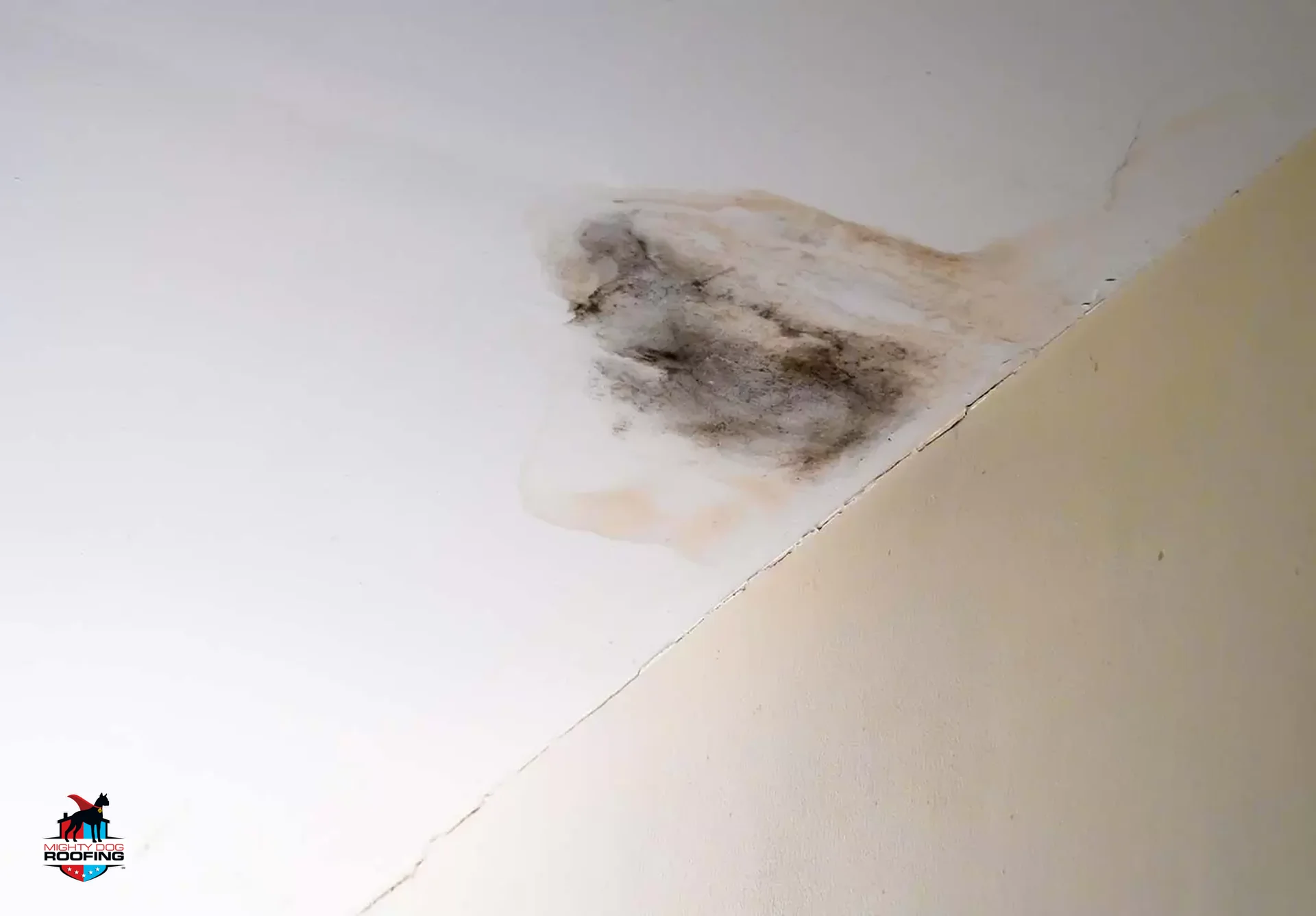
Prior to arranging professional service, capture photographs of every discoloration from various perspectives. Apply date stamps to all images — this documentation proves invaluable for insurance submissions later. Record precisely when you initially observed each mark and whether dimensions, coloration, or texture have shifted. Mighty Dog Roofing advises maintaining written notes alongside photographic evidence.
Protect the Interior While You Arrange a Repair
Position receptacles beneath active drips and relocate furnishings away from affected zones to minimize interior damage. Nevertheless, these stopgap measures merely purchase time — they cannot halt progression occurring within your structure. Arranging a professional assessment now surpasses waiting for spring temperatures. Reach out to the Mighty Dog Roofing team today — acting promptly costs substantially less than postponing.