

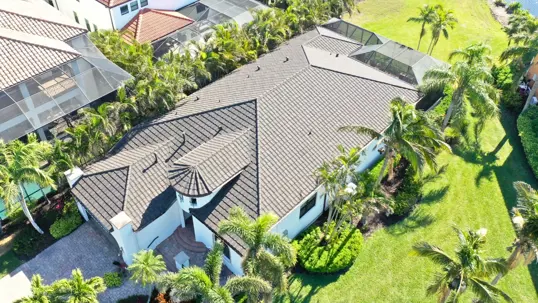
A tile roof is one of the most durable roofing systems you can own, but that doesn't mean it's problem-free.
If you've owned a tile roof in Sarasota, Bradenton, Venice, or Lakewood Ranch for more than a few years, you've probably noticed something: a cracked tile after a storm, a stain on the ceiling that came out of nowhere, or a patch of moss creeping across the ridge line. None of these mean your roof is failing but they're also not nothing.
As we covered in our guide to how long tile roofs actually last in Florida, the tiles themselves are built to last 50 to 100+ years. Most of the problems homeowners actually run into come from the materials underneath and around the tile, not the tile itself. This guide walks through the most common tile roof problems we see across Southwest Florida, what causes them, and which ones need a professional's attention versus a simple fix.
| Problem Usually | Caused By | Urgency |
|---|---|---|
| Cracked or broken tiles | Foot traffic, storm debris, age | Repair soon |
| Slipped or displaced tiles | Wind, deteriorated fasteners, mortar failure | Repair soon |
| Missing or cracked mortar/ridge caps | Age, UV exposure, thermal cycling | Monitor / repair |
| Moss or algae growth | Shade, humidity, poor drainage | Low urgency (unless spreading) |
| Debris in valleys | Nearby trees, storms | Clear promptly |
| Cracked or deteriorated pipe boots | Age (typically 8–15 year lifespan) | Repair promptly |
| Damaged or rusted flashing | Age, salt air, storm impact | Repair promptly |
| Hidden leaks with no visible tile damage | Failed underlayment beneath intact tiles | Inspect immediately |
Cracked or Broken Tiles
This is the most visible and most common tile roof problem, and usually the easiest to fix. Tiles can crack from storm debris, falling branches, foot traffic (including from someone walking on the roof improperly), or simply age and thermal stress over decades of Florida heat.
The good news: a single cracked tile is rarely a sign of a larger problem, and in most cases it can be replaced individually without disturbing the surrounding roof. The one thing worth checking is whether the underlayment beneath that tile was compromised. If water has been getting in through the crack for a while, there may be more to address than just the tile itself.
Slipped or Displaced Tiles
Tiles that have shifted out of place rather than cracked are usually a sign that the fasteners or mortar holding them down have weakened. This is common after high-wind events, but it can also happen gradually as adhesive mortar ages and loses its grip over many years.
A slipped tile isn't just a cosmetic issue. It exposes the underlayment beneath it to direct UV and rain, accelerating wear in that specific spot. Left alone through a full rainy season, a slipped tile can turn a simple reset into a legitimate underlayment repair.
Missing or Cracked Mortar and Ridge Caps
Ridge caps, the tiles that run along the peak of the roof, are sealed with mortar or adhesive foam that keeps them locked in place and watertight. Over time, especially under intense Florida sun, that mortar can crack, crumble, or separate from the tile.
This is one of the more overlooked problems because ridge caps sit at the highest, least visible point of the roof. Homeowners often don't notice a ridge issue until a leak develops near the peak of the house, at which point it's usually progressed further than it would have if caught during a routine inspection.
Moss or Algae Growth
Florida's humidity makes moss and algae a near-inevitability on any roof with some shade coverage, especially on the north-facing slopes of homes near mature tree canopy. In small amounts, this is largely cosmetic and not urgent.
That said, heavier moss growth can hold moisture against the tile and underlayment longer than the roof would otherwise dry, which can accelerate wear in that area over time, particularly around valleys where debris also tends to collect. If moss is spreading quickly or concentrated in valleys, it's worth mentioning to your inspector.
Debris Collecting in Roof Valleys
Valleys where two roof planes meet are where the most water flows during any rain event, which also makes them the spot where leaves, pine needles, and other debris naturally collect. Left unaddressed, debris buildup can trap moisture against the valley metal, accelerate corrosion, and in heavier storms, actually redirect water flow toward places it shouldn't go.
Homes near mature oak canopy, common throughout Sarasota and Bradenton neighborhoods, tend to need more frequent valley clearing than homes with less tree coverage.
Cracked or Deteriorated Pipe Boots
Pipe boots are the rubber or synthetic seals around plumbing vents that penetrate the roof. They have one of the shortest lifespans of any component on a tile roof, typically 8 to 15 years, because they're constantly exposed to direct sun and thermal expansion/contraction.
Cracked pipe boots are one of the single most common sources of roof leaks in Florida, tile or otherwise, and they're often mistaken for a "roof problem" when the fix is actually a small, targeted repair. This is a good example of why an inspection that only looks at the tile surface can miss the real issue entirely.
Damaged or Rusted Flashing
Flashing directs water away from roof penetrations, walls, and transitions, chimneys, skylights, and the points where a roofline changes direction. In coastal areas like Siesta Key, Longboat Key, and Anna Maria Island, salt air accelerates corrosion on metal flashing significantly faster than it would inland.
Damaged flashing rarely announces itself. It's usually discovered either during a professional inspection or after water has already found its way inside near a chimney or wall.
Hidden Leaks With No Visible Tile Damage
This is the problem that catches the most homeowners off guard: a leak developing while every tile on the roof looks completely intact. As we cover in why tile roofs still leak even when the tiles look fine, the underlayment beneath the tile is the roof's actual waterproofing layer, and it ages on a much shorter timeline than the tile above it.
If you're seeing a ceiling stain with no obvious tile damage anywhere nearby, don't assume the roof is fine just because the surface looks good. This is exactly the scenario a professional inspection is built to catch.
When Should You Call a Roofer?
Schedule an inspection if you notice any of the following:
✔ A cracked, slipped, or missing tile ✔ A new stain on a ceiling, wall, or near a ridge line ✔ Visible debris buildup in a valley that hasn't been cleared in a while ✔ Cracking or gaps around a plumbing vent, chimney, or skylight ✔ Heavier-than-usual moss or algae growth ✔ Your roof hasn't been inspected in the past year, or since the last major storm
Most of these issues are manageable when caught early. The risk isn't any single problem on this list; it's letting several of them go unaddressed at once, which is how a roof that "looks fine" ends up needing more extensive work than it should have.
The Mighty Dog Difference
At Mighty Dog Roofing Southwest Florida, we don't just check for cracked tiles from the ground. Our inspections evaluate flashing, valleys, ridge caps, pipe boots, and drainage patterns the components most likely to cause a problem before the tile ever does and we document everything with detailed photo reports so you can see exactly what we find.
Schedule Your Tile Roof Inspection
If you've noticed any of the issues above or it's been a while since your last inspection, we proudly serve Sarasota, Bradenton, Venice, Lakewood Ranch, Parrish, Siesta Key, Longboat Key, and Anna Maria Island.
👉 Schedule your free roof inspection today and get a detailed photo report from the Mighty Dog Roofing Southwest Florida team.
Frequently Asked Questions
Is a cracked roof tile an emergency? Usually not, but please address it promptly. A cracked tile exposes the underlayment beneath it, and the longer it's left unrepaired, the more likely that spot is to develop a leak.
Can I walk on my tile roof to inspect it myself? We don't recommend it. Improper foot placement is actually one of the more common causes of cracked tiles, and much of the roof's condition (flashing, underlayment, valley metal) isn't assessable from the surface anyway.
How do I know if a leak is coming from a tile or something underneath it? In most cases, you can't tell from the ground or attic alone. A professional inspection can trace the water's path back to its actual source, which is often several feet away from where the stain appears inside.
Does moss on my roof mean I need a replacement? No. Moss is common on Florida roofs, especially shaded ones, and is typically a maintenance issue rather than a structural one, though heavier growth is worth mentioning during an inspection.
How often should pipe boots be replaced? Pipe boots typically last 8 to 15 years. Because they're one of the more common sources of leaks, it's worth having them checked specifically during any roof inspection, especially on roofs over a decade old.
Read Next
- How Long Do Tile Roofs Last in Florida? What Sarasota Homeowners Should Know
- Can You Tell If Your Roof Is Healthy From the Ground?
- Roof Issues Often Start with the Installation
- Common Roof Repairs Sarasota Homeowners Face After Storm Season
Florida Homeowner Disclaimer: Roof condition and repair needs vary based on age, installation quality, and exposure to Florida's weather conditions. Insurance providers may require documentation of roof condition or repairs to maintain coverage. Please consult with local roofing and insurance professionals for guidance specific to your home.