

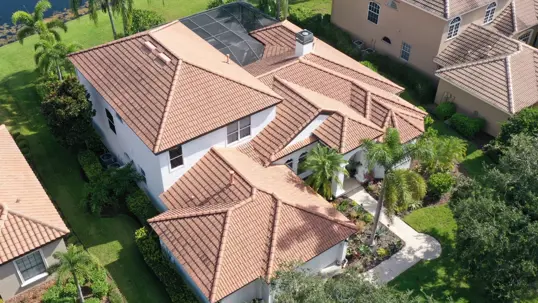
If you own a tile roof in Southwest Florida, you've probably wondered how much life it has left.
Maybe your roof is approaching 20 years old. Maybe your insurance company has started asking questions about its age. Maybe a tile cracked during last summer's storms, and you're not sure if that's a simple repair or a sign of bigger problems underneath.
Here's the good news: tile is one of the longest-lasting roofing materials available, and a well-installed tile roof can often outlast the homeowner who installed it.
Here's the catch: the tiles themselves are rarely what fails first.
Beneath every tile roof is a waterproofing system, underlayment, flashing, valleys, and sealants that age on a completely different timeline than the tile above it. Understanding the difference helps you avoid surprise leaks, unnecessary replacements, and insurance headaches. This guide covers everything Sarasota, Bradenton, Venice, and Lakewood Ranch homeowners need to know about tile roof lifespan, from what shortens it to when it's time to call a professional.
| Roof Component | Typical Lifespan in Florida |
|---|---|
| Concrete Tile | 50–75 years |
| Clay Tile | 75–100+ years |
| Underlayment | 20–35 years (varies by material) |
| Flashing & Valley Metal | 20–30 years |
| Pipe Boots & Sealants | 8–15 years |
| Fasteners | 20–30 years |
In short: the tiles can realistically outlive the roof underneath them by decades. Actual lifespan depends on installation quality, hurricane exposure, routine maintenance, proximity to salt air, UV exposure, and ventilation. Because of this gap, most tile roofs need underlayment and flashing work sometimes more than once long before the tiles themselves need replacing.
Why Tile Roofs Last So Long
Clay and concrete roof tiles are built to withstand decades of intense Florida sun, heavy rain, and wind-driven storms. Clay tile, one of the oldest roofing materials in the world, typically lasts 75 to 100+ years when properly maintained. Concrete tile, more common on newer Southwest Florida homes, generally lasts 50 to 75 years depending on weather exposure and installation quality.
Both materials resist UV degradation far better than asphalt shingles, don't rot, and hold up well against wind uplift when properly fastened, which is part of why tile roofing remains such a popular choice across Sarasota, Bradenton, Venice, Parrish, and the surrounding barrier islands.
For comparison, asphalt shingle roofs typically have a shorter expected lifespan in the same conditions — see our guide on how long shingle roofs last in Florida for a closer look at the factors involved.
Why Tile Roofs Still Leak (Even When the Tiles Look Fine)
This is the single biggest misconception homeowners have about tile roofing: an intact tile does not mean an intact roof.
The tile you see is really just the outer shield. Underneath it is the part of the system doing the actual waterproofing:
- Underlayment — the water-resistant barrier between the tile and the roof deck
- Flashing — metal installed around chimneys, walls, and roof transitions
- Valley metal — channels water where two roof planes meet
- Pipe boots — seals around plumbing vents
- Sealants — fill gaps at penetrations and ridge caps
- Fasteners — hold tiles and underlayment in place
These components take the brunt of Florida's heat and humidity long before the tile does. Underlayment in particular breaks down from prolonged UV and heat exposure trapped beneath the tile, and older organic-felt underlayments often fail well before the 20-year mark. That's why a roof can develop an active leak while every tile on it still looks brand new; the failure is happening beneath the surface, not on top of it.
| Clay Tile | Concrete Tile | |
|---|---|---|
| Typical Lifespan | 75–100+ years | 50–75 years |
| Weight | Lighter | Heavier |
| Cost | More expensive | More affordable |
| Color | Naturally fired, holds color well | Painted/pigmented, may fade over time |
| Common Look | Barrel/Spanish style | Flat or low-profile styles |
| Best For | Homeowners prioritizing longevity and classic aesthetics | Homeowners balancing cost and durability |
Neither option is "better" across the board; the right choice depends on your home's structure, budget, and architectural style. A roofing professional can advise on which is appropriate for your specific roof deck and framing.
Factors That Affect Tile Roof Lifespan
Florida presents some of the harshest roofing conditions in the country, and several factors determine how long any given tile roof will actually last:
- Intense UV exposure — accelerates breakdown of underlayment and sealants
- Heavy, frequent rain — tests every flashing point and seam
- High humidity — contributes to moisture retention beneath tiles
- Salt air — homes on Siesta Key, Longboat Key, and Anna Maria Island face accelerated corrosion of metal flashing and fasteners
- Tropical storms and hurricane-force winds can lift tiles, crack ridge caps, and drive water under flashing
- Installation quality — improperly installed underlayment or flashing shortens lifespan regardless of tile quality
- Routine maintenance — or the lack of it determines how early small issues turn into large ones
Homes closer to the coast typically need slightly more frequent inspections than inland homes in Lakewood Ranch or Parrish, simply because salt air is harder on metal components.
Signs Your Tile Roof May Need Attention
Many roofing issues develop well before water ever reaches the inside of your home. Watch for:
- Cracked or slipped tiles
- Loose or missing ridge caps
- Ceiling stains or discoloration
- Missing or deteriorated mortar
- Damaged or rusted flashing
- Water stains around chimneys or skylights
- Moss or algae growth
- Debris collecting in roof valleys
If you notice any of these, a professional roof inspection can determine whether the issue is cosmetic, a simple repair, or a sign of a larger underlayment or flashing problem.
Can Individual Roof Tiles Be Replaced?
Yes — in most cases, a damaged tile can be replaced on its own without touching the rest of the roof.
That said, a cracked tile is often a symptom, not the root cause. The real question is why the tile failed in the first place. Common underlying causes include:
- Deteriorated underlayment beneath the tile
- Shifting or settling of the roof structure
- Wind damage from a recent storm
- Improper installation of the original tile
- Aging flashing nearby that's contributing to movement
A professional inspection identifies the true source of the problem so you're not simply replacing the same tile again in a year or two.
Should You Repair or Replace a Tile Roof?
This is one of the most common questions homeowners ask once their roof passes the 15- to 20-year mark, and the honest answer is: it depends on what's happening underneath the tile, not just the tile's appearance.
Repair is usually the right call when:
- The tiles themselves are in good structural condition
- Damage is isolated to a specific area (a valley, a penetration, a section of ridge cap)
- The underlayment is still within its expected service life
Replacement becomes the more practical option when:
- The underlayment is widely deteriorated across the roof
- Repeated repairs are becoming frequent and costly
- The roof deck has sustained water damage
- Your insurance carrier is requiring updated documentation of roof condition due to age
A detailed inspection with photo documentation is the best way to make this decision with confidence rather than guesswork.
Common Myths About Tile Roofs
Myth: Tile roofs last forever. Truth: The tiles often do. The waterproofing system underneath them does not, and it typically needs attention well before the tiles show any wear.
Myth: A cracked tile means you need an entirely new roof. Truth: In many cases, only the individual tile or a small section of underlayment nearby needs to be repaired.
Myth: If the roof isn't leaking, it's healthy. Truth: Underlayment and flashing can deteriorate for years before a leak becomes visible inside the home. By the time you see a stain, the underlying problem may have existed for a while.
Myth: All tile roofs age at the same rate. Truth: Coastal exposure, installation quality, ventilation, and maintenance history all affect how quickly a roof ages. Two roofs of the same age can be in very different condition.
How Often Should Tile Roofs Be Inspected?
As a general guideline, we recommend a professional roof inspection about once a year once a tile roof reaches 12 to 15 years of age, and always after a major storm or hurricane. Roofs under 10 years old typically need less frequent attention, but a post-storm check is still wise any time your area experiences significant wind or hail.
When Should You Call a Roofer?
Schedule an inspection if any of the following apply:
✔ Your roof is over 15 years old ✔ A hurricane or significant storm has recently passed through ✔ You've noticed a cracked, slipped, or missing tile ✔ There's a new stain on a ceiling or ridge line ✔ You're buying a home with a tile roof ✔ You're selling a home with a tile roof ✔ Your insurance company has requested a roof inspection or four-point inspection ✔ It's simply been more than a year since your last inspection
Why Professional Inspections Matter
Because most of a tile roofing system is hidden beneath the tile itself, many developing problems aren't visible from the ground or even from a ladder.
At Mighty Dog Roofing Southwest Florida, our inspections go beyond a visual scan of the tile surface. We evaluate:
- Roof valleys and drainage patterns
- Flashing and roof-to-wall transitions
- Penetrations, pipe boots, and seals
- Ridge caps and mortar condition
- Visible tile damage
- Overall roof age and condition relative to expected lifespan
We use drone inspections and detailed photo reports so homeowners can see exactly what our inspectors find not just take our word for it. Our goal isn't to recommend a replacement unless one is truly warranted; often the right answer is a smaller repair, updated flashing, or targeted underlayment work.
Schedule Your Tile Roof Inspection
Whether your tile roof is 15 years old or more than 40, a routine inspection can catch small issues while they're still inexpensive to fix. We proudly inspect tile roofs throughout Sarasota, Bradenton, Venice, Lakewood Ranch, Parrish, Siesta Key, Longboat Key, and Anna Maria Island.
👉 Schedule your free roof inspection today and receive a detailed photo report from the Mighty Dog Roofing Southwest Florida team.
Frequently Asked Questions
How long do concrete tile roofs last in Florida? Most concrete tile roofs last 50 to 75 years when properly maintained, though the underlayment beneath the tiles typically needs replacement well before that.
How long do clay tile roofs last? Clay tiles often last 75 to 100+ years, making them one of the longest-lasting roofing materials available for Florida homes.
How long does tile roof underlayment last? Underlayment typically lasts 20 to 35 years, depending on the material used, installation quality, and heat/UV exposure, often needing replacement at least once during the life of the tile above it.
Can a tile roof leak if the tiles aren't broken? Yes. Many leaks originate from aging underlayment, flashing, valleys, or roof penetrations rather than from the tiles themselves.
Can individual roof tiles be replaced? In most cases, yes. A single damaged tile can typically be replaced without a full roof replacement, though it's worth identifying why the tile failed in the first place.
How often should tile roofs be inspected? We recommend an inspection about once a year once your roof reaches 12 to 15 years old, plus a check after any major storm.
Are tile roofs good for hurricanes? Properly installed tile roofs can perform well in high winds, but improper installation, aging fasteners, or deteriorated flashing can make a roof more vulnerable during a storm.
Does insurance care about tile roof age? Many Florida insurance carriers factor roof age and condition into coverage and premiums, and some require a recent inspection or four-point inspection before renewing a policy, particularly on roofs approaching 20 years old.
Read Next
- Can You Tell If Your Roof Is Healthy From the Ground?
- Roof Inspection Sarasota: Why It Matters Before Storm Season
- Roof Issues Often Start with the Installation
- Common Roof Repairs Sarasota Homeowners Face After Storm Season
- The Pros and Cons of Metal Roofing for Florida Homes
Florida Homeowner Disclaimer: Roof lifespan in Florida may vary significantly from manufacturer estimates due to the state's extreme weather conditions. Insurance providers often require roof replacement or inspection before the end of a roof's expected lifespan to maintain the insurability of the property. Please consult with local roofing and insurance professionals for guidance specific to your home.