Should a 20-year-old roof be replaced?
Not automatically, but it's worth a close look. Many asphalt shingle roofs are designed to last somewhere in the 15-to-30-year range, so at 20 years yours may be nearing the end of its life even if it still looks fine.
What twenty years means for roof condition
A twenty-year-old roof does not automatically require replacement. Age matters because shingles, sealants, and flashing weather over time, but different roofing materials and installations do not age at identical rates. A roof with sound shingles, secure flashing, and no signs of leakage may have useful life remaining. Conversely, a younger roof can need major work if wind, poor installation, or persistent moisture has damaged it. The decision should be based on condition, not a birthday alone.
Signs that change the decision
Missing or curled shingles, widespread granule loss, exposed matting, repeated leaks, and soft or damaged roof decking are stronger warning signs than age by itself. Look for a pattern. One loose shingle may be repairable, while deterioration across multiple slopes suggests the covering is reaching the end of its service life. Stains on an interior ceiling deserve investigation, although their location does not necessarily identify where water first entered the roof.
Repair versus replacement
A focused repair makes sense when damage is limited and the surrounding shingles remain flexible enough to work with. Repairs become less attractive when brittle shingles crack during handling or replacement pieces cannot be integrated reliably with the old covering. Repeated service calls for separate leaks may also point to broader deterioration. A roofing professional can explain whether a specific repair is likely to hold or whether replacement would address multiple weak areas at once.
What a roof assessment should cover
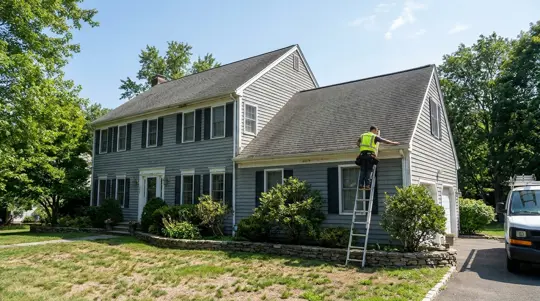
Ask for an inspection of the field shingles, ridges, valleys, penetrations, flashing, and accessible attic conditions. The inspector should distinguish normal weathering from active defects and explain what was actually observed. Photos of trouble spots are more useful than a recommendation based only on the year the roof was installed. If the original installation date is uncertain, previous invoices, permits, and homeowner records may help establish a reasonable history without substituting for the inspection.
Planning before failure
A homeowner does not need to wait for a ceiling leak before planning. If the roof is nearing the end of its expected service period, an inspection can help establish which repairs are urgent and which improvements can be scheduled. During a replacement discussion, ask about flashing, ventilation, underlayment, and how the new system will handle water at edges and roof penetrations. These details matter as much as the appearance of new shingles.
What this means for Ridgefield homeowners
In Ridgefield, Connecticut, a roof that has weathered many winters deserves a condition-based review rather than an automatic replacement order. Compare the most exposed slope with sheltered sections, and ask whether deterioration is isolated or widespread. An inspection can also identify flashing work that should be considered alongside any roof replacement.
For Ridgefield homeowners comparing bids, ask each contractor to identify the same problem areas so recommendations are comparable. One proposal might address a localized flashing defect, while another assumes that the entire roof covering is failing. A clear explanation of the evidence makes it easier to decide whether a limited repair is reasonable or whether the cost of repeated repairs would be difficult to justify.
FAQ
Does roof age alone mean replacement?
A twenty-year-old roof does not automatically require replacement. Age matters because shingles, sealants, and flashing weather over time, but different roofing materials and installations do not age at identical rates.
What signs suggest a full replacement?
Missing or curled shingles, widespread granule loss, exposed matting, repeated leaks, and soft or damaged roof decking are stronger warning signs than age by itself. Look for a pattern. One loose shingle may be repairable, while deterioration across multiple slopes suggests the covering is reaching the end of its service life.
Can a twenty-year-old roof be repaired?
A focused repair makes sense when damage is limited and the surrounding shingles remain flexible enough to work with. Repairs become less attractive when brittle shingles crack during handling or replacement pieces cannot be integrated reliably with the old covering.
What should a roof inspection include?
Ask for an inspection of the field shingles, ridges, valleys, penetrations, flashing, and accessible attic conditions. The inspector should distinguish normal weathering from active defects and explain what was actually observed.
Should a 20-year-old roof be replaced?
Not automatically, but it's worth a close look. Many asphalt shingle roofs are designed to last somewhere in the 15-to-30-year range, so at 20 years yours may be nearing the end of its life even if it still looks fine. The appropriate response depends on the roof condition and whether the underlying cause has been identified. An inspection can confirm whether conditions allow proper installation.
Conclusion
A twenty-year-old roof does not automatically require replacement. These details matter as much as the appearance of new shingles. For Ridgefield homeowners, a roof inspection can help match the next step to the actual condition.
For an assessment of this issue, Mighty Dog Roofing of Fairfield County can discuss roof inspection and roofing options appropriate to the condition of your home.