Is it better to remove old shingles before installing new shingles?
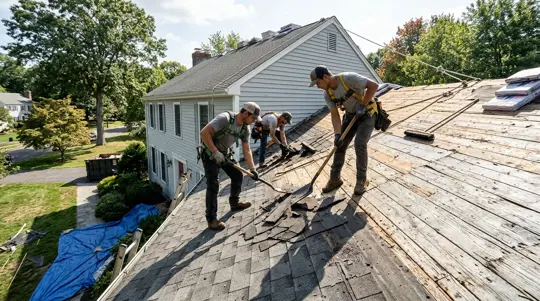
Yes, removing old shingles is generally better before installing new shingles. It exposes the roof deck for inspection, provides a flatter installation surface, and allows damaged materials to be corrected. Installing shingles over an existing layer may be possible in limited circumstances, but the roof’s condition, code requirements, product instructions, and warranty terms should be reviewed first.
Why Is Removing Old Shingles Usually the Better Choice?
Old shingles conceal the materials beneath them. Once they are removed, a roofing contractor can inspect the roof deck and identify areas that may need attention before new materials are installed. This matters because new shingles rely on the condition of the surface supporting them.
A roof can look suitable for new shingles from the outside while having damage beneath the existing layer. For example, a past leak may have affected a section of decking without leaving an obvious sign on the roof’s surface. Removing the shingles gives the contractor an opportunity to assess that area and address it as part of the roof installation.
A full removal also makes it easier to see how the existing roof was assembled. The contractor can evaluate the exposed surface and prepare it for the new roofing materials. For a Ridgefield, Connecticut homeowner, that inspection can provide a clearer picture of the roof’s condition before the new shingles cover it.
How Does the Existing Roof Affect the New Installation?
New shingles need an appropriate installation surface. If the old shingles are uneven, curled, or damaged, placing another layer over them can carry those irregularities into the new roof. Removing the existing layer allows the contractor to work from a flatter surface and deal with problems that would otherwise remain hidden.
The condition of the roof deck is equally important. Removing the old shingles allows damaged sections to be identified and corrected before installation continues. Covering those sections with new shingles would leave the underlying concern in place.
This is why a decision about shingle removal involves more than the appearance of the old roof. A contractor needs to consider what is beneath it and whether the surface can properly support the planned installation. The goal is to give the new shingles a sound foundation, not simply to cover the visible signs of wear.
When Might Installing Shingles Over Old Shingles Be Possible?
Installing new shingles over an existing layer, often called an overlay, may be possible in limited circumstances. Whether it is appropriate depends on the condition of the current roof and the requirements that apply to the new installation. It should not be assumed that an overlay is suitable just because the old shingles remain in place.
Before considering an overlay, a roofing contractor should assess the existing shingles and the roof as a whole. An uneven or damaged surface can be a reason to remove the old materials. The contractor should also review applicable code requirements, the shingle manufacturer’s installation instructions, and relevant warranty terms. Those requirements can affect whether an overlay is an acceptable option.
An overlay also limits how much of the roof deck can be inspected. If there are signs of damage or uncertainty about what lies beneath the shingles, removal provides a better opportunity to investigate. In most cases, taking off the old shingles offers a more complete assessment and a clearer starting point for the new installation.
What Should Homeowners Discuss Before Roof Installation?
Homeowners can ask a roofing contractor to explain what the roof evaluation shows and how it affects the recommended installation method. The discussion should include the condition of the current shingles, any signs of underlying damage, and whether removing the existing layer is needed to inspect the deck properly.
It is also reasonable to ask how the proposed approach aligns with applicable code requirements, product instructions, and warranty terms. These considerations should be reviewed for the specific roof rather than treated as a general rule that applies to every property.
For homeowners in Ridgefield and surrounding communities, the most useful recommendation is one based on the roof’s actual condition. Understanding why a contractor recommends removal or, in a limited case, an overlay helps the homeowner make an informed decision about the work.
FAQ
Can new shingles be installed over old shingles?
Sometimes, but an overlay depends on the existing roof’s condition and applicable requirements. A contractor should review code requirements, product instructions, and warranty terms before recommending it.
Why inspect the roof deck before installing new shingles?
The deck supports the roofing materials. Inspecting it after old shingles are removed allows damaged areas to be identified and corrected before they are covered by the new installation.
What if the old shingles are curled or uneven?
Curling or uneven shingles may prevent the new layer from having a flat surface. A roofing contractor can evaluate whether the existing materials need to be removed.
Does removing old shingles reveal every roofing problem?
Removal gives a contractor access to inspect the exposed roof deck and identify visible concerns. The evaluation should also consider other relevant parts of the roof and any known leak history.
Is it better to remove old shingles before installing new shingles?
Yes, removing old shingles is generally better before installing new shingles because it exposes the roof deck for inspection, creates a flat installation surface, and allows damaged materials to be corrected. An overlay may be possible in limited circumstances, but roof condition, code requirements, product instructions, and warranty terms should be reviewed first.
Conclusion
Removing old shingles is generally the better approach because it allows the roof deck to be inspected, damaged materials to be corrected, and new shingles to be installed on a flatter surface. An overlay should be considered only after the roof and applicable requirements are reviewed.
If you are planning a roof installation in Ridgefield, Connecticut, Mighty Dog Roofing of Fairfield County can evaluate your existing roof and explain which installation approach fits its condition.