

Do homeowners have to be home for a roof inspection?
Homeowners usually do not have to be home for an exterior roof inspection when the roofing contractor has permission and safe access to the property. However, someone may need to be present if the inspection includes the attic, interior water stains, or access concerns. Confirm the inspection scope before the appointment.
When Can a Roof Inspection Be Completed Without the Homeowner?
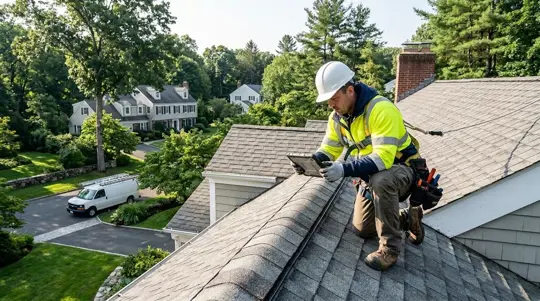
A roofing contractor can often complete an exterior inspection while the homeowner is away. The contractor primarily needs permission to enter the property and unobstructed access to the areas being evaluated. This may include the roof, gutters, flashing, roof penetrations, and other visible exterior components.
Before leaving the property unattended, homeowners should make sure the contractor understands where access is permitted. Gates should be unlocked when necessary, and pets should remain securely inside. Vehicles, outdoor furniture, or other belongings may also need to be moved if they block access around the house.
During an exterior inspection, the roofer may examine:
Shingles for cracking, curling, deterioration, or missing sections
Flashing around chimneys, walls, vents, and other roof penetrations
Gutters and downspouts for visible damage or drainage concerns
Skylights and the surrounding roofing materials
Roof edges, valleys, ridges, and other vulnerable areas
Visible signs of moisture intrusion or exterior damage
Homeowners in Ridgefield, Connecticut can usually arrange this type of inspection without changing their entire schedule. The contractor may document the findings with photographs and review them with the homeowner afterward by phone, video call, email, or a separate appointment.
When Does Someone Need to Be Home for a Roof Inspection?
Someone should generally be present when the roofing inspection requires access to the interior of the house. Exterior conditions can reveal many problems, but certain concerns cannot be evaluated thoroughly from the roof alone.
Interior access may be necessary when:
The attic needs to be inspected: A roofer may need to look for moisture, staining, damaged roof decking, inadequate ventilation, or visible light entering through openings.
Water stains are present: Examining stains on ceilings or walls can help the contractor compare interior evidence with possible entry points on the roof.
A skylight appears to be leaking: The contractor may need to inspect both the interior and exterior of the skylight to better understand the source of the moisture.
Access is restricted: Locked gates, enclosed roof sections, interior roof access points, or other property features may require help from someone at the house.
The inspection involves detailed planning: A homeowner may prefer to be present when discussing repair priorities, roof installation considerations, or coordination with other exterior projects.
The homeowner does not always have to attend personally. Another authorized adult may provide access, answer basic questions, and remain at the property while the inspection is completed.
How Should Homeowners Prepare for a Roof Inspection?
The most important step is confirming the scope of the appointment in advance. Homeowners should ask whether the contractor expects to inspect only exterior roofing components or also needs access to the attic and interior living areas. This determines whether anyone must be home.
The contractor should also know about known concerns before arriving. Information about active leaks, ceiling stains, previous repairs, storm damage, or recurring moisture can help focus the inspection. If the homeowner will be away, photographs and a written description may provide useful context.
For properties in Ridgefield and surrounding Fairfield County communities, seasonal weather and tree coverage can affect access around the roof. Homeowners should identify locked gates, steep areas, loose outdoor items, pets, and any other conditions that could interfere with safe movement around the property.
If exterior work such as siding installation, window installation, or skylight installation is also being considered, mentioning it beforehand may help the contractor understand how those components connect with the roofing system. However, each service may require a separate evaluation and different access arrangements.
What Happens After an Unattended Roof Inspection?
After completing the inspection, the contractor should communicate the findings clearly. This may include photographs, notes about observed conditions, and an explanation of whether maintenance, repairs, additional investigation, or roof installation should be considered.
An unattended inspection should not prevent homeowners from asking questions. They can request clarification about the location and significance of any observed damage, whether interior access is still needed, and what the recommended next step involves.
In other words, homeowners can often be away during a straightforward exterior inspection, provided the contractor has permission and safe access. Staying home becomes more important when the roofer needs to connect exterior findings with conditions inside the attic or living space.
FAQ
Can a roofer inspect the roof if the gates are locked?
The contractor will need an agreed-upon way to access the property. Homeowners should confirm gate arrangements before the appointment rather than leaving access details unresolved.
Does an exterior roof inspection include the attic?
No. An exterior inspection evaluates accessible roofing components outside the home. Attic conditions require interior entry and should be specifically included in the inspection scope.
Can someone other than the homeowner provide access?
Yes. An authorized adult may be present to provide access and answer questions, as long as the homeowner has made appropriate arrangements with the contractor.
Should homeowners report ceiling stains before the inspection?
Yes. Tell the contractor about stains, leaks, and other interior symptoms in advance. These concerns may indicate that someone should be home to allow an interior evaluation.
Do homeowners have to be home for a roof inspection?
Homeowners usually do not have to be home for an exterior roof inspection when the contractor has safe access and permission to inspect the property. Someone may need to be present if the roofer must enter the attic, investigate interior water stains, or discuss access concerns. Confirm the inspection scope before the appointment.
Conclusion
Homeowners generally do not need to be present for an exterior roof inspection when the contractor has permission and safe access. Someone should be available when attic entry, interior moisture investigation, restricted access, or an in-person discussion is part of the appointment.
Before scheduling, contact Mighty Dog Roofing of Fairfield County to confirm the inspection scope and access requirements. Their team can explain whether the property can be inspected while you are away or whether someone should be present for a more complete roofing evaluation.