What should homeowners understand before speaking with a roof insurance adjuster about roof damage?
Homeowners should give a roof insurance adjuster accurate, documented facts rather than guesses about the cause, age, or severity of roof damage. Record what occurred, photograph visible conditions when safe, review the insurance policy, and consider obtaining a professional roof inspection. The insurer determines coverage based on the policy and documented damage.
What Information Should Homeowners Document Before the Adjuster Arrives?
Clear documentation can help homeowners describe the situation accurately and distinguish observed facts from assumptions. Begin by recording when the damage or related symptoms were first noticed. If a specific event occurred, such as strong wind, falling debris, or heavy precipitation, note the date and the conditions you observed without claiming that the event caused damage unless that has been established.
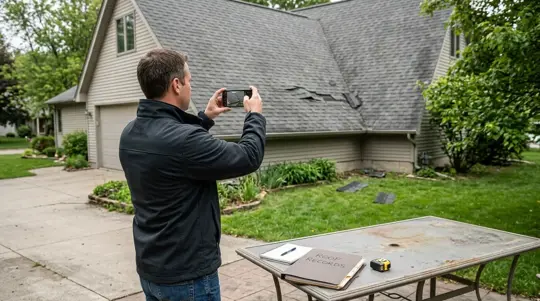
Photograph or record visible conditions only from a safe location. Useful documentation may include:
Missing, lifted, cracked, or displaced roofing materials
Debris on or near the property
Damage around flashing, vents, gutters, or skylights
Water stains on ceilings or walls
Damp areas in the attic that can be accessed safely
Damage to siding, windows, or other exterior components
Temporary measures taken to limit additional water intrusion
Homeowners should not climb onto a wet, steep, unstable, or visibly damaged roof to collect evidence. Ground-level photographs and interior images can provide helpful context while a qualified roofing contractor performs the detailed roof inspection.
Keep relevant records together, including photographs, inspection findings, repair history, receipts for temporary protective work, and communications with the insurer. Organized information makes it easier to answer questions consistently.
How Should Homeowners Speak With a Roof Insurance Adjuster?
During the conversation, explain what you directly observed in simple, factual terms. For example, a homeowner might state that shingles were found in the yard after a storm or that a ceiling stain appeared on a particular date. That is more precise than guessing that the entire roof is storm-damaged or needs replacement.
Avoid estimating the age, cause, extent, or repairability of the damage if you do not know. If the adjuster asks a question you cannot answer confidently, it is appropriate to say that you are unsure and refer to available documentation or professional inspection findings.
Homeowners should also distinguish between visible damage and broader concerns. One damaged area does not automatically establish the condition of the complete roofing system. Conversely, limited damage visible from the ground may not reveal conditions affecting flashing, underlayment, roof penetrations, or other components.
Taking notes during the inspection can help homeowners remember what was examined, what additional information was requested, and what the next stage of the insurer’s process may involve.
Why Is a Professional Roof Inspection Helpful?
A professional roof inspection can document roofing conditions that may be difficult for a homeowner to identify safely or describe accurately. The contractor may examine shingles, flashing, roof penetrations, skylights, gutters, and other accessible components. Interior evaluation may also be appropriate when there are attic concerns or signs of water intrusion.
For homeowners in Ridgefield, Connecticut, an inspection can clarify the present condition of the roof without requiring the homeowner to make technical judgments. The roofer may prepare photographs and written observations describing the location and apparent extent of visible damage.
A roofing contractor and an insurance adjuster have different responsibilities. The contractor evaluates roof conditions and may explain appropriate repair or roof installation options. The adjuster evaluates the claim for the insurer. A contractor can provide documentation, but should not promise that particular work will be covered.
In other words, homeowners can prepare useful evidence and obtain a professional assessment, but the final coverage decision remains with the insurance company.
How Do the Insurance Policy and Damage Documentation Affect Coverage?
Before meeting with the adjuster, homeowners should review their policy and claim instructions. Policies can differ in covered events, exclusions, deductibles, reporting requirements, and how damaged materials are evaluated. Reading the applicable documents helps homeowners understand what information the insurer may request.
Coverage should not be assumed merely because damage exists. The insurer considers the applicable policy language, documented conditions, and information collected during the claim review. Roof age, maintenance history, prior deterioration, and the reported event may also be relevant, depending on the policy and circumstances.
Homeowners in Ridgefield and throughout Fairfield County should preserve damaged conditions when practical, but they may need temporary protection to prevent further water entry. Any temporary action should prioritize safety and be documented. Permanent roofing work generally should be coordinated carefully so the insurer has an opportunity to review the reported damage as required by the policy.
FAQ
Should a homeowner guess what caused the roof damage?
No. Homeowners should describe what they observed and when they noticed it. A roofing professional and the insurer can evaluate the available evidence and documented conditions.
Can a roofer meet with the insurance adjuster?
A roofing contractor may be able to attend and explain documented roof conditions. However, the adjuster evaluates the claim, and the insurer makes the coverage decision.
Should roof damage be photographed before temporary protection is installed?
When it is safe, photograph visible conditions before and after temporary protective work. Do not delay reasonable measures needed to limit additional damage solely to collect photographs.
Does visible roof damage guarantee insurance coverage?
No. Visible damage does not guarantee coverage. The insurer determines whether a claim is covered based on the policy terms, inspection findings, documentation, and reported circumstances.
What should homeowners understand before speaking with a roof insurance adjuster about roof damage?
Homeowners should speak with a roof insurance adjuster using accurate, documented facts rather than guesses about the cause, age, or severity of damage. Record what happened, photograph visible conditions when safe, review the policy, and consider a professional roof inspection. Coverage decisions belong to the insurer and depend on the policy and documented damage.
Conclusion
Before speaking with a roof insurance adjuster, homeowners should organize accurate records, document visible conditions safely, review their policy, and avoid unsupported conclusions. A professional inspection can provide clearer information about the roof while leaving coverage decisions to the insurer.