

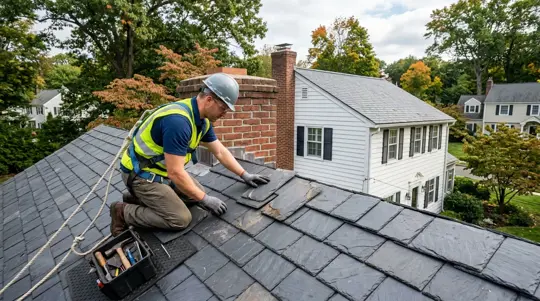
How often should a slate roof be replaced?
A properly installed slate roof requires relatively little maintenance and can last for many decades. Rather than replacing the entire roof on a set schedule, homeowners should monitor its condition and replace damaged or worn slate tiles as needed. Regular inspections help identify issues early and can extend the life of the roofing system.
Why Do Slate Roofs Last So Long?
Slate is one of the most durable roofing materials available, which is why many homeowners choose it for long-term performance. When installed correctly, a slate roof can provide reliable protection for decades with relatively little maintenance compared to many other roofing materials.
Unlike some roofing systems that are replaced after reaching a typical lifespan, slate roofs are often maintained by repairing or replacing individual damaged tiles instead of installing an entirely new roof. This approach helps preserve the integrity of the roof while addressing isolated areas of wear.
For homeowners in Ridgefield, Connecticut, seasonal weather can expose roofs to changing temperatures, rain, snow, and falling debris. Regular roofing inspections help ensure that any damage is identified before it affects the surrounding roof structure.
What Signs Indicate a Slate Roof May Need Attention?
Although slate roofs are known for their longevity, they should still be inspected periodically for signs of wear or damage. Addressing small issues early can help prevent more extensive repairs later.
Common signs a slate roof may need professional attention include:
Cracked or broken slate tiles
Missing slates after severe weather
Loose or slipping tiles
Damaged flashing around chimneys, skylights, or roof penetrations
Water stains or leaks inside the home
These issues do not necessarily mean the entire roof needs replacement. In many cases, replacing individual slate tiles or repairing surrounding roofing components may restore the roof's performance.
If your home also includes features such as skylight installation, it's important to inspect the areas surrounding those openings since flashing plays a critical role in preventing water intrusion.
How Often Should a Slate Roof Be Inspected?
A slate roof does not require frequent replacement, but routine inspections are an important part of proper maintenance.
Professional roofing inspections can help identify:
Minor tile damage before it worsens
Loose or deteriorating flashing
Areas where moisture could enter
Damage caused by storms or fallen tree limbs
Homeowners should also schedule an inspection after significant weather events that may have affected the roof.
In Fairfield County, changing seasons can place additional stress on roofing materials. Regular inspections provide peace of mind and help ensure that small maintenance needs are addressed before they become larger problems.
When Is Full Slate Roof Replacement Necessary?
Complete slate roof replacement is typically considered only when repairs are no longer practical or when multiple components of the roofing system have reached the end of their useful life.
A roofing professional may recommend replacement if:
Large sections of slate are extensively damaged
The underlying roof structure requires major repairs
Previous repairs are no longer effective
The roof can no longer provide reliable protection
Every roof is different, so replacement decisions should be based on a thorough inspection rather than age alone. An experienced roofing contractor can evaluate the condition of both the slate tiles and supporting components to determine the most appropriate solution.
For homeowners in Ridgefield and surrounding communities, understanding the condition of the roof helps with planning future maintenance and exterior improvement projects, including roof installation, siding installation, or window installation when needed.
Can Regular Maintenance Extend the Life of a Slate Roof?
Yes. Proper maintenance is one of the best ways to maximize the lifespan of a slate roof.
Helpful maintenance practices include:
Schedule periodic professional roof inspections.
Replace damaged or missing slate tiles promptly.
Keep gutters clear so water drains properly.
Address flashing issues around chimneys and skylights.
Avoid unnecessary foot traffic on the roof to reduce the risk of breaking slate tiles.
These simple maintenance steps help protect the roofing system and reduce the likelihood of more extensive repairs in the future.
FAQ
Can individual slate tiles be replaced instead of the whole roof?
Yes. If only a few tiles are damaged, replacing individual slate tiles is often a practical solution without replacing the entire roofing system.
How much maintenance does a slate roof require?
Slate roofs generally require relatively little maintenance, but regular inspections and prompt repairs help keep them performing well over time.
Should I inspect my slate roof after a storm?
Yes. Severe weather can damage slate tiles or flashing, so a professional inspection can help identify issues before they lead to leaks.
Can damaged flashing affect a slate roof?
Yes. Flashing helps keep water out around roof penetrations. Damaged flashing can contribute to leaks even if the slate tiles remain in good condition.
How often should a slate roof be replaced?
A properly installed slate roof may not need replacement for many decades, as it is designed for exceptional longevity with relatively little maintenance. Regular roofing inspections can help identify damaged or worn slate tiles before they affect the rest of the roof, helping homeowners in Ridgefield and surrounding communities protect their investment.
Conclusion
A properly installed slate roof does not usually need replacement on a fixed schedule. Instead, regular inspections, timely repairs, and replacing damaged slate tiles when necessary help maintain the roof's performance and extend its service life.