

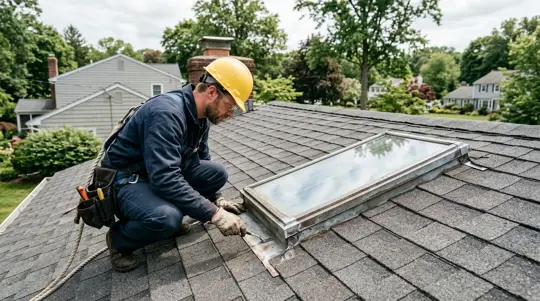
How often should skylights be replaced?
Skylights generally should be evaluated for replacement after about 15 to 30 years. Product quality, installation, weather exposure, seal condition, leaks, condensation, and visible deterioration all affect timing. In Fairfield County, a roofing professional can inspect the unit and surrounding flashing to determine whether repair or skylight replacement is appropriate.
Age and expected service life
Age and expected service life is central to answering this question. A professional evaluates visible materials, nearby flashing or penetrations, drainage, attachment, and accessible supporting surfaces. Roofing components work together, so a condition that appears limited to one area may affect the recommendation for repair, monitoring, or skylight replacement.
For homeowners in Ridgefield and surrounding communities, the purpose of an inspection is to document current conditions rather than make a decision from age or appearance alone. Photographs and a clear explanation help distinguish cosmetic differences from concerns involving moisture, fastening, or the roof deck.
Warning signs such as leaks, fogging, cracked glazing, and worn seals
Warning signs such as leaks, fogging, cracked glazing, and worn seals also shapes the answer. The contractor should explain what can be confirmed without disturbing materials and what may remain concealed. Product instructions, weather conditions, safe access, and the condition of the existing roof can all affect how work should proceed.
In Ridgefield, Connecticut, seasonal temperature changes, wind, rain, and snow can influence how roofing materials age. That does not automatically mean replacement is required. It means the recommendation should account for the complete roof assembly and the evidence observed at the property.
Why roof replacement is a practical time to evaluate a skylight
Why roof replacement is a practical time to evaluate a skylight should be discussed before a homeowner approves work. Useful questions include what conditions were observed, which materials are affected, whether additional investigation is needed, and how the proposed scope follows product and installation requirements. A written proposal should identify the work being recommended and any limitations that could change after materials are removed.
Homeowners can prepare by gathering installation records, prior repair information, warranty documents, and photographs of leaks or visible changes. The core answer remains: skylights generally should be evaluated for replacement after about 15 to 30 years. Product quality, installation, weather exposure, seal condition, leaks, condensation, and visible deterioration all affect timing. In Fairfield County, a roofing professional can inspect the unit and surrounding flashing to determine whether repair or skylight replacement is appropriate. A professional roofing assessment can provide the property-specific context needed for a sound decision.
A homeowner should also compare the proposed work with the rest of the roof's condition. A limited repair may be reasonable when surrounding materials remain serviceable, while broader work may be appropriate when the same wear appears across a larger area. The contractor should explain this distinction without relying on pressure or unsupported promises. In Fairfield County, clear communication about access, cleanup, material compatibility, and follow-up expectations helps the homeowner understand both the immediate work and how it fits into future roofing maintenance.
FAQ
How often should skylights be replaced?
Skylights generally should be evaluated for replacement after about 15 to 30 years. Product quality, installation, weather exposure, seal condition, leaks, condensation, and visible deterioration all affect timing. In Fairfield County, a roofing professional can inspect the unit and surrounding flashing to determine whether repair or skylight replacement is appropriate.
Can a visual check from the ground provide a complete answer?
A ground-level check can reveal obvious concerns, but it usually cannot confirm decking, flashing, fastening, or attic conditions. A professional inspection provides a more complete assessment.
Does the age of the roof determine the recommendation by itself?
No. Age is one factor, but material condition, installation, ventilation, weather exposure, repairs, and signs of moisture also influence the appropriate recommendation.
What should be included in a roofing contractor’s explanation?
The contractor should explain observed conditions, accessible evidence, recommended work, material requirements, limitations, and any areas that may require further investigation.
How often should skylights be replaced?
Skylights generally should be evaluated for replacement after about 15 to 30 years. Product quality, installation, weather exposure, seal condition, leaks, condensation, and visible deterioration all affect timing. In Fairfield County, a roofing professional can inspect the unit and surrounding flashing to determine whether repair or skylight replacement is appropriate.
Conclusion
The appropriate decision should reflect the approved guidance, the material requirements, and the roof’s actual condition. Documented observations are more useful than assumptions based only on age or appearance.