

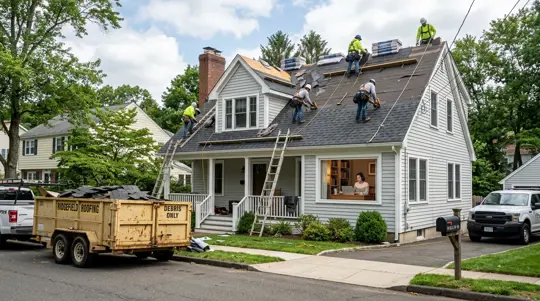
Can homeowners stay in the house during roof replacement?
Yes, homeowners can usually stay in the house during roof replacement, but they should prepare for loud noise, vibration, workers around the property, falling debris, and temporary access restrictions. Children, pets, remote workers, and people sensitive to noise may be more comfortable staying elsewhere until the work is complete.
What Should Homeowners Expect During a Roof Replacement?
Roof replacement is an active construction project. Contractors remove existing roofing materials, inspect the roof deck, install the new roofing system, and clean the surrounding property. Although most of this work occurs outside, occupants will still notice the activity from inside the house.
Common disruptions include:
Loud and frequent noise: Removing old materials and fastening new components can create persistent hammering, scraping, and equipment noise.
Vibration throughout the house: Work on the roof may cause walls, ceilings, light fixtures, and items on shelves to shake.
Workers around the property: Crew members may need access to the roof, driveway, yard, and areas near exterior walls.
Falling materials and debris: Old shingles, nails, flashing, and other materials may be directed into designated disposal areas.
Temporary access limitations: Certain doors, walkways, parking spaces, or sections of the yard may be unavailable during parts of the project.
Remaining home is generally possible when occupants understand these conditions and follow the roofing contractor’s directions. Before the project begins, homeowners should ask which entrances are safe to use, where vehicles should be parked, and whether any areas of the property will be temporarily closed.
Who May Be More Comfortable Staying Somewhere Else?
Even when staying in the house is permitted, it may not be the most comfortable choice for every household member. The decision should reflect individual needs, daily routines, and sensitivity to construction activity.
Young children may have difficulty resting or concentrating during prolonged noise. They should also be kept away from work zones, equipment, materials, and exterior areas where debris could fall. Adults supervising children may find it easier to spend the day at another safe location.
Pets can also react strongly to roof replacement. Hammering and vibration may cause anxiety, hiding, barking, or attempts to escape. Doors and gates may be opened as workers move around the property, creating an additional concern. Keeping pets in a quiet interior room may help, but some animals will be more comfortable away from the house.
Remote workers should consider whether calls, meetings, and focused work will be practical. Roofing noise can travel directly through the ceiling and may continue throughout much of the workday. Anyone who works nights, experiences noise sensitivity, or needs uninterrupted rest may also prefer temporary alternative arrangements.
How Can You Prepare to Stay Home Safely?
Homeowners who remain in the house can take several precautions before the roof installation begins. Preparation helps protect household belongings and reduces unnecessary movement through active work areas.
Items attached to walls or placed on high shelves should be secured or temporarily moved. Roof work can create enough vibration to shift framed pictures, decorations, and fragile objects. Attics should also be checked because dust or small particles may fall from the underside of the roof deck during removal and installation.
Vehicles should be moved according to the contractor’s instructions. Keeping the driveway clear may provide space for equipment, material delivery, and debris collection while protecting vehicles from dust and falling materials. Outdoor furniture, grills, planters, toys, and other movable objects may also need to be relocated away from the house.
In Ridgefield, Connecticut, changing weather can affect how a roofing project is organized. Homeowners should maintain communication with the contractor regarding the work schedule, property access, and any weather-related changes. Occupants should never enter marked work zones or approach ladders, tools, and roofing materials without permission.
How Should Homeowners Coordinate With the Roofing Contractor?
Clear communication before construction begins is essential. Homeowners should tell the roofing contractor if anyone will remain inside, work remotely, care for children, or keep pets at the property. This allows the crew to explain expected activity and identify appropriate entrances or restricted areas.
The contractor should provide instructions concerning parking, exterior access, attic preparation, landscaping, and daily cleanup. Homeowners should also confirm how they will receive updates if access conditions change during the project.
For homeowners in Ridgefield and throughout Fairfield County, the practical answer remains the same: staying home is often possible, but comfort and safety depend on preparation, household needs, and compliance with the contractor’s directions. Choosing to leave temporarily may be sensible when noise, vibration, or access limitations would significantly disrupt the day.
FAQ
Is it safe to stay inside while old shingles are being removed?
It is generally possible to remain inside, provided occupants stay away from exterior work zones and follow all safety and access instructions from the roofing contractor.
Can I work from home during a roof replacement?
You can, but hammering, equipment, and vibration may interrupt calls and concentration. Consider working elsewhere if you require a quiet environment or uninterrupted meetings.
What should I do with my pets during roof replacement?
Keep pets in a secure, quiet interior area or arrange for them to stay elsewhere. Construction noise and frequent outdoor activity may cause stress or escape attempts.
Should I move my vehicle before roofing work begins?
Yes, if directed by the contractor. Moving vehicles away from the work area helps provide crew access and protects them from dust, debris, equipment, and roofing materials.
Can homeowners stay in the house during roof replacement?
Yes, homeowners can usually stay in the house during roof replacement, but they should expect loud noise, vibration, workers around the property, falling debris, and temporary access restrictions. Children, pets, remote workers, and anyone sensitive to noise may be more comfortable elsewhere. Follow the contractor’s safety and access instructions.
Conclusion
Homeowners can usually remain in the house during roof replacement, but they should anticipate considerable noise, vibration, exterior activity, debris, and temporary access restrictions. Whether staying home is practical depends on the needs of the household and the contractor’s safety guidance.
If you are planning a roof installation in Ridgefield, Connecticut, contact Mighty Dog Roofing of Fairfield County to discuss the project, household considerations, and property-access requirements before work begins. Clear preparation can help you decide whether remaining home or making temporary arrangements is the more comfortable option.