Malvern’s mature trees are one of the best things about living here. From the historic borough to wooded neighborhoods in Willistown and East Whiteland, shade keeps homes cooler in summer and gives streets their character. But that same shade creates ideal conditions for moss, algae, and lichen to grow on roofs.
By November, many homeowners notice green patches or dark streaks on north-facing slopes. Some assume it’s only a cosmetic problem. In reality, moss can trap moisture and lift shingle edges, potentially leading to roof damage. Black algae streaks, on the other hand, are usually a cosmetic concern on asphalt shingles. Knowing the difference helps homeowners choose the right treatment and protect their roofs as winter approaches.
What’s Growing on Your Roof?
Not everything on a roof is the same. Knowing what you’re looking at helps you choose the right treatment.
Growth | What It Looks Like | How Serious It Is |
Black streaks (algae) | Dark vertical streaks running down the roof | Usually cosmetic on asphalt shingles; dark staining may affect the roof's appearance and reflectivity |
Moss | Green, fuzzy clumps, often in shaded areas and along shingle edges | Serious; holds water and can lift shingles |
Lichen | Flat, crusty patches in gray, green, or yellow | Moderate; attaches firmly and can damage shingle granules when removed incorrectly |
Mold or mildew | Discoloration on wood trim, fascia, or decking | Can indicate moisture problems in the roof system |
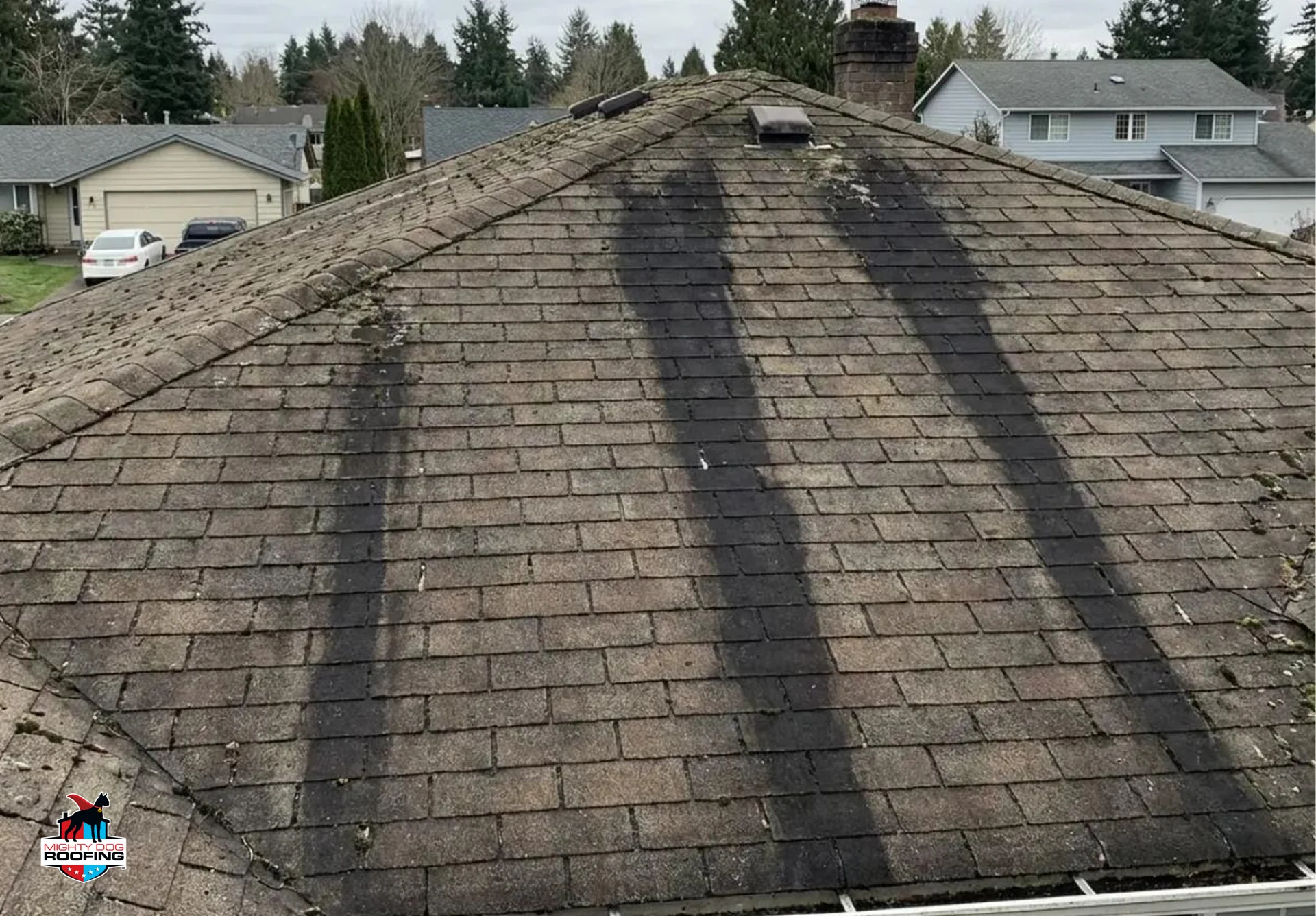
The black streaks seen on many asphalt roofs are usually caused by a type of airborne algae called Gloeocapsa magma. It spreads from roof to roof and feeds on limestone filler found in many shingles.
How Moss Can Damage Roof Shingles
Moss Holds Moisture
Moss acts like a sponge. It keeps shingles damp long after rain stops, which speeds up wear and can lead to rot in wood components.
Moss Lifts Shingles
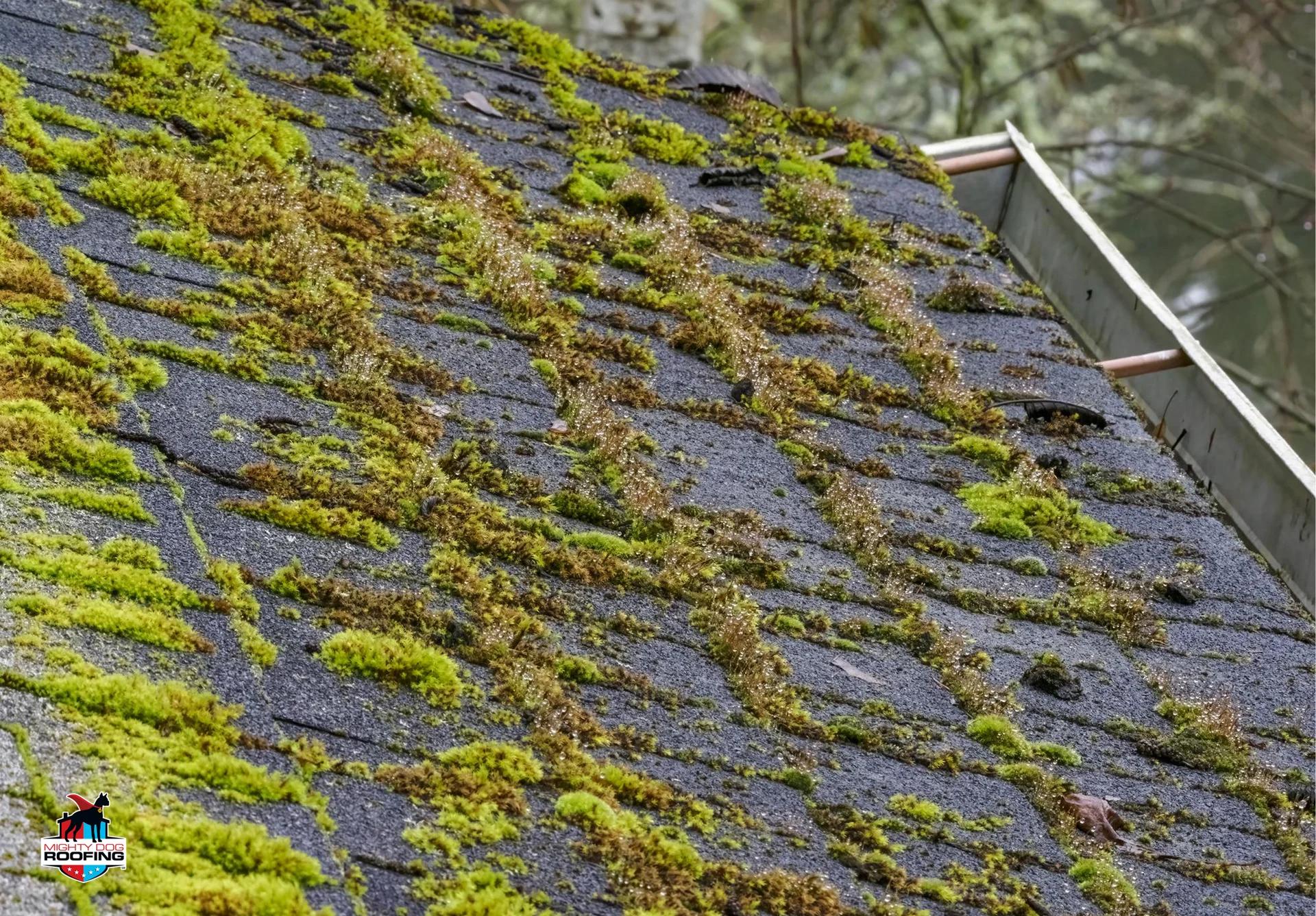
As moss grows between and under shingles, it pushes the edges upward. Lifted shingles are more likely to blow off in wind and let water reach the underlayment.
Freeze-Thaw Makes It Worse
In late fall and winter, water held in moss can freeze overnight and expand. Repeated freeze-thaw cycles widen gaps and cause shingle edges to crack.
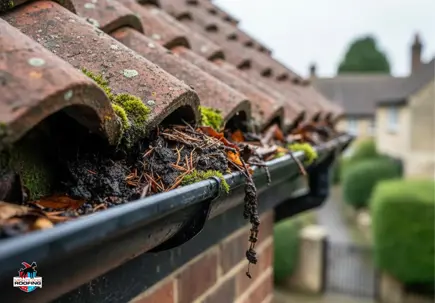
Debris Builds Up
Moss traps leaves, pine needles, and dirt, which creates even more moisture and feeds more growth. Some of that debris washes into gutters and contributes to clogs.
How to Remove Moss From a Roof Safely
Roof moss removal requires care because improper cleaning can damage asphalt shingles. If you're considering professional roof cleaning, make sure the contractor follows the shingle manufacturer's recommendations. Keep these guidelines in mind:
- Avoid pressure washing. High-pressure water strips protective granules from asphalt shingles and can force water under them.
- Avoid scrubbing or scraping. Brushes, wire tools, and aggressive scraping can dislodge protective granules from asphalt shingles. Use a cleaning method approved by the shingle manufacturer instead.
- Use a roof-safe cleaning solution. Products made for roof moss and algae, applied with low pressure, kill growth without damaging shingles. Rinse according to the product instructions and protect nearby plants.
- Let treatments work over time. Dead moss often loosens and washes away with rain over the following weeks.
- Stay off steep or wet roofs. Roofs covered in moss are slippery, especially in cold weather. For most homeowners, it’s safer to hire a professional.
How to Prevent Moss and Algae From Coming Back
Prevention Method | How It Helps |
Trim overhanging branches | Lets more sunlight reach the roof so it dries faster |
Keep gutters and valleys clear | Prevents debris and standing water that encourage growth |
Choose algae-resistant shingles | Many modern shingles include copper-coated granules that resist streaking |
Improve attic ventilation | Helps reduce moisture and condensation in the roof system |
Schedule regular inspections | Catches early growth before it causes damage |
When Moss Means Your Roof Needs Repair
Sometimes moss has already caused damage by the time it’s noticed. Watch for these signs:
- Shingles that are curled, lifted, or missing
- Large bare spots where granules have worn away
- Soft or spongy areas on the roof surface
- Water stains on ceilings or in the attic
- Rotted fascia or roof edges
A roof inspection can confirm whether the growth is still surface-level or whether shingles and decking have been affected. If damage is found, targeted roof repair services can replace damaged shingles and seal vulnerable areas before winter.
Don’t Forget Your Gutters
On tree-shaded homes, roofs and gutters often struggle at the same time. Moss, granules, and leaves wash into gutters and create clogs. When gutters overflow, water can back up under shingles at the roof edge and soak the fascia. In winter, clogged gutters also contribute to ice buildup.
If your gutters are sagging, leaking, or constantly full of debris, consider gutter repair and installation with gutter guards designed for heavy leaf areas.
Why Late Fall Is the Right Time to Act
November is a good month to deal with moss and algae in Malvern. Most leaves are down, so it’s easier to see the roof and clear debris. Fall is a practical time to inspect the roof, remove accumulated debris, and arrange professional cleaning when weather conditions and the product instructions allow. Addressing moss before winter can reduce trapped moisture and help prevent further shingle damage.
A clean, dry roof lasts longer and performs better through winter. For Malvern homeowners surrounded by beautiful mature trees, a little late fall roof care goes a long way toward protecting the home.