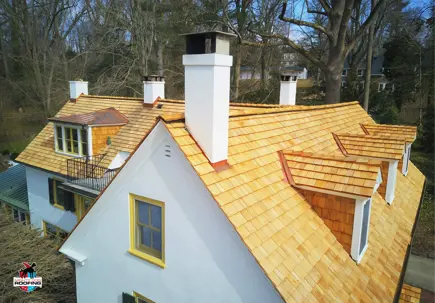
Cedar shake roofs are part of what gives many Main Line homes their character. In Wayne, you’ll see them on Shingle-style houses, Colonial Revivals, carriage houses, and custom homes designed to look like they’ve always been there. A well-maintained cedar roof weathers to a soft silver-gray that fits naturally with mature trees and stone walls.
But cedar is a natural material, and it doesn’t last forever. Shade, moisture, and Pennsylvania’s freeze-thaw cycles all take a toll. By late fall, many Wayne homeowners notice splitting shakes, moss, or leaks and start asking the same question: should the roof be repaired, or is it time to replace it?
How Long Does a Cedar Shake Roof Last?
A cedar shake roof can last roughly 20 to 30 years or more, depending on the quality of the wood, how it was installed, and how well it’s maintained. Roofs that stay shaded and damp under heavy tree cover often age faster than roofs with good sun and airflow.
It also helps to know what’s on your roof. Cedar shakes are thicker and split by hand or machine, giving them a rough, rustic texture. Cedar shingles are sawn, thinner, and smoother. Both age in similar ways, but thicker shakes often last longer when properly maintained.
Why Cedar Roofs Struggle on Main Line Homes
Heavy Shade and Mature Trees
Wayne’s tree-lined streets are beautiful, but shade keeps cedar damp. Moisture that lingers after rain encourages moss, lichen, and fungal growth, which break down the wood over time.
Leaves and Debris
Fallen leaves collect in valleys, behind chimneys, and between shakes. Trapped debris holds water against the wood and blocks the natural drainage cedar relies on.
Freeze-Thaw Cycles
Water that soaks into cracks and splits can freeze overnight, expanding and widening the damage. Over several winters, small splits can turn into leaks.
Signs Your Cedar Shake Roof Needs Attention
Warning Sign | What It Looks Like | What It Usually Means |
Split or cracked shakes | Lengthwise cracks or pieces missing | Normal aging; widespread splits suggest the roof is near the end of its life |
Cupping or curling | Shake edges lifting or bowing | The wood is drying out and losing its shape |
Moss and lichen | Green or gray growth, especially on shaded slopes | Moisture is being held against the wood |
Soft or spongy areas | Shakes that crumble or feel soft | Rot has started in the wood or the roof deck |
Missing shakes | Gaps or exposed underlayment | Wind or age damage that can let water in |
Interior leaks | Stains on ceilings or in the attic | Water is getting past the roof system |
Worn flashing | Rust, gaps, or lifted metal near chimneys and walls | A common source of leaks on older roofs |
A professional roof inspection is the best way to understand how much of the roof is affected. Cedar damage can look minor from the ground while the underlayment and decking underneath tell a different story.
When Repair Makes Sense
Cedar shake roof repair is usually a good option when the roof still has years of life left and the damage is limited to specific areas. Common cedar roof repairs include:
- Replacing individual split, cracked, or missing shakes
- Clearing moss and debris from valleys and behind chimneys
- Repairing or replacing worn flashing around chimneys, skylights, and walls
- Identifying and repairing the source of minor leaks before winter weather arrives
If the damage is limited and the surrounding shakes, flashing, and roof deck remain in good condition, targeted roof repair services can help extend the roof’s service life and reduce the risk of winter leaks.
When Replacement Is the Better Choice
Cedar shake roof replacement often makes more sense when:
- Splitting, cupping, or rot affects large sections of the roof
- The roof needs frequent repairs, and an inspection reveals widespread deterioration or significant loss of wood thickness
- Soft spots suggest the roof deck underneath is damaged
- Leaks keep returning after repairs
- Repair costs start to approach a significant share of replacement cost
Your Replacement Options
When it’s time for roof replacement, Wayne homeowners usually consider three directions:
Option | Appearance | Maintenance | Considerations |
New cedar shakes | Authentic natural wood look that weathers to silver-gray | Periodic cleaning and treatment | Preserves historic character; higher cost and ongoing care |
Synthetic (composite) shakes | Designed to resemble cedar | Low; no rot or insect damage | Keeps a shake look with less upkeep; product quality varies |
Architectural asphalt shingles | Dimensional look; some styles mimic shakes | Low | Lower cost and widely available; less authentic on historic homes |
The right choice depends on your home’s architecture, budget, and how much maintenance you’re willing to take on. For historic properties, check with your township first. Wayne spans Radnor, Tredyffrin, and Upper Merion townships, and some areas have guidelines on roofing materials.
Cedar Shake Roof Cost: What Affects the Price
Cedar roofing costs more than asphalt because of the material and the skilled labor it requires. The final price depends on:
- Roof size, pitch, and complexity
- Shake grade and thickness
- Condition of the roof deck and needed repairs
- Flashing replacement around chimneys and walls
- Removal and disposal of the old roof
- Access to the roof and protection of landscaping
A written estimate after an inspection gives you an accurate number for your home.
Why November Is the Right Time to Decide
Late fall is when cedar roofs face their toughest test. Leaves are piling up, rain is more frequent, and freezing nights are on the way. Repairing damaged shakes and flashing before winter helps reduce the risk of water intrusion and prevents existing problems from getting worse.
If replacement is needed, November is also a good time to get an inspection and estimate, compare materials, and plan the project. Cedar shake roofs are a beautiful part of Main Line architecture, and with the right care or the right replacement plan, your Wayne home can keep that character for decades to come.