
A leaking gutter doesn't always mean a new gutter system. But a patched gutter that fails again six months later costs more than replacement would have in the first place — in contractor visits, in water damage accumulating between repairs, and in the compounding frustration of a problem that keeps coming back.
The decision between repair and replacement comes down to a few specific factors: age, system type, scope of damage, and what's happening to the fascia behind it. At Mighty Dog Roofing of Greater Chadds Ford — a residential roofing company near you serving Chester and Delaware County — every gutter evaluation starts with exactly these questions.
Here's how to read those factors clearly before you call anyone.
When Repair Is the Right Call
Isolated Damage on an Otherwise Sound System
Not every gutter problem is a system problem. These situations point to repair rather than replacement:
A single leaking seam on a system under ten years old. Seam sealant breaks down over time — that's expected. One failing seam on a system that's otherwise intact and properly pitched is a repair, not a replacement. The key word is single. One seam failing is a maintenance issue. Three seams failing on the same run is a pattern.
One section pulled from the fascia with dry, intact wood behind it. A gutter section that has separated from the fascia after a hard winter is straightforward to re-hang — provided the fascia board behind it is dry and structurally sound. If the wood is soft, wet, or showing early rot, re-hanging into compromised fascia creates the same failure again within a season.
A disconnected downspout or missing end cap. These are component failures, not system failures. A downspout that has separated at a joint, an end cap that has popped off, a splash block that has shifted — all of these are repairs that take under an hour and cost very little.
Pitch correction on a short section. Gutters that pool water mid-run because hangers have shifted can often be re-pitched by resetting individual hangers without touching the rest of the system. This is appropriate when pitch problems are limited to one section and the system is otherwise intact.
What a Good Gutter Repair Actually Includes
A repair done correctly addresses the actual failure — not just its visible symptom. Seam resealing with the right product matters: butyl rubber sealant or a product specifically rated for gutter applications outlasts general-purpose exterior caulk significantly. A contractor who reseals a failing joint with silicone caulk from a hardware store is solving a problem for one season, not several.
Hanger replacement should be part of any re-hang where the existing fasteners pulled out of the fascia. Re-driving the same screw into the same hole in softened wood doesn't hold — the repair will fail again at the first significant ice load or heavy rain.
Typical repair costs in Chester County:
- Seam resealing (per section): $75–$200
- Single section re-hang with new hangers: $150–$350
- Downspout reconnection or replacement: $100–$250
- Pitch correction on one run: $200–$400
When Replacement Is the Smarter Move
System-Wide Failure Signs
Some gutter problems aren't isolated — they're symptoms of a system that has reached the end of its functional life. These are the indicators that repair is no longer the right framework:
Multiple leaking seams across different sections. When seams are failing at three or more locations on the same system, the sealant throughout the system has reached the same age and condition. Resealing one joint today means resealing two more next season. The cumulative repair cost approaches or exceeds replacement, without the benefit of a new system when it's done.
Gutters pulling away from fascia at multiple points along the roofline. One detached section is a repair. Multiple detached sections indicate hanger failure throughout the system — a function of age, ice loading, and fastener fatigue. Re-hanging individual sections into progressively weakening fascia is not a durable solution.
Visible rust streaking or internal corrosion. Surface rust on aluminum gutters indicates the protective coating has failed. Once corrosion begins in aluminum, it progresses. Patching rust spots with sealant contains the leak temporarily — it doesn't stop the corrosion that created it.
Pitch problems running the length of the system. When gutters are consistently pooling along multiple runs — not just one section — the system has shifted beyond what hanger adjustment can correct. This typically happens in older sectional systems where cumulative ice loading has deformed the profile over multiple winters.
Age as a Decision Factor
Age alone doesn't determine whether to repair or replace — condition does. But age provides important context for how to interpret condition:
- Under 10 years: Isolated problems almost always favor repair. The system has significant remaining life and repair investment is justified.
- 10–15 years: Evaluate system-wide condition carefully. Isolated issues still favor repair; pattern failures favor replacement.
- 15–20 years (sectional gutters): Replacement is usually the better financial decision. Sectional systems at this age have compromised sealant throughout, and the cumulative repair cost over the next three to five years typically exceeds replacement cost.
- 20+ years (any system): Full assessment required. A well-maintained seamless system at 20 years may still have life left. A neglected sectional system at 20 years almost certainly doesn't.
When Fascia Condition Forces the Issue
The fascia — the vertical board your gutters attach to — is often the deciding factor that homeowners don't see until the gutter comes off the wall. Water that has been backing up behind a leaking or overflowing gutter contacts the fascia first. Wood fascia absorbs that moisture silently, and rot spreads behind the gutter surface without visible signs from the ground until it's well advanced.
The experienced roofing team at Mighty Dog Roofing of Greater Chadds Ford assesses fascia condition on every gutter evaluation — not as a separate service, but as part of understanding what the gutter system has been doing to the wall behind it. Re-hanging a gutter into rotted fascia doesn't solve the problem. It creates the same failure again, usually faster, because the new fasteners have less material to hold into.
When fascia replacement is needed alongside gutters, bundling both into one project saves significantly on labor — the gutter has to come off anyway to address the fascia, and re-hanging new gutters onto repaired fascia is part of the same mobilization.
Sectional vs. Seamless — Why It Changes the Math
What Sectional Gutters Look Like When They're Failing
Sectional gutters — the type installed in ten-foot lengths with visible seams joining them — were standard residential installation through the 1990s. Many Chester County homes still have the original sectional systems. The fundamental limitation is structural: every seam is a potential failure point, and a typical home has twelve to twenty seams depending on the roofline configuration.
As sealant ages, seams fail gradually — first weeping, then dripping, then running. Resealing extends the life of each joint by a few seasons. But when multiple seams across the system are at the same age and condition, resealing becomes a maintenance cycle rather than a repair. The system is managing its deterioration, not recovering from it.
Why Seamless Gutters Change the Repair Equation
Seamless gutters — formed on-site from a continuous coil of aluminum — have seams only at inside and outside corners and at downspout connections. On a typical Chester County home, that's three to six seam locations rather than fifteen to twenty. Fewer seams mean fewer failure points, and the ones that exist are the first places to check when any problem develops.
When a seamless system has an isolated seam failure, it's almost always at a corner or downspout connection — addressable as a targeted repair. When a seamless system has widespread issues at fifteen or twenty years, the problem is typically hanger failure or fascia condition rather than seam failure — a different scope than sectional system replacement.
The practical implication: a sectional system with three failing seams and fifteen years of age is almost always a replacement conversation. A seamless system with one failing corner seam and twelve years of age is almost always a repair conversation. The visible symptom — water dripping from the gutter — looks identical. The right response is different.
What Hidden Damage Changes the Decision
Fascia Rot You Can't See From the Ground
Fascia rot behind gutters is one of the most consistently underdiagnosed problems in Chester County exterior inspections. The gutter hides the fascia surface. Paint on the fascia face may look intact while the wood behind the painted surface has been absorbing moisture for years.
Ground-level indicators of fascia rot to watch for:
- Paint bubbling or pulling away from the fascia face below the gutter line
- A slight depression or soft look along the fascia run — the wood behind has compressed
- Staining on the siding below the gutterline that doesn't correspond to an obvious overflow point
- Gutters that re-detach within a season after being re-hung — fasteners have nothing solid to hold into
If any of these are present, fascia condition needs to be confirmed before any gutter decision is finalized. The scope and cost of the project changes significantly depending on whether fascia replacement is part of the work.
Underground Downspout Problems
Some Chester County homes have downspouts that connect to underground drainage — either a French drain system or a direct connection to a storm drain. When underground connections fail or clog, water appears to drain from the gutter normally but pools near the foundation rather than discharging away from the home.
Installing new gutters over a failed underground connection doesn't solve the drainage problem. The symptoms — basement moisture, foundation staining, soggy soil along the foundation perimeter — continue regardless of what's happening above ground. Before investing in gutter replacement, confirm that downspouts are actually discharging where they should.
A simple test: run a garden hose at full pressure into the top of the downspout. Water should emerge at the outlet point within thirty to sixty seconds. If it doesn't — or if it backs up — the underground connection needs attention before or alongside any gutter work.
Repair vs. Replacement: Decision Reference
Situation | Right Call | Why |
One leaking seam, system under 10 years | Repair | Isolated failure, system has life remaining |
Three or more leaking seams, any age | Replacement | Pattern failure — repair is a maintenance cycle |
One section detached, fascia dry | Repair | Isolated mechanical failure |
Multiple sections detached, fascia soft | Replacement + fascia | Re-hanging into compromised fascia fails again |
Sectional system, 15+ years, multiple issues | Replacement | Cumulative repair cost exceeds replacement |
Seamless system, 12 years, one corner leak | Repair | Isolated seam failure, system otherwise sound |
Visible rust or internal corrosion | Replacement | Corrosion progresses — sealing buys months, not years |
Pitch problems on full run | Replacement | Hanger fatigue throughout — adjustment doesn't hold |
How to Get an Honest Assessment
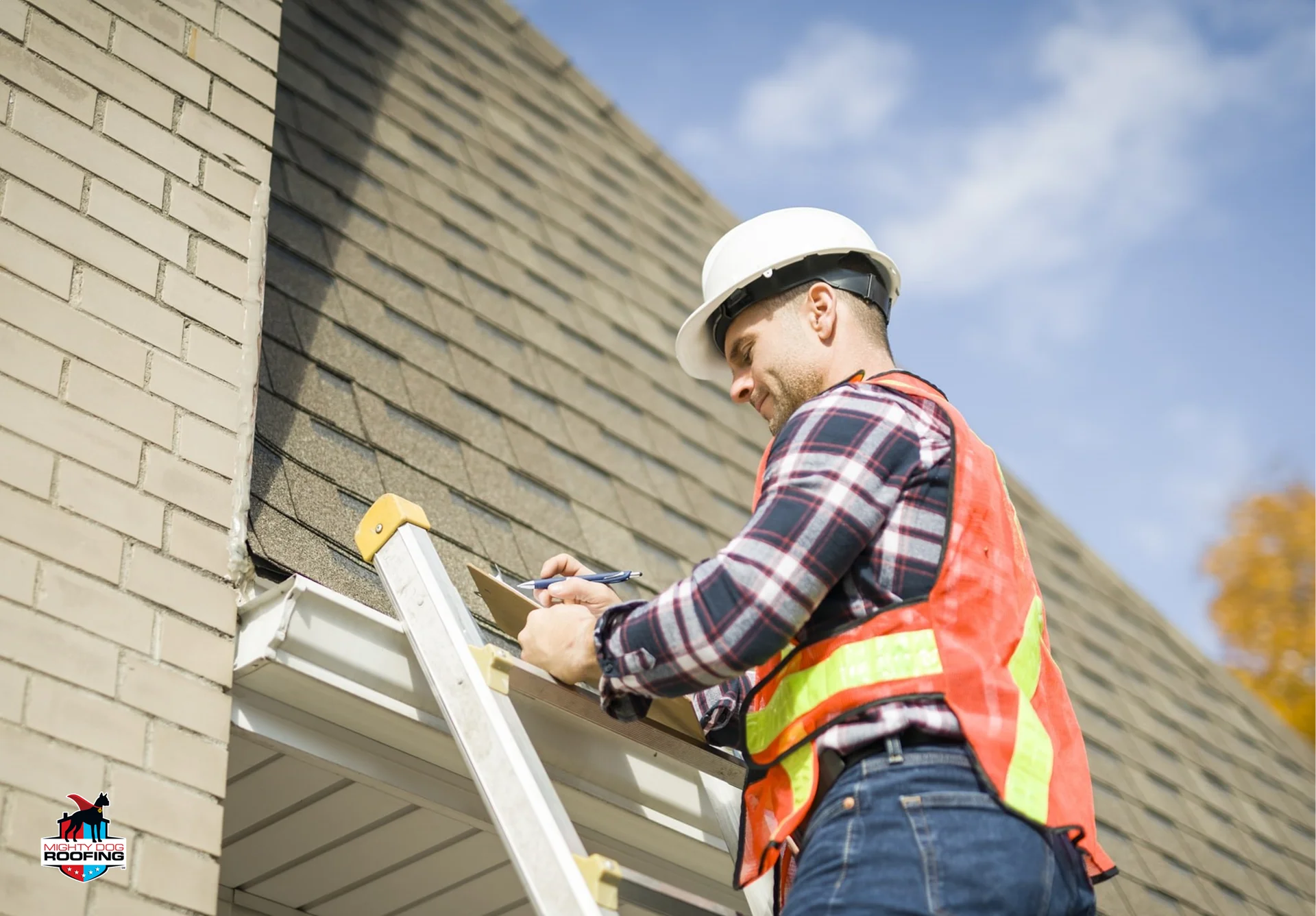
A gutter evaluation that gives you a useful answer covers more than what's visible from the ground. At Mighty Dog Roofing of Greater Chadds Ford, every gutter assessment includes:
- Full system inspection covering pitch, hanger condition, seam integrity, and downspout function
- Fascia condition assessment — not just what's visible but what the gutter has been doing to the wood behind it
- Written findings with a clear repair vs. replacement recommendation and cost for each option
- No pressure toward replacement when repair is genuinely the right answer — and no hesitation to recommend replacement when repair is just a delay
A contractor who arrives and quotes replacement without evaluating repair isn't giving you the full picture. A contractor who patches everything without assessing whether the system has remaining life isn't either.
If your gutters have been giving you problems — overflow, detachment, or foundation moisture you can't explain — get a free estimate from Mighty Dog Roofing of Greater Chadds Ford and find out which conversation you're actually in: a repair conversation or a replacement one.
Know Which Conversation You're In Before You Call
Repair makes sense when the damage is isolated, the system has life remaining, and the fascia behind it is sound. Replacement makes sense when you're managing deterioration rather than fixing a failure — when the cumulative cost of keeping an old system running approaches what a new one would cost, and the new one comes with twenty years of not having this conversation again.
Most homeowners don't know which situation they're in until someone looks at the system properly. That's the starting point — not the quote.