

A farmhouse roof does two things at once — it carries the aesthetic weight of the entire exterior and it performs through Pennsylvania winters, spring storms, and summer heat without complaint. On a farmhouse more than almost any other architectural style, the roof is a dominant visual element. The pitch is steep, the surface area is large, and the material choice reads clearly from the street and across the property.
Not every roofing material pulls off both jobs equally well. The right choice depends on whether your home is a working rural property outside Kennett Square, a modern farmhouse build in a Chester County development, or a historic structure where material authenticity matters as much as performance. At Mighty Dog Roofing of Greater Chadds Ford — a roofing contractor near you serving Chester County and the Brandywine Valley — farmhouse roofing assessments start with those distinctions, because the answer changes depending on which one you're working with.
What Makes Farmhouse Roofing Different
The Visual Language of a Farmhouse Roof
Farmhouse architecture communicates through simplicity and material honesty. Steep gable rooflines, wide overhangs, and clean transitions between roof and wall define the style — and the roofing material either reinforces that language or fights it.
On a traditional colonial or craftsman home, the roof is one element among several competing for visual attention. On a farmhouse, the roof often dominates. A steeply pitched gable visible from the road makes the roofing material the first thing a visitor registers about the exterior. Color, texture, and profile — standing seam vs. shingle, smooth vs. dimensional — all communicate something about the property before anything else does.
This is why material selection for a farmhouse roof deserves more consideration than it might get on other architectural styles. The wrong material doesn't just underperform — it looks wrong, and it looks wrong from a distance.
Performance Requirements Specific to Chester County
Rural and semi-rural Chester County properties carry specific performance demands that suburban installations don't face at the same level:
Tree cover and debris load. Many farmhouse properties in Chadds Ford, Kennett Square, and the Brandywine Valley sit under or adjacent to mature hardwood canopy. Oak leaves, maple seed pods, and pine needles accumulate on roof surfaces and in valleys faster than on open suburban lots. Material choices that are susceptible to moss and algae in shaded, debris-retaining conditions perform differently here than their specifications suggest.
Steeper pitches and wind exposure. Traditional farmhouse rooflines run steep — often 8:12 to 12:12 pitch — which means more surface area exposed to wind uplift than lower-slope residential roofs. Properties on elevated sites or at field edges face wind loads that urban and suburban installations don't.
Larger roof surfaces and complex drainage. A full farmhouse property often includes the main dwelling plus outbuildings, connected structures, or additions with complex roofline intersections. Valley design, drainage path planning, and flashing detail at transitions matter more on these properties than on simpler rooflines.
Metal Roofing — the Farmhouse Standard
Why Metal Became the Default for Farmhouse Exteriors
Metal roofing on Pennsylvania farm buildings isn't a trend — it's a century-old tradition. Standing seam metal has been the practical and visual standard on agricultural structures throughout Chester and Lancaster Counties since well before modern roofing alternatives existed. That history gives metal roofing an authenticity on farmhouse exteriors that no other material can claim.
Visually, standing seam metal reads correctly on both traditional working farmhouses and modern farmhouse builds. The vertical panel lines reinforce the verticality of steeply pitched gables. The clean, minimal surface works with board and batten siding, dark trim, and the generally unadorned aesthetic that defines the style. It's one of the few roofing materials that looks equally at home on a 200-year-old Chester County stone farmhouse and a new construction modern farmhouse in a Kennett Square development.
Performance in Chester County Conditions
Beyond aesthetics, metal roofing outperforms every other residential option on the specific demands Chester County farmhouse properties place on a roof:
Lifespan. A properly installed standing seam metal roof lasts 40–70 years with minimal maintenance. On a farmhouse that you intend to own for decades — or pass to the next generation — this lifespan changes the economics of the material entirely.
Snow and debris shedding. Steep farmhouse pitches combined with a metal surface shed snow, leaves, and debris efficiently. The accumulation problems that plague asphalt shingles in shaded, debris-heavy environments are largely absent on metal. Moss and algae — significant issues on asphalt under tree cover — don't establish on metal surfaces.
Freeze-thaw performance. Chester County averages 40–60 freeze-thaw cycles per year. Metal roofing handles thermal cycling without the granule loss, adhesive seal failure, and surface cracking that those cycles impose on asphalt shingles over time.
Impact resistance. Hail and wind-driven debris cause the most immediate storm damage on asphalt shingles. Metal roofing — particularly standing seam with a hidden fastener system — performs significantly better under impact loading and is less susceptible to wind uplift than exposed-fastener systems or shingles.
Exposed Fastener vs. Standing Seam — the Key Distinction
Not all metal roofing is equal, and the distinction matters for farmhouse applications:
Standing seam uses a concealed fastener system — panels lock together at raised seams with no fasteners exposed to weather. This is the correct choice for residential farmhouse applications: clean appearance, no fastener penetrations that can leak over time, and full thermal movement accommodation.
Exposed fastener metal panels (sometimes called corrugated or R-panel) are appropriate for agricultural outbuildings and barns. On a primary residence, exposed fasteners create long-term maintenance requirements as the rubber washers at each penetration age and require replacement. They also read visually as a commercial or agricultural product rather than a residential one.
If a contractor quotes metal roofing without specifying which system, ask directly. The price difference is significant, and so is the performance and appearance difference over twenty years.
Cost and What to Expect
Standing seam metal roofing installed on a Chester County farmhouse runs $18,000–$40,000+ depending on roof size, pitch complexity, gauge of steel or aluminum, and coating specification. The range is wide because farmhouse roof surfaces vary significantly — a modest 1,800 square foot main structure sits at the lower end; a larger property with connected additions, complex valleys, and outbuilding inclusion sits at the upper end and beyond.
The premium over asphalt is real. Over a 30-year ownership window, it pays back through avoided replacement cycles, lower maintenance cost, and — in some cases — insurance premium reductions for impact-resistant roofing.
Architectural Asphalt Shingles — the Practical Middle Ground
Where Asphalt Shingles Work Well on Farmhouse Homes
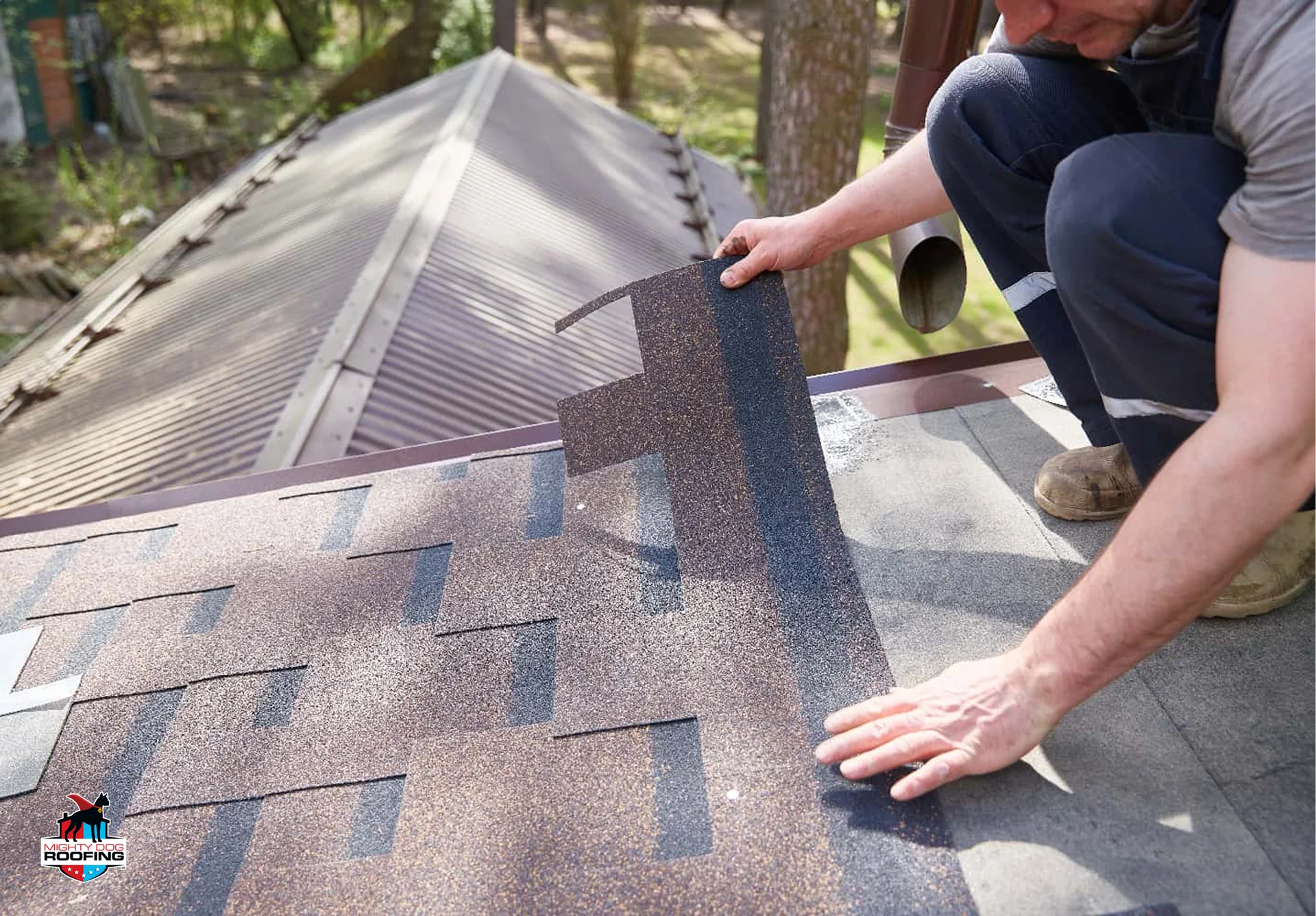
Metal roofing is the premium choice for farmhouse exteriors. It isn't always the right choice — budget constraints, HOA restrictions, or a preference for a softer visual profile all create legitimate reasons to choose asphalt instead. Premium architectural shingles, specified correctly, are appropriate for farmhouse applications.
The key word is premium. Three-tab shingles and builder-grade architectural products don't suit farmhouse aesthetics or Chester County performance demands. The dimensional texture of a quality architectural shingle — particularly in weathered wood, aged slate, or earthy brown tones — reads appropriately on a farmhouse roofline and holds its appearance longer than flat-profile products.
What to Specify for a Farmhouse Application
Not all architectural shingles perform equally in Chester County conditions. For a farmhouse application, the minimum specification should include:
- 30-year architectural shingle minimum — not a builder-grade product
- Impact-resistant (Class 4) rating for rural Chester County locations with hail exposure and debris load from mature tree cover
- Algae-resistant coating — critical for properties with significant shade; standard shingles under heavy tree cover show algae staining within five to seven years
Color selection matters on a farmhouse more than on many other styles. Weathered wood tones, charcoal blends, and warm brown profiles work with the material honesty of the style. Bright or saturated colors — Mediterranean blends, high-contrast variegated profiles — fight the farmhouse aesthetic rather than supporting it.
The Honest Lifespan Reality for Chester County
Quality architectural shingles carry 30-year warranties. In Chester County conditions — specifically on a farmhouse property with significant tree cover, debris accumulation, and freeze-thaw cycling — realistic performance runs 20–25 years when maintained properly.
What shortens that window on rural farmhouse properties:
- Moss and algae under tree cover — requires periodic treatment; untreated, it shortens shingle life significantly
- Debris accumulation in valleys — compacted leaf matter retains moisture against shingles; valley clearing is a maintenance task that many farmhouse owners skip
- Ice dam formation — steep farmhouse pitches shed snow efficiently, but complex roofline intersections with lower-slope sections create ice dam risk at transitions
These aren't arguments against asphalt on a farmhouse. They're maintenance realities to budget for if asphalt is the choice.
Slate — Authentic, Durable, and Demanding
Why Slate Belongs on Certain Chester County Farmhouses
Chester County has more original slate-roofed farmhouses than most regions in the country. Pennsylvania's Slate Belt — running through Lehigh and Northampton Counties to the north — supplied roofing material for residential and agricultural construction throughout the region for over a century. On a historic Chester County stone farmhouse, slate isn't a premium upgrade. It's the original material, and replacement in kind preserves both the property's character and its historical integrity.
Slate performs at a level no other material matches for lifespan: 75–150 years for hard Pennsylvania slate when properly installed and maintained. On a property that has already stood for 150 years, that performance profile is appropriate in a way that a 25-year shingle simply isn't.
Visually, slate carries a visual weight and depth that synthetic alternatives approximate but don't replicate. The irregular surface, the natural color variation across a roof plane, and the way slate weathers over decades produces an appearance that reads as genuinely old rather than designed to look old.
Where Slate Falls Short for Farmhouse Applications
Slate is not the right choice for every Chester County farmhouse, and the limitations are real:
Cost. Installed slate on a residential farmhouse in Chester County runs $30,000–$60,000+ depending on size and complexity. That premium is justified on a historic property where authenticity matters and long-term ownership is the plan. On a modern farmhouse build where the aesthetic is the goal rather than the history, that premium is harder to justify against metal or premium asphalt.
Structural requirements. Slate is significantly heavier than any other residential roofing material — typically 800–1,500 lbs per square (100 sq ft) compared to 250–400 lbs for asphalt. Before specifying slate on any structure, rafter and sheathing capacity must be verified by someone qualified to assess it. Not every farmhouse frame — particularly additions and outbuildings — is built to carry that load.
Installer availability and repair complexity. Qualified slate installers are not common in Chester County. Finding a contractor with genuine slate installation experience — not just a willingness to try — requires vetting. Repair, when needed, requires the same expertise. This isn't an argument against slate; it's a reason to confirm installer qualifications before committing to the material.
Synthetic slate — fiber cement or polymer-based products that replicate slate appearance — addresses the cost and weight limitations while delivering reasonable visual approximation. For a modern farmhouse build where the look matters more than historical authenticity, synthetic slate is worth evaluating alongside natural.
Cedar Shakes — Character With a Maintenance Commitment
The Farmhouse Case for Cedar
Cedar shakes carry a visual texture and warmth that manufactured materials approximate but don't fully replicate. On a traditional Chester County farmhouse — particularly a Pennsylvania German or Colonial Revival style where natural materials define the character — cedar reads authentically in a way that vinyl or fiber cement doesn't.
Cedar weathers naturally to a silver-gray tone over the first five to ten years that suits rural farmhouse aesthetics particularly well. The irregular profile and natural variation across a cedar shake roof communicates the same material honesty that the farmhouse style is built around.
Where cedar still makes legitimate sense for Chester County farmhouse applications: secondary structures and outbuildings where the aesthetic matters but the structural and budget demands of slate or metal aren't warranted, sections of a larger roofline where cedar is used as an accent material alongside metal on primary planes, and historic properties where cedar is the original roofing material and replacement in kind is the priority.
The Honest Maintenance Reality in Pennsylvania
Chester County's climate is not kind to cedar over the long term. The humidity, the tree cover on most rural properties, and the temperature cycling all create conditions that accelerate cedar deterioration without consistent maintenance.
What maintaining cedar in Pennsylvania actually requires:
- Staining or sealing every 3–5 years — not optional; untreated cedar in PA's humidity grays unevenly and begins to split and curl within a decade
- Moss and algae treatment — a chronic issue under tree cover; untreated growth traps moisture and accelerates rot
- Annual inspection of valleys and low-slope transitions — the areas where debris accumulates and moisture retention is highest
A cedar shake roof maintained on this schedule can reach 30–40 years in Chester County. A cedar roof treated as low-maintenance reaches 12–15 years before replacement is necessary. The material isn't the variable. The maintenance commitment is.
Material Comparison for Chester County Farmhouse Properties
Material | Installed Cost Range | Lifespan in PA | Farmhouse Visual Fit | Maintenance Level |
Standing seam metal | $18,000–$40,000+ | 40–70 years | Excellent — traditional and modern | Very low |
Premium architectural asphalt | $12,000–$22,000 | 20–25 years | Good — with correct color and profile | Low–Medium |
Natural slate | $30,000–$60,000+ | 75–150 years | Excellent — historic properties | Low (high repair cost) |
Synthetic slate | $16,000–$28,000 | 30–50 years | Good — modern farmhouse builds | Low |
Cedar shakes | $18,000–$32,000 | 15–40 years | Excellent — traditional properties | High |
How to Choose the Right Material for Your Farmhouse
Questions That Should Drive the Decision
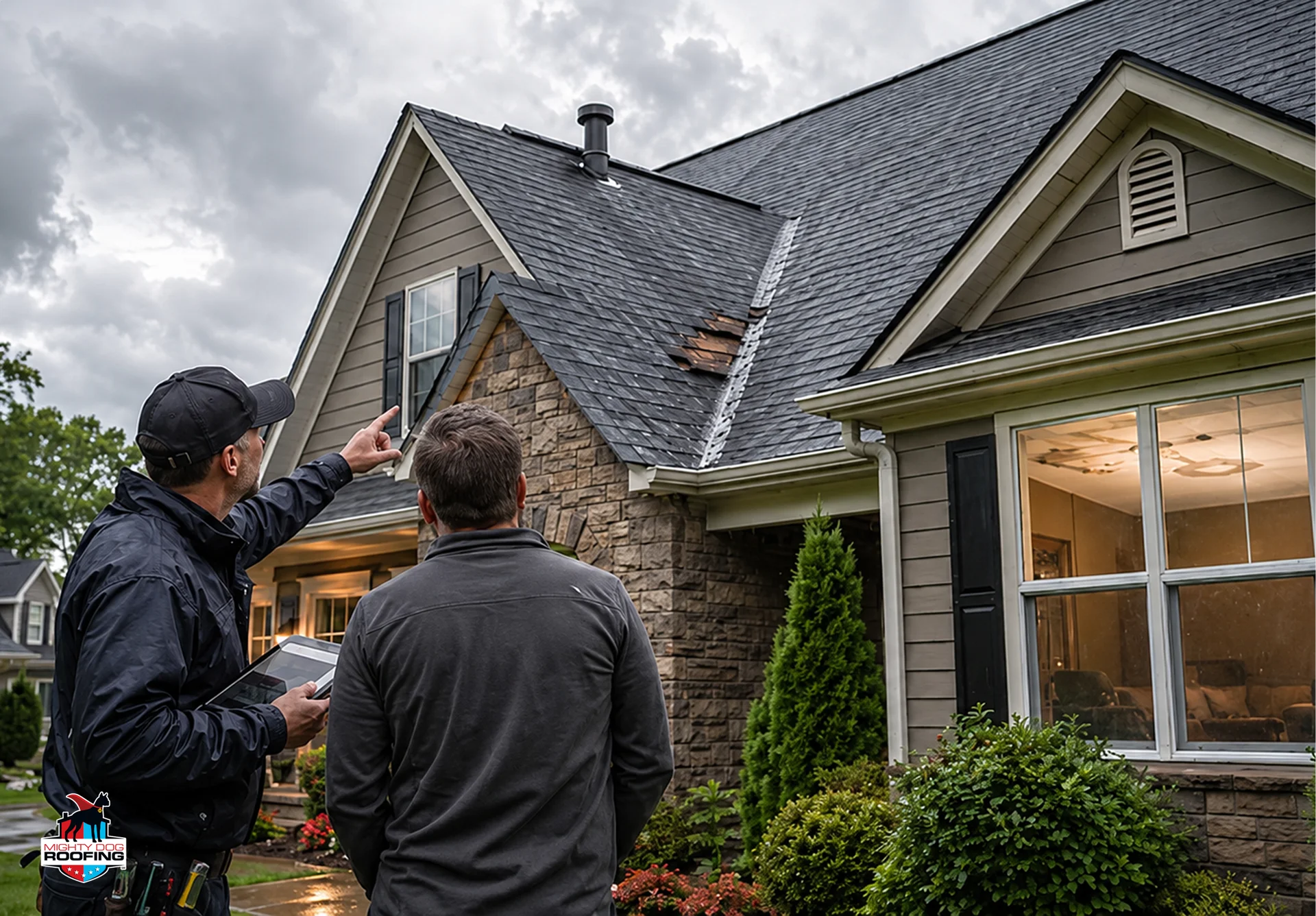
Before any material decision is finalized, these questions clarify the right direction:
Is this a historic property where material authenticity matters, or a modern farmhouse build where the aesthetic is the goal? The answer changes the slate conversation entirely — and affects whether cedar or standing seam is the stronger choice.
What is the roof's pitch, complexity, and tree exposure? High pitch with significant tree cover favors metal strongly. Lower complexity with less debris load opens the asphalt conversation more practically.
What is the realistic ownership timeline? A 10-year ownership horizon and a 40-year one produce different material economics. Metal and slate pay back their premium over long ownership. On a shorter horizon, premium asphalt may make more financial sense.
What is the structural capacity of the existing frame? This question must be answered before slate is specified on any structure. At Mighty Dog Roofing of Greater Chadds Ford, every slate consideration includes a structural assessment as part of the estimate process — not as an afterthought. The certified roofing professionals on our team have the experience to evaluate both the structural and material questions before any commitment is made.
What the Mighty Dog Roofing Team Evaluates
A farmhouse roofing assessment at Mighty Dog Roofing of Greater Chadds Ford covers more than material selection. Before any recommendation is made, the team evaluates:
- Structural capacity — rafter size, spacing, and sheathing condition relative to material weight
- Ventilation configuration — farmhouse attic assemblies vary significantly and ventilation requirements change with material choice
- Tree exposure and debris load — which materials require active maintenance vs. which shed and resist naturally
- Valley and transition complexity — where the roofline is most vulnerable and how material choice affects those zones
The Mighty Dog Roofing team evaluates structural capacity, ventilation configuration, tree exposure, and valley complexity before any material recommendation is made — so the decision is based on the specific property, not a general preference.
If you're weighing material options for a farmhouse roof replacement in Chester County, contact our roofing experts for a property-specific assessment. The right material for your farmhouse is the one that fits the structure, the site, and the ownership plan — not the one that looks best in a product brochure.
The Best Farmhouse Roof Is the One That Belongs
Standing seam metal is the strongest all-around choice for most Chester County farmhouse properties — traditional or modern, rural or semi-rural. It performs at the top of every relevant category, reads authentically on the style, and carries a lifespan that makes the premium rational over a long ownership horizon.
Slate belongs on historic properties where authenticity is the priority and the structure supports the weight. Premium asphalt is a legitimate choice when budget constraints are real and the specification is correct. Cedar works where maintenance commitment is genuine and the aesthetic demand is high.
The roof that belongs on your farmhouse is the one that performs where the property puts it, looks like it was always there, and doesn't require a replacement conversation in fifteen years. That's the starting point — and it starts with an honest look at the specific property, not a materials catalog.