
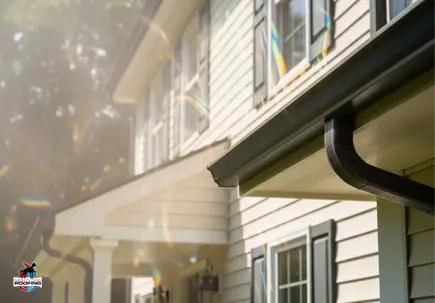
Gutters take a real beating in winter — that much is common knowledge among Chester County homeowners, who know to watch for ice dams and snow-related sagging every year without fail, and who can usually spot the signs of winter gutter damage without much explanation. What most don't realize is that summer heat creates an entirely separate category of gutter damage, quietly and consistently, from June straight through August, with no ice or snow anywhere in the picture. Thermal expansion, sealant failure, and debris accumulation under summer conditions all quietly set the stage for the failures that eventually show up as active leaks once fall rain arrives in real volume.
A residential roofing company near you handling gutter service calls in October is, more often than not, looking at problems that actually began three or four months earlier — in the middle of a heat wave that nobody, at the time, connected to their gutter system at all. Here's exactly what heat is doing to your gutters right now, and what's genuinely worth checking before fall rain arrives and finds every weak point the summer left behind.
Why Summer Is Harder on Gutters Than Most Homeowners Think
The Heat Numbers That Matter
Dark aluminum gutters sitting in direct sun can reach surface temperatures of 120°F–160°F on a typical summer afternoon, then cool by 60°F or more once night falls — a swing that repeats, day after day, for months at a stretch without a single break in the pattern. This thermal cycling is genuinely cumulative in its effect on the system: each individual cycle stresses seams, hangers, and sealant just a small amount, which is exactly why the damage that finally becomes visible in October has actually been building steadily and invisibly since June, one hot afternoon at a time.
What Chester County's Summer Adds Specifically
- High humidity combined with sustained heat accelerates organic growth inside gutter channels that aren't cleared out on a regular schedule through the season
- Summer storm intensity places real, sudden stress on the whole gutter system at once, with heavy rain volume testing every existing weak point simultaneously rather than one at a time
- Gutters on south and west-facing exposures consistently take the most cumulative damage and tend to fail first, simply because they absorb the greatest share of direct afternoon heat compared to shaded or north-facing sections
Thermal Expansion — What Heat Does to Gutter Sections
How Aluminum Gutters Move in Summer Heat
A single 20-foot section of aluminum gutter can expand by as much as a quarter inch on a genuinely hot afternoon, a small but real amount of movement that most homeowners would never guess was happening just by looking at the system from below. That movement stresses end caps, seam connections, and J-hook fasteners every single time it happens, day after day through the entire summer season, with each cycle contributing a small amount of fatigue to the connection points. Sectional gutter systems — which have considerably more connection points than fully seamless systems do — are meaningfully more vulnerable to this kind of cumulative stress building up across an entire season of repeated expansion and contraction.
What Expansion Damage Looks Like
- End cap separation — a small gap gradually opens at the end of a gutter run and typically only becomes obvious as a leak during heavier rain events, when water volume exceeds what the small gap can handle without overflowing
- Seam gaps in sectional systems — sealant at the joint stretches under repeated movement, then cracks, and eventually stops sealing effectively under any real load
- Hanger loosening — repeated expansion and contraction movement gradually fatigues the fastener connection anchoring the gutter into the fascia board, until the gutter begins to pull away visibly
Sealant Failure — the Hidden Summer Problem
Why Summer Heat Accelerates Sealant Breakdown
Gutter sealant is manufactured and rated for a specific operating temperature range, and summer heat on dark gutter surfaces consistently pushes well past that rated range on hot afternoons, putting the material under conditions it wasn't really designed to handle for extended periods. UV exposure adds a second, entirely separate layer of degradation on top of the heat itself, breaking down sealant surface chemistry independently through direct sun exposure regardless of temperature. This combination explains why sealant that looked completely intact back in April can be visibly cracked and pulling away by August, with no single obvious event or storm that caused the failure — just steady, cumulative wear. This is exactly the kind of hidden deterioration that an experienced roofing team is trained to spot during a routine gutter check, well before it turns into an active leak.
Where Sealant Failures Show Up First
- Inside corners and mitered sections — consistently the highest-stress points anywhere in a gutter system, where two runs meet at an angle
- End caps positioned on south-facing runs — the sections receiving the most combined UV and direct heat exposure throughout the day
- Downspout outlet connections — where high water volume during storms amplifies even a small sealant gap into a clearly visible, actively dripping leak
Debris and Organic Growth in Summer Conditions

What Builds Up Over Summer
Seed pods and helicopter seeds shed by maples and oaks accumulate steadily in gutter channels throughout the season, especially on properties with mature tree cover close to the roofline. Shingle granules washed down off the roof during summer storms settle at the low points of each gutter run, adding to the buildup already in progress. Algae and organic slime can form readily in any section holding standing water, particularly where debris has already partially blocked the normal flow of water toward the downspout.
Why Summer Debris Is Different From Fall Leaves
Summer debris tends to be wet, fine, and compacts very differently than the dry fall leaves most homeowners are more used to clearing out each year, which makes it considerably harder to flush out with a simple garden hose rinse. Organic growth binds that fine debris together into a denser, more stubborn mass than dry leaves alone would ever create on their own without that binding effect. Partially blocked gutters overflow readily during summer storms, and that repeated overflow can affect fascia boards and even foundation drainage over the course of a season if it happens more than once or twice without being addressed.
Storm Damage to Gutters in Summer
What August Storms Do to Gutter Systems
High-volume rain events stress every section of a gutter system simultaneously, not just whatever happens to be the single weakest point on that particular run. Wind loading generated by summer thunderstorm gusts places direct physical pressure on hanger attachment points along the entire length of the gutter. Branches and larger wind-driven debris landing in gutters during a storm can cause additional physical damage well beyond anything water alone would cause on its own, denting sections or knocking hangers loose outright.
What to Check After a Significant Summer Storm
- Walk the full perimeter of the home during the next rain event — the exact overflow location identifies the problem zone directly and immediately without any guesswork
- Look closely for any sections that have visibly shifted or no longer sit flat and flush against the fascia board along its length
- Check downspout discharge points to confirm water is actually moving away from the foundation, rather than pooling nearby where it can cause separate and unrelated problems over time
What to Do Before Fall Arrives
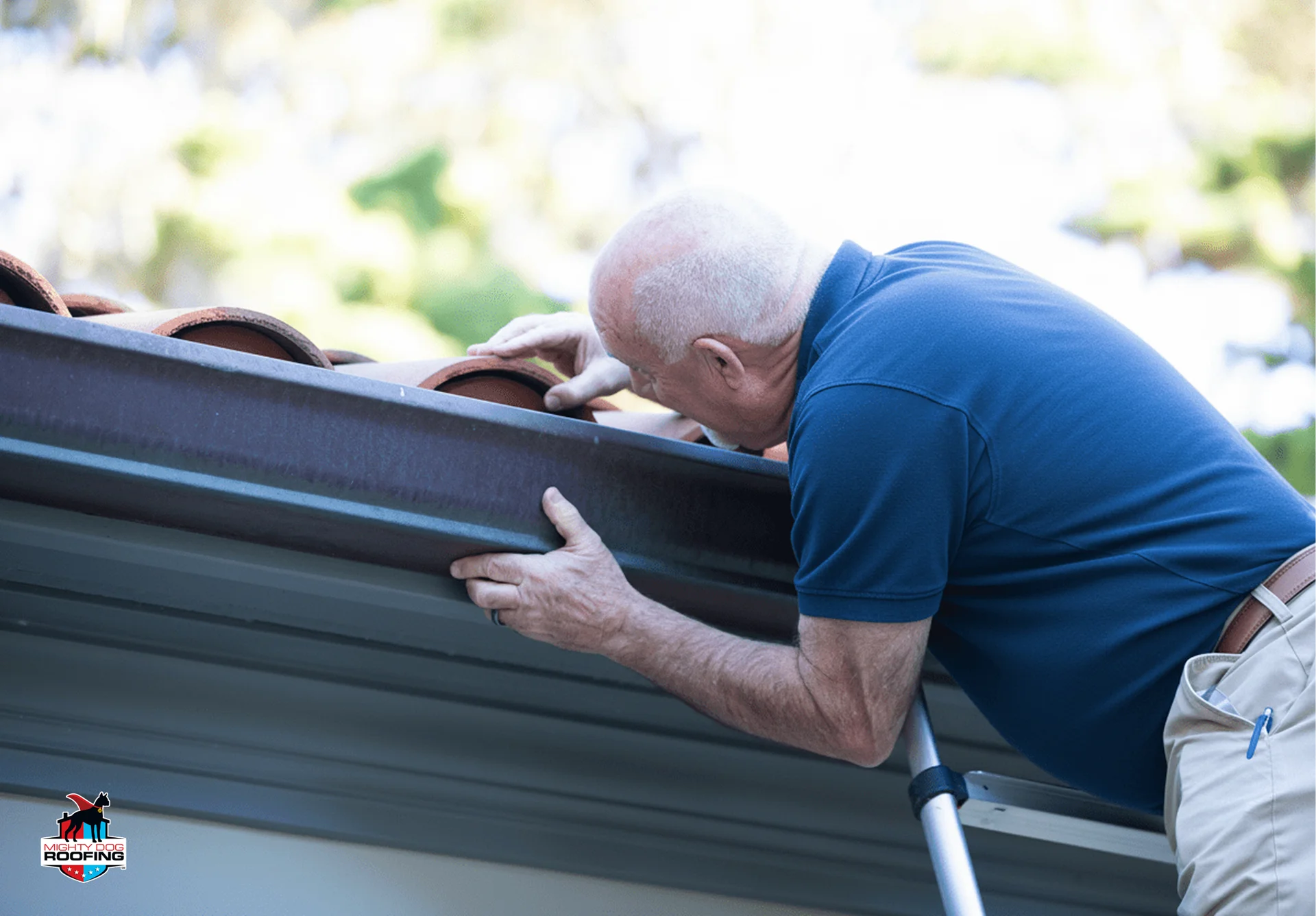
The Late-Summer Gutter Checklist
- Clear any existing debris accumulation now, well before fall leaf season adds an entirely new layer on top of what's already sitting in the gutters
- Run water through the entire system and check every seam, corner, and downspout connection carefully for active leaks or slow drips
- Look specifically for hanger gaps — any section where the gutter has pulled even slightly away from the fascia board compared to the rest of the run
When to Call for a Professional Assessment
Multiple seam failures or hanger issues showing up across different sections of the system are worth a professional look before fall demand really peaks across the region. Fascia staining or paint failure below the gutter line typically means moisture is already working its way in behind the trim, out of sight. Any section that overflows consistently even after a thorough clearing needs direct attention now, rather than after the first hard fall rain makes the problem considerably worse than it already is. Get a free estimate before fall demand peaks and the calendar fills up around you.
Summer heat doesn't destroy a gutter system overnight — it weakens it section by section, day after day, until the first heavy fall rain finally finishes the job it started back in June. A late-summer check costs almost nothing to arrange. The foundation and fascia damage that results from a full season of undetected gutter failure costs considerably more to fix once it's already done.