
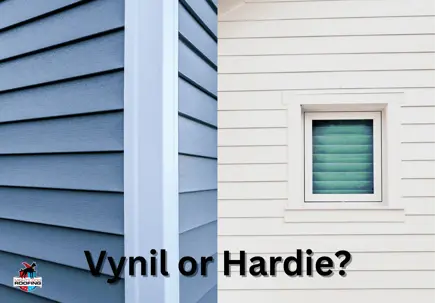
What Each Material Is Made Of — and Why It Matters
What Vinyl Siding Is
Vinyl siding is a PVC-based product — a plastic cladding layer with no structural value. It comes in a range of thicknesses from budget-grade panels at 40 mils to premium products at 55 mils or higher. Insulated vinyl adds a layer of expanded polystyrene foam to the back of each panel, which reduces thermal bridging and adds a modest R-value. Vinyl is lightweight, doesn't absorb moisture, and doesn't require painting. The limitations are specific: thinner panels dent under impact, all vinyl fades over time and cannot be repainted, and the material expands and contracts significantly with temperature changes — managed by correct installation, or visible as a problem within a few years.
What James Hardie Fiber Cement Is
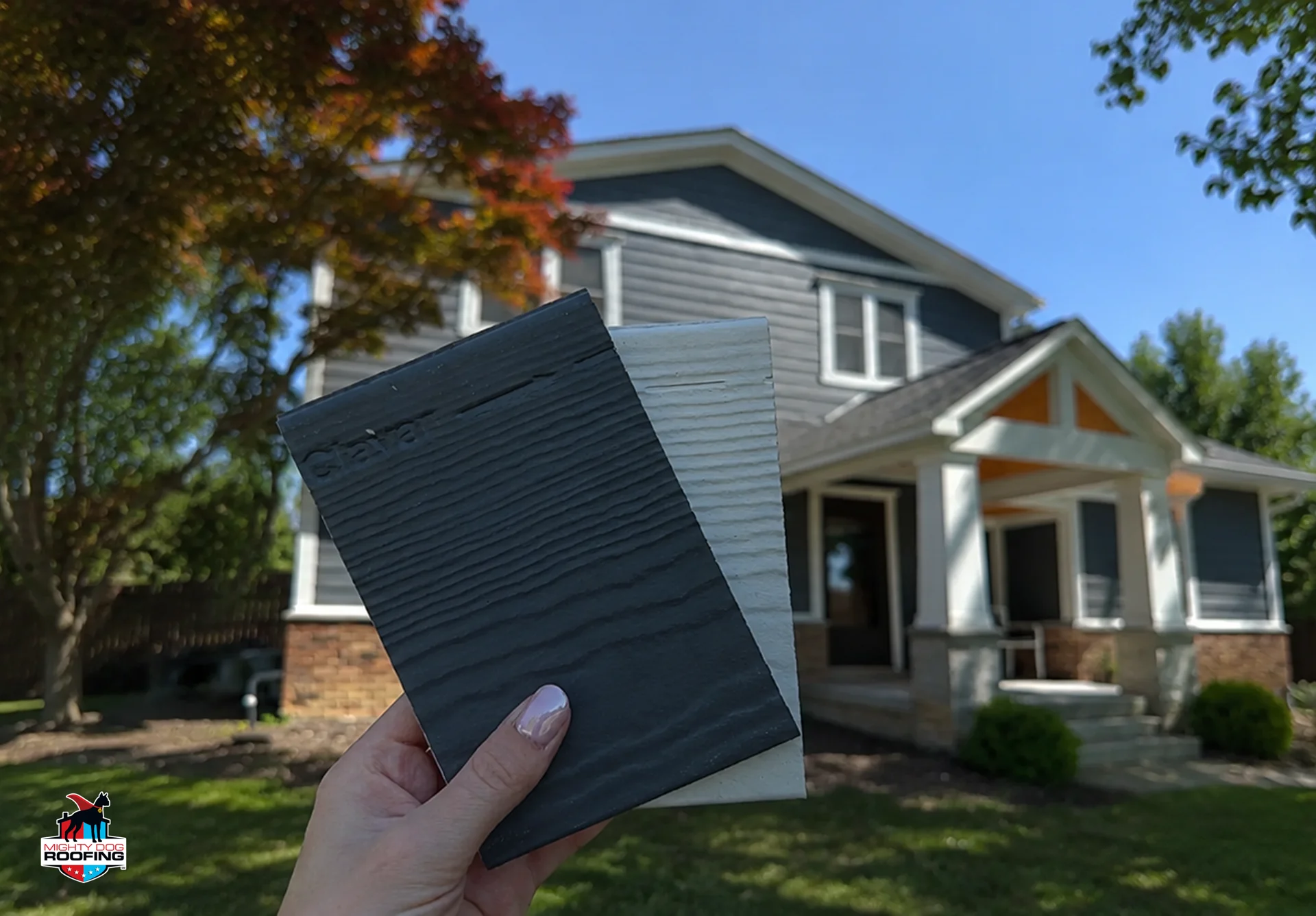
James Hardie fiber cement — most commonly sold as HardiePlank lap siding — is a composite of Portland cement, sand, and cellulose fiber. A single 12-foot plank weighs 10–12 pounds, compared to 1–2 pounds for a vinyl panel of the same length. That density means better impact resistance, more secure fastener holding, and no flexing under thermal stress. Fiber cement is non-combustible, which affects fire ratings in certain jurisdictions and can lower homeowner's insurance premiums. It accepts field repainting, meaning the color can be refreshed or changed during the life of the installation — a capability vinyl does not offer. James Hardie products carry a 30-year limited warranty on the substrate and 15 years on factory-applied ColorPlus finishes.
Side-by-Side: Cost, Lifespan, and Performance
Factor | Vinyl Siding | James Hardie |
Installed cost (Chester County) | $5–$9 per sq ft | $12–$18 per sq ft |
Expected lifespan | 20–25 years | 30–50 years |
Color / painting | Fixed at purchase — cannot be repainted | Repaintable every 10–15 years; full color flexibility |
Impact resistance | Moderate; cracks from hail 1.5"+ | High; dents rather than cracks under most impacts |
Fire resistance | PVC melts and burns | Non-combustible, Class 1-A fire rated |
Thermal movement | High — buckling risk if installed too tight | Minimal — dimensionally stable across seasons |
Maintenance | Low — periodic washing only | Low — repaint every 10–15 years |
Resale return (Cost vs. Value report) | 68–72% | 75–80% |
Upfront Cost and True Cost of Ownership
Why the Installation Cost Gap Is Real
The labor premium for fiber cement reflects genuine installation requirements: the material requires two-person handling on most cuts, carbide-tipped blades to cut cleanly, and specific nail sizes and patterns per James Hardie's installation specifications to maintain warranty coverage. On a 2,000 sq ft home with moderate complexity, the cost difference between vinyl and HardiePlank typically runs $14,000–$18,000. Contractors who quote fiber cement at vinyl prices are either cutting corners on installation quality or miscalculating the scope. Mighty Dog Roofing of Greater Chadds Ford provides separate line-item estimates for material and labor on both products so homeowners can see exactly where the cost difference comes from.
Long-Term Cost: Maintenance and Repainting
Vinyl siding's zero-maintenance advantage has an important limit: when it fades — within 10–15 years on sun-exposed elevations — the only option is full replacement. There is no way to repaint vinyl and achieve a durable result. James Hardie requires repainting every 10–15 years, costing $3,000–$7,000 for a full exterior. That's a real expense, but it's also an opportunity to update the home's color entirely. Over a 30-year period, the true cost of ownership for both materials converges more than the upfront gap suggests.
Performance in Pennsylvania's Climate
Freeze-Thaw Cycles and Thermal Movement
Pennsylvania experiences temperature swings from below-freezing winter nights to 90°F summer days. Vinyl's coefficient of thermal expansion is roughly five times that of fiber cement — meaning vinyl panels move significantly more across that range. When installed correctly with proper nail clearance and slot allowance, that movement is accommodated without damage. When installed tight — a common error on rushed jobs — panels buckle in summer and crack in winter. Fiber cement's dimensional stability means this failure mode essentially doesn't exist. Mighty Dog Roofing of Greater Chadds Ford follows James Hardie's installation specifications on every HardiePlank job, which is required to maintain manufacturer warranty coverage.
Storm and Impact Performance
Chester County sees significant summer thunderstorm activity and periodic hail. When hail or impact damage occurs on vinyl, matching replacement panels to faded surrounding material is often impractical — new panels read as a visible patch. Fiber cement handles the same impact better, and when surface damage does occur, it can be spot-painted to match. These differences affect insurance claim frequency and repair costs over the installation's life in ways that don't appear in an upfront cost comparison.
Which Option Is Right for Your Home
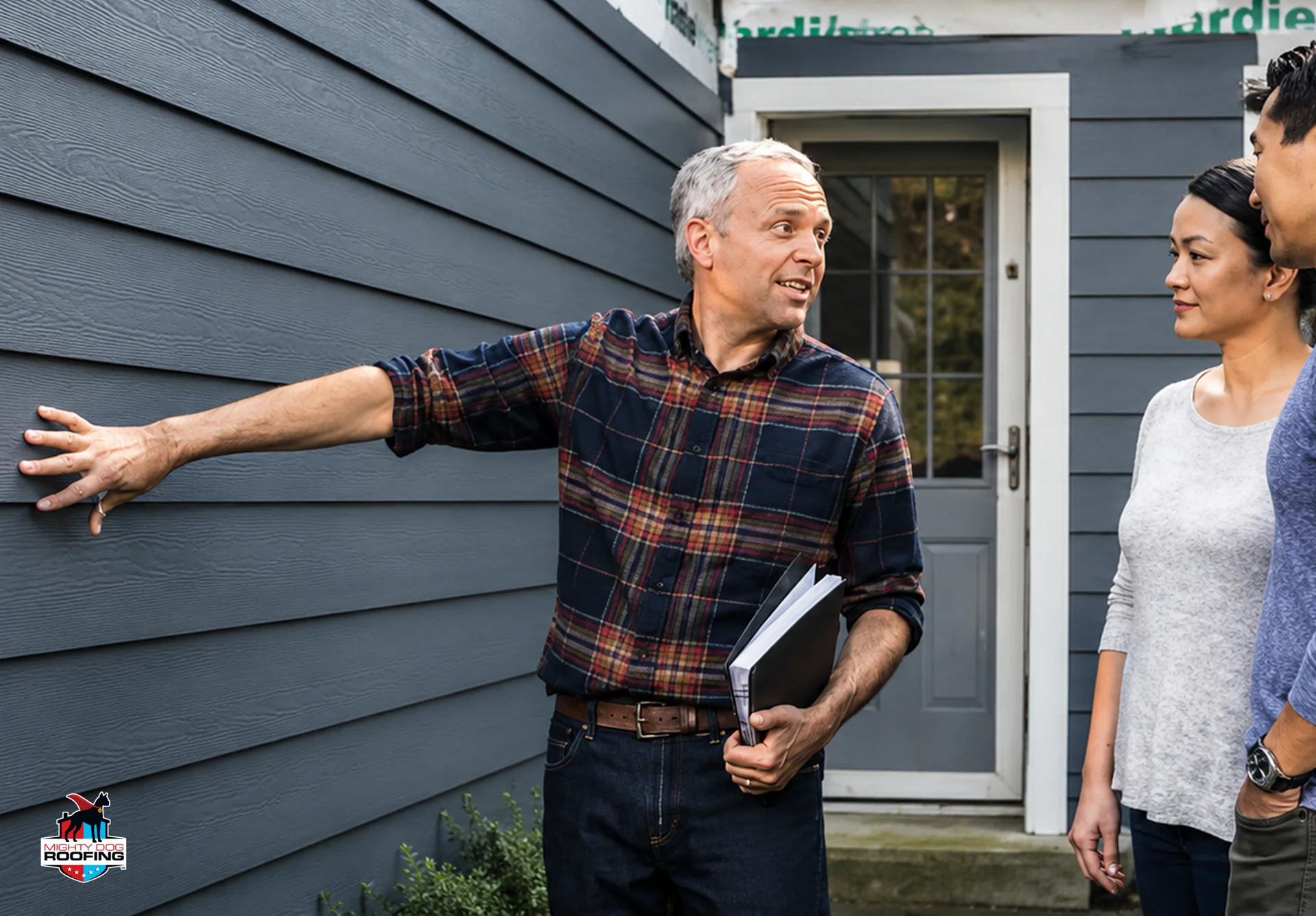
The right choice depends on your home, your timeline, and your priorities. Here's a practical framework for the decision:
- Choose vinyl if your priority is minimizing upfront cost, you plan to sell within 7–10 years, and your home is in the mid-market price range where fiber cement's resale premium is less pronounced
- Choose James Hardie if you plan to stay long-term, want color flexibility over time, your home has stone or brick accents where vinyl's lighter appearance reads as a mismatch, or your home is in the upper price tier where buyer expectations around exterior materials are higher
- Consider insulated vinyl as a middle path if energy efficiency improvement is a priority and the fiber cement premium is outside the budget — insulated vinyl adds measurable R-value at lower cost than HardiePlank
As a siding contractor near you, Mighty Dog Roofing of Greater Chadds Ford installs both vinyl and James Hardie throughout Chester County. Before any material is ordered, we provide a written side-by-side cost comparison for your specific home — material, labor, and long-term maintenance factored in — so the decision is based on actual numbers, not estimates from a brochure.
On-site visits cover current siding condition, measurements, moisture barrier assessment, and a full walkthrough of both product options against your home's specific profile. We serve homeowners across Chester County, including Kennett Square, Glen Mills, Media, Landenberg, and Avondale.
To walk through the options in person, reach out to our siding installation team to schedule an on-site visit. We'll assess your current siding condition, take measurements, and review both products against your home's specific profile — no commitment required.
On-site visits are available throughout Chester County, including Kennett Square, Glen Mills, Media, Landenberg, Avondale, and surrounding communities. Most walkthroughs take under 90 minutes and result in a written estimate you can use to compare options at your own pace.
Prefer to start with a quick inquiry? Get a free siding estimate online and we'll follow up to get you on the schedule.