
What Soffit and Fascia Actually Do
The Role of the Fascia Board
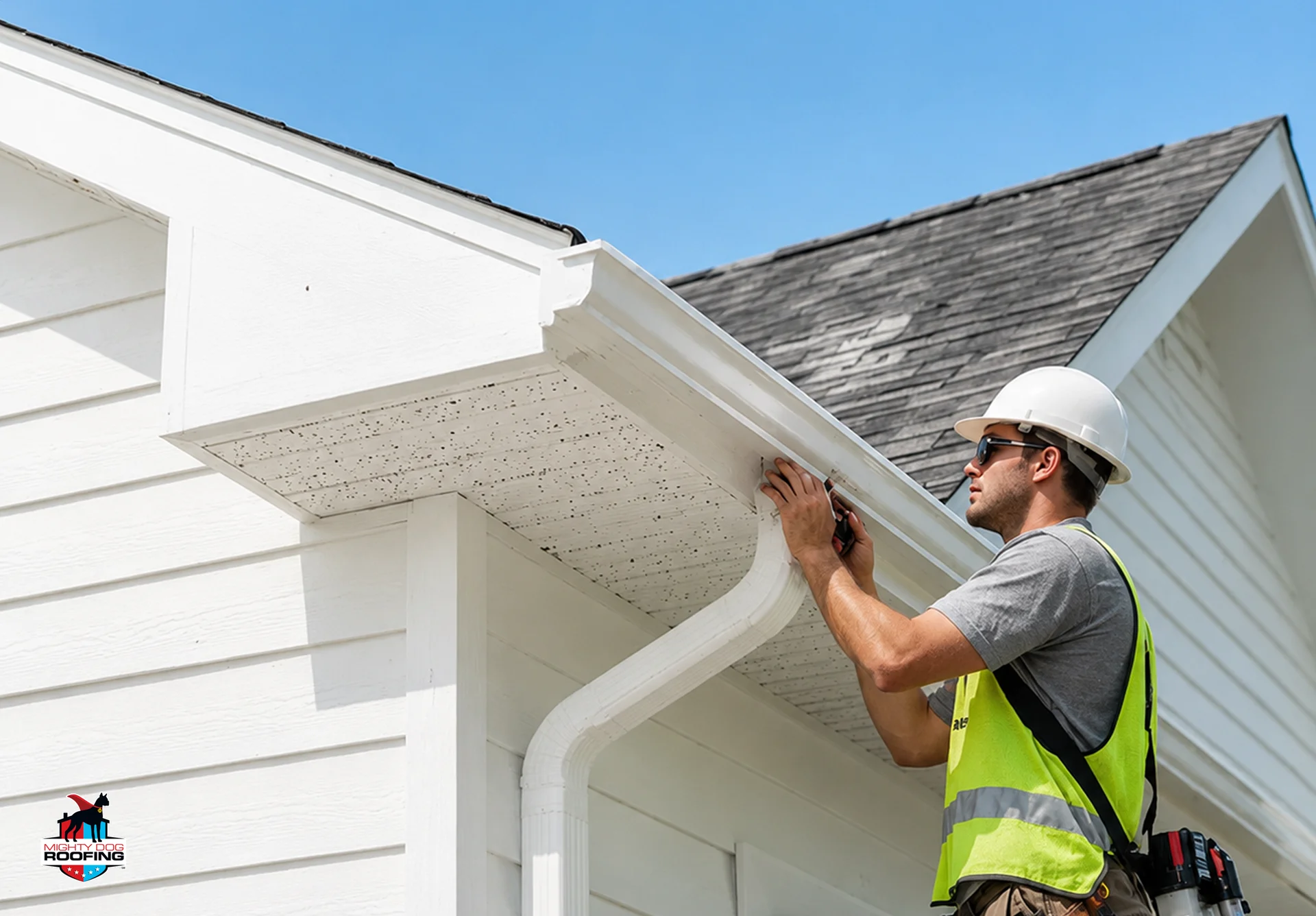
The fascia is the vertical board that runs along the lower edge of the roofline — the board your gutters attach to. It seals off the end of the roof rafters, gives the roofline a finished edge, and carries the full weight of your gutter system. When it's in good shape, none of this is visible or noticeable. When it begins to rot, the problems compound quickly.
Because gutters sit directly against the fascia, any moisture that gets behind or underneath them — from overflow, a leaking seam, or poor gutter pitch — contacts the fascia first. Wood fascia boards absorb that moisture silently. By the time the rot is visible from the ground, it's typically been spreading for months. In Chester County, where spring and summer bring significant rainfall, the combination of a leaking gutter and an exposed fascia is one of the most common causes of roofline damage that homeowners don't catch until it's expensive.
What Soffit Does for Ventilation
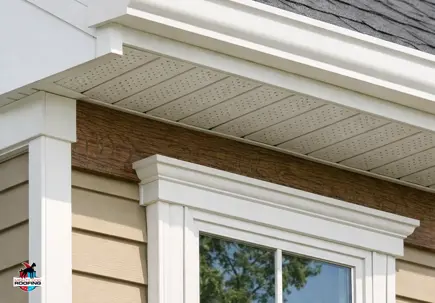
Soffit covers the underside of the roof overhang. On most residential homes, soffit panels are vented — they contain perforated openings that allow outside air to enter the attic. This intake airflow works with ridge vents and box vents on the exhaust side to keep attic temperature from building to damaging levels.
When soffit vents are working correctly, cool air enters low at the eaves and warm moist air exits high at the ridge — in summer protecting shingles from heat damage, in winter preventing condensation on the sheathing that causes mold and rot. Blocked or damaged soffit cuts the effectiveness of the entire ventilation system regardless of how well the exhaust side is performing.
Signs Your Soffit or Fascia Is Failing
What to Look For From the Ground
A ground-level inspection during or just after rain is one of the most practical checks a homeowner can do. Look along the roofline while gutters are actively flowing and note any overflow — the location usually points to a blockage, a pitch issue, or a seam leak directing water behind the gutter. At Mighty Dog Roofing of Greater Chadds Ford, a roofline walkthrough is part of every exterior inspection we perform before any estimate is written. Several specific things are worth looking for on every pass:
- Paint bubbling, peeling, or pulling away from fascia boards below the gutters — the earliest external sign of moisture behind the surface
- Soft spots or slight depressions on wood fascia indicating rot already underway
- Buckling or separating seams on aluminum-clad fascia, even when the cap itself looks intact
- Soffit panels that have sagged, separated at joints, or show dark water staining
- Any panel that has physically dropped at an edge — no longer sealed, now an entry point for moisture and pests
Pest Entry and Blocked Ventilation
Damaged soffit is the single most common entry point for wildlife into residential attics in Pennsylvania. Wasps build nests inside open soffit cavities. Squirrels chew through deteriorated panels to access the attic for nesting. Birds enter through gaps at panel edges or where soffit meets fascia. The damage done by a squirrel colony or large wasp nest inside an attic is considerable — and none of it is quiet once it starts.
Beyond pest entry, warped, cracked, or debris-blocked soffit panels no longer allow adequate air intake. If your attic is significantly hotter than outside during summer, or if you've seen frost on attic sheathing during winter, restricted soffit ventilation is one of the first things to evaluate. A roofing contractor near you can assess intake airflow as part of a standard roof and exterior inspection.
Repair vs. Replacement: Cost and Scope Reference
Situation | Action | Typical Cost | Key Condition |
1–2 rotted fascia sections, dry rafter tails | Spot repair | $200–$600 | Confirm rafter tail condition before agreeing to scope |
Rot running full roofline length | Full fascia replacement | $1,200–$3,000+ | Bundle with gutter re-hang to save on labor |
1–3 damaged soffit panels, structure intact | Panel replacement | $150–$400 | Verify lookout boards are dry before closing up |
Multiple soffit sections sagging or open | Full soffit replacement | $800–$2,500+ | Opportunity to upgrade to vented panels if not present |
Rot has reached rafter tails | Rafter tail repair + full replacement | $2,000–$5,000+ | Structural — must be addressed before new fascia or gutters |
Material Options: What to Choose and Why
Vinyl, Aluminum, and Wood
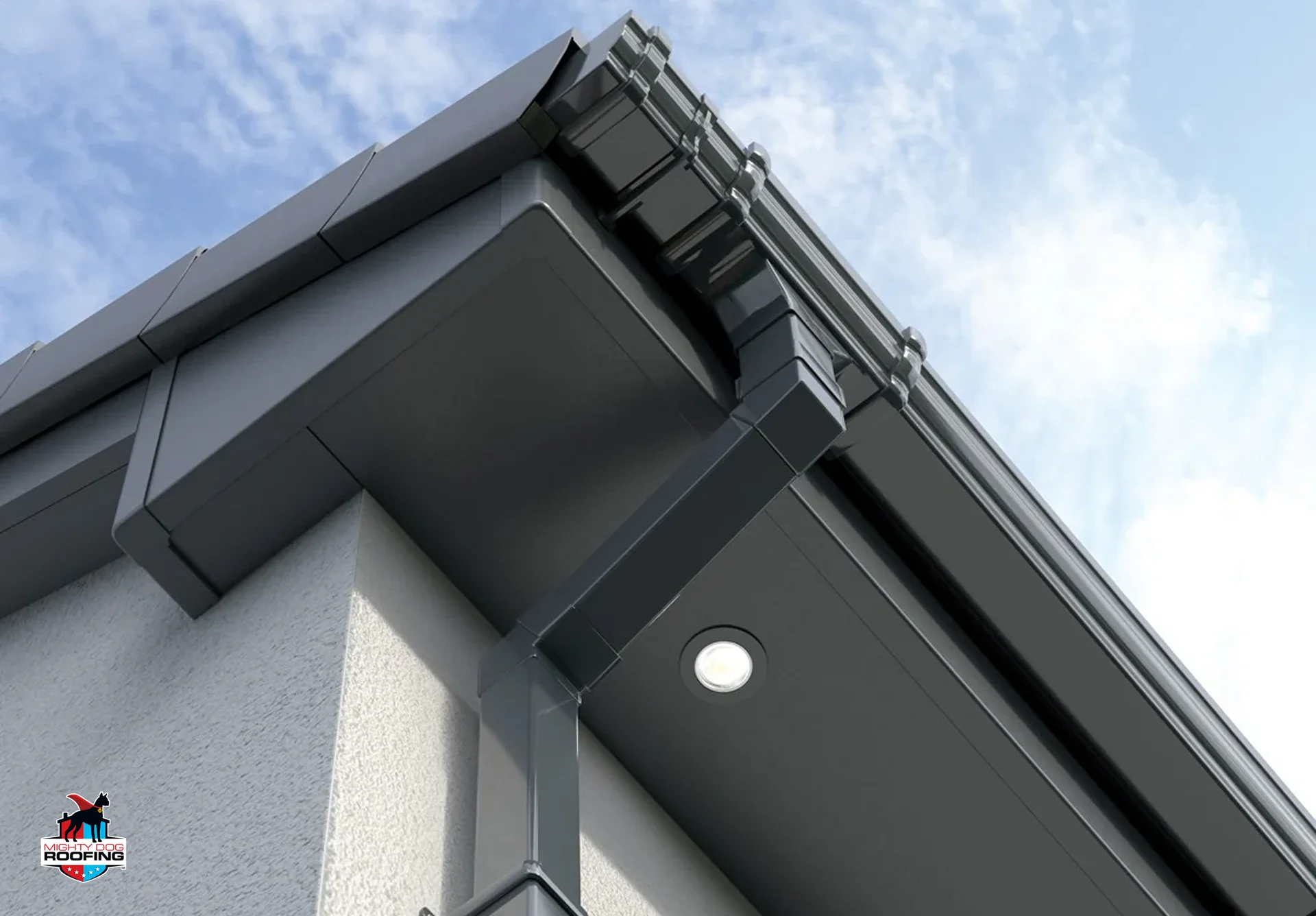
Vinyl soffit and fascia is the most common replacement choice for residential homes in Pennsylvania — it doesn't rot, doesn't require painting, and handles roofline moisture exposure well. Aluminum fascia cladding installs over existing wood as a protective cover: durable and cost-effective when the wood behind it is sound, but it doesn't fix underlying rot. Wood remains appropriate for homes where matching original millwork or historic aesthetics is a priority, though it requires regular painting and moisture inspection to perform long-term in Pennsylvania's climate.
What to Ask Before Work Begins
Mighty Dog Roofing of Greater Chadds Ford provides written estimates that break out rafter tail inspection, gutter re-hanging, and material costs separately — so homeowners can see exactly what's included before any work starts. Before signing with any contractor, it's worth raising these questions directly:
- Will the rafter tails be inspected as part of the job, and what happens if rot is found?
- Is gutter re-hanging included in the estimate, or billed separately once the fascia is replaced?
- What does the workmanship warranty cover and for how long?
- Will replacement soffit include vented panels that meet the attic's ventilation requirements?
Fix Soffit and Fascia Before Summer: Why Timing Matters
Late spring is the best window to catch soffit and fascia problems before they become urgent. By early summer, pest activity accelerates — wasps begin building nests in earnest, and squirrels that found entry points in spring have often already established themselves. Addressing open or damaged soffit before summer prevents a pest problem on top of a structural one.
The summer rain season in Chester County also puts maximum stress on gutters and the fascia they're attached to. A gutter that pulls away from compromised fascia during a July thunderstorm is an emergency that a May inspection could have prevented.
Mighty Dog Roofing of Greater Chadds Ford performs exterior inspections throughout Chester County before the summer season hits. The certified roofing professionals on our team assess fascia condition, soffit integrity, and gutter attachment as part of every roofline inspection — and provide written findings so you know what needs attention before work is scheduled.
Most roofline walkthroughs take under an hour. The written report gives you a clear picture of what's failing, what's borderline, and what doesn't need attention yet — so you're not guessing when contractors give you a quote. Inspections cover homes throughout Kennett Square, Glen Mills, Avondale, Media, and surrounding communities in Chester County.
A walkthrough takes considerably less time than managing water damage and pest removal after the season has already started. To get on the schedule, schedule a free inspection with Mighty Dog Roofing of Greater Chadds Ford today.