
Two siding quotes on the same house in Chester County can be $8,000 apart. That gap isn't random — it reflects real differences in material grade, labor quality, what's included in tear-off, and whether the moisture barrier underneath is being replaced or just patched. Most homeowners look at two numbers and choose the lower one without knowing what they're actually comparing.
At Mighty Dog Roofing of Greater Chadds Ford, we write itemized estimates specifically so homeowners can see what each line covers — and make a real comparison rather than a price comparison. If you're ready to start that process, connect with a siding company near you serving Chester County. Here's what drives siding cost in Chester County in 2026, and what the numbers on your quotes actually mean.
What Drives Siding Installation Cost in Pennsylvania
The Four Cost Variables That Matter Most
Siding installation cost comes down to four factors. Every quote you receive is a combination of these — and the difference between a $9,000 and a $17,000 quote almost always traces back to one or more of them.
1. Material type and grade This is the single biggest driver of total project cost. Vinyl siding at the entry level and fiber cement at the premium end can differ by $8,000–$15,000 on the same home — before labor is factored in. Within each material category, grade matters enormously. Builder-grade vinyl and premium vinyl carry the same name and look similar in a brochure. They perform very differently over ten years in Pennsylvania weather.
2. Home size and complexity Linear footage of wall surface is the base measurement, but complexity multiplies cost. A two-story colonial with multiple dormers, gable ends, and detailed trim costs significantly more to side than a single-story ranch of similar square footage. Corners, transitions, and penetrations all require additional material and labor time.
3. Tear-off and disposal Removing old siding and disposing of it is labor-intensive work. Some contractors include it in their base quote. Others list it as an add-on, or don't mention it until the job starts. On a full exterior replacement, tear-off and disposal typically adds $1,500–$3,000 to the total. If a quote doesn't mention tear-off, ask specifically whether it's included.
4. Wall preparation What's under the old siding determines how much preparation work is needed before new material goes on. Moisture barrier replacement, sheathing repair, and flashing work at windows and doors are all legitimate cost items — and all of them protect the new siding from the inside out. A low quote that excludes wall prep is often a quote for a siding job that will have moisture problems within five years.
Why Chester County Jobs Often Cost More Than Regional Averages
National average figures for siding installation tend to understate what Chester County homeowners actually pay. Several factors push local costs higher:
- Labor market — Contractor labor costs in the greater Philadelphia region are above national average, and experienced crews in Chester and Delaware County reflect that
- Permit requirements — Many Chester County municipalities require permits for full exterior siding replacement; permit fees and inspection scheduling add cost and time
- Older housing stock — A significant portion of Chester County homes were built before 1990, and older homes carry higher wall prep risk; finding deteriorated sheathing or an absent moisture barrier is more common than in newer construction
- Architectural complexity — Chadds Ford, Kennett Square, and surrounding communities have a high concentration of traditional colonials, farmhouses, and historic homes with complex rooflines and detailed trim that increase installation time
Cost by Material — 2026 Reference Ranges
The ranges below reflect installed costs for a typical single-family home in Chester County — approximately 1,500–2,200 square feet of wall surface, two stories, standard complexity. Larger homes, complex rooflines, or significant wall prep needs will push costs toward or beyond the upper end.
Material | Installed Cost Range | Lifespan in PA | Maintenance Level |
Entry-level vinyl | $7,000–$11,000 | 15–20 years | Low |
Premium vinyl | $11,000–$16,000 | 20–25 years | Low |
Engineered wood | $12,000–$22,000 | 20–30 years | Medium |
Fiber cement (James Hardie) | $14,000–$28,000 | 30–50 years | Medium |
Cedar / natural wood | $20,000–$35,000+ | 20–40 years | High |
Vinyl Siding
Vinyl remains the most common siding material in Chester County for straightforward reasons — it doesn't rot, doesn't require painting, and installs efficiently. The cost range is wide because the product range is wide.
Entry-level vinyl at $7,000–$11,000 installed uses thinner panels with less rigid backing and fewer color-through options. It performs adequately in mild conditions but shows UV fading and impact brittleness more quickly in Pennsylvania's temperature extremes. Premium vinyl in the $11,000–$16,000 range uses thicker panels, often with insulated foam backing, and holds color and dimensional stability significantly longer.
The question worth asking on any vinyl quote: what is the specific product name and thickness? A contractor who can't or won't answer that question is quoting a material category, not a product.
Fiber Cement
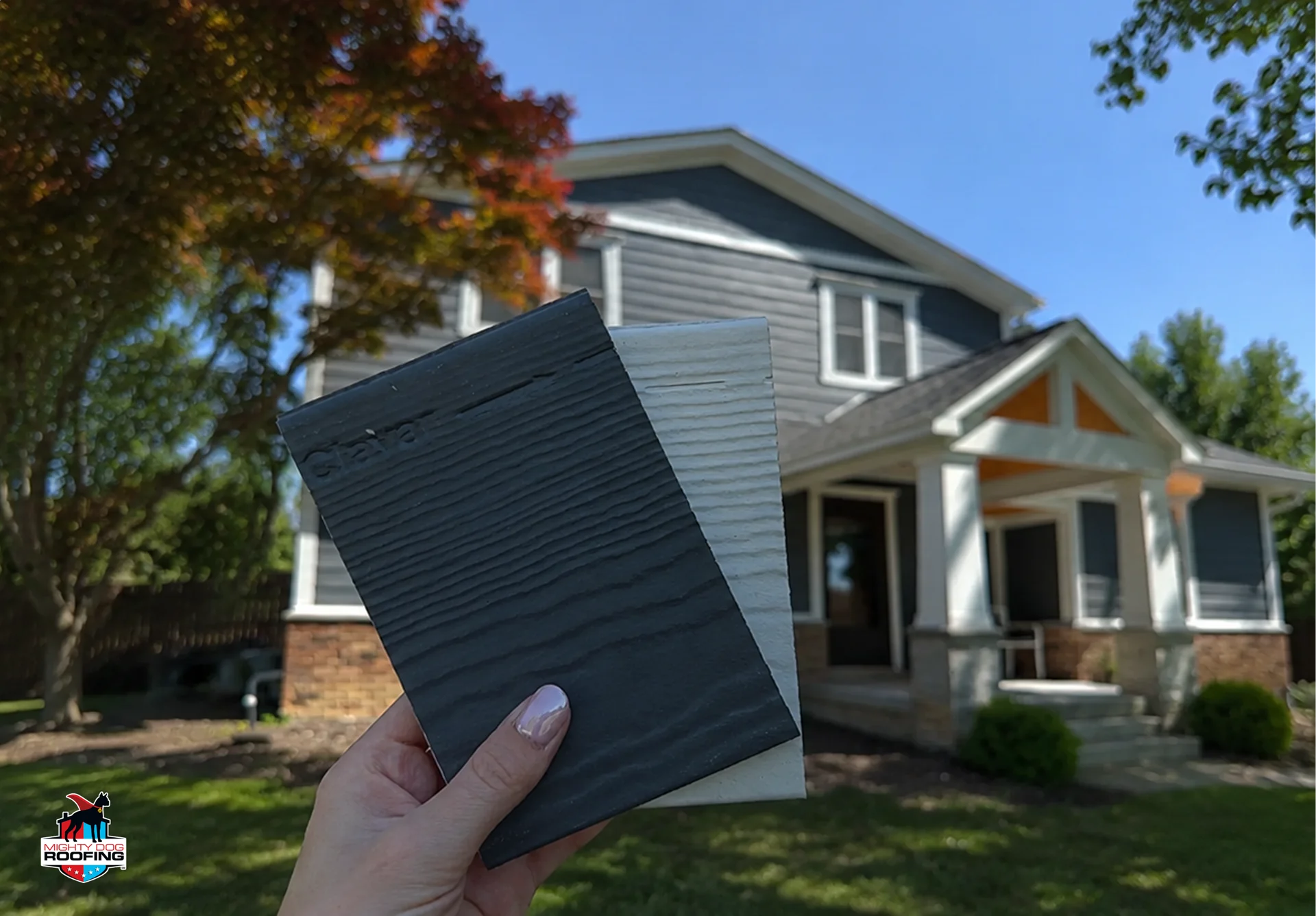
Fiber cement — James Hardie being the most recognized brand — costs more to install than vinyl for reasons that are structural, not marketing. The panels are heavier, require different cutting equipment, and demand more precise installation technique, particularly at cut edges and penetrations. Labor costs for fiber cement installation run 20–35% higher than vinyl on the same home.
What the premium buys in Chester County conditions: dimensional stability through freeze-thaw cycles that vinyl can't match, paint retention of 15–20 years between recoats, and impact resistance that handles hail and wind-driven debris significantly better. Over a 30-year ownership window, the total cost of fiber cement — installation plus maintenance — often compares favorably to vinyl when repaint cycles and potential replacement are factored in.
At Mighty Dog Roofing of Greater Chadds Ford, fiber cement estimates include a full breakdown of the labor premium so homeowners understand exactly where the cost difference comes from.
Engineered Wood
Engineered wood products — LP SmartSide being the most widely installed — sit between vinyl and fiber cement on both cost and performance. They offer the visual warmth of natural wood with significantly better moisture resistance than traditional cedar, and install more efficiently than fiber cement.
The performance caveat in Pennsylvania: engineered wood is more sensitive to installation quality than either vinyl or fiber cement. Improper flashing, missed primer at cut edges, or inadequate ground clearance creates moisture exposure that shortens lifespan significantly. When engineered wood is installed correctly, the 20–30 year lifespan is achievable. When it isn't, problems emerge in seven to ten years.
Cedar and Premium Options
Natural cedar and other wood sidings remain appropriate for Chester County homes where authenticity and character are the priority — historic properties, significant colonial revivals, and homes where the architectural detail warrants the material. The installed cost range of $20,000–$35,000+ reflects both material cost and the additional labor time that complex wood profiles require.
The honest performance reality: cedar in Pennsylvania's humid climate demands repainting or restaining every four to six years to perform at the top of its lifespan range. Homeowners who commit to that maintenance schedule get a beautiful, durable exterior. Those who don't find themselves with rot issues before the fifteen-year mark.
What's Included — and What Isn't
What a Complete Quote Should Cover
A complete siding installation quote covers more than panels and labor. Before comparing numbers, confirm each of the following is explicitly included:
- Tear-off and disposal of existing siding — weight and volume make this a significant labor item
- Full moisture barrier replacement — not just repair of damaged sections, but complete new house wrap on all elevations
- Flashing at all windows, doors, and penetrations — sill pan flashing, head flashing, and integration with the moisture barrier
- Trim components — corner posts, J-channel, window and door surround, soffit termination
- Final caulking at all penetrations and dissimilar material transitions
- Permit fees if required by your municipality
- Cleanup and debris removal from the property perimeter
Red Flags in a Low Quote
A quote that comes in significantly below others on the same scope isn't necessarily a better deal. These are the most common reasons a low siding quote is low:
- Tear-off listed as an add-on or absent from the scope entirely
- No line item for moisture barrier replacement — old house wrap left in place saves the contractor time and material cost; it costs the homeowner in wall performance over years
- Flashing and penetration sealing not mentioned — one of the most expensive omissions over time
- Single-line quote with no itemization — impossible to compare against a detailed estimate; there's no way to know what's actually included
- Material listed by category only — "vinyl siding" without a product name or thickness specification could mean anything
The experienced siding professionals at Mighty Dog Roofing of Greater Chadds Ford provide itemized written estimates on every job — broken out by material, labor, tear-off, wall prep, and permit — so homeowners can compare line by line rather than number by number.
Additional Costs That Can Change the Final Number
Wall Repair and Sheathing Replacement
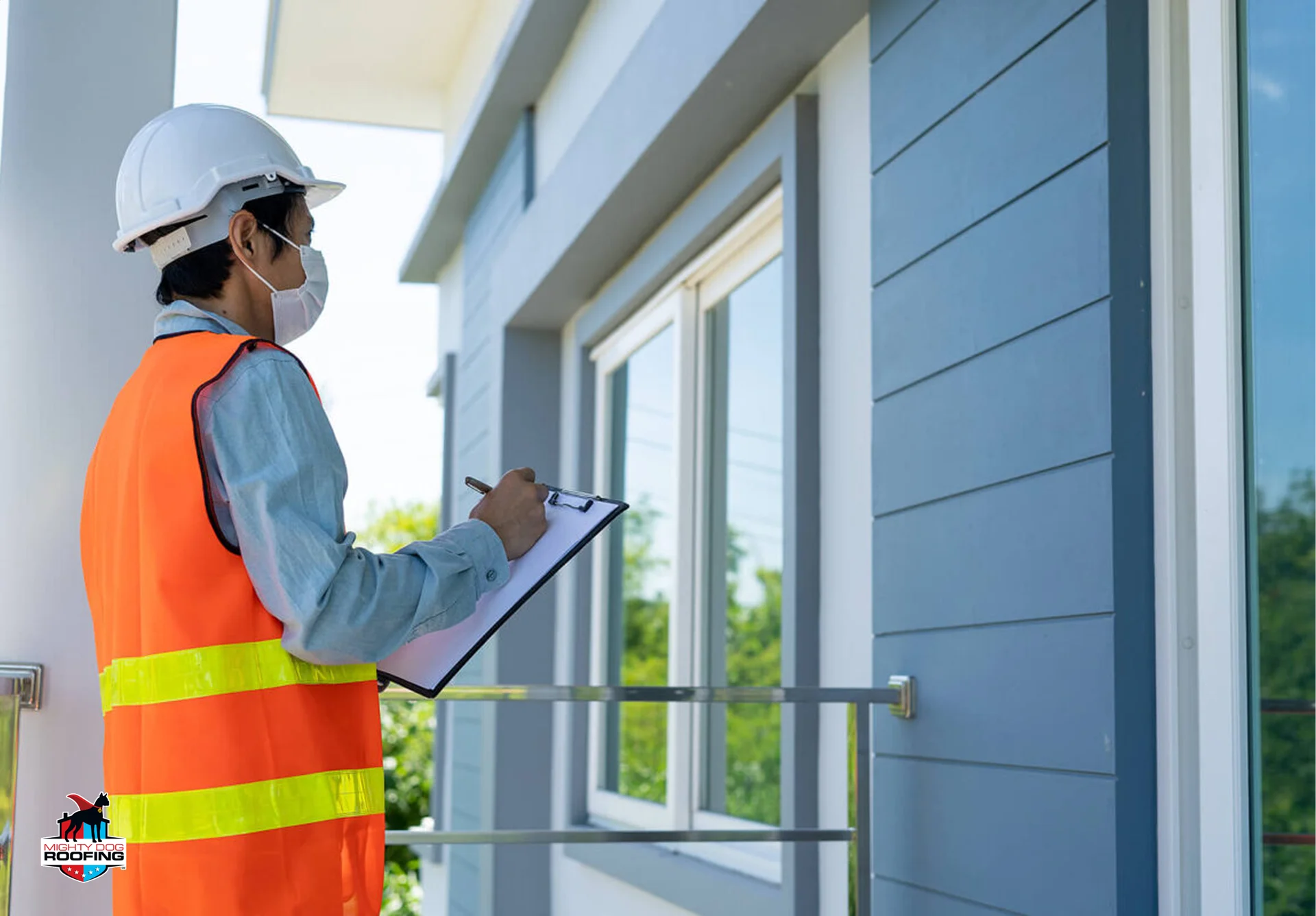
Sheathing damage found during tear-off is the most common source of unexpected cost on a Chester County siding job. Older homes — particularly those built before 1985 — frequently have sections of OSB or plywood sheathing that have absorbed moisture behind failed siding and need replacement before new panels go on.
Sheathing replacement typically runs $3–$6 per square foot of affected area, including labor. On a home where moisture damage is limited to one elevation, this might add $800–$2,000 to the total. On a home with widespread moisture issues, it can add considerably more.
The right way to handle this: any sheathing damage found during tear-off should be photographed, measured, and presented to the homeowner with a written change order before repair work begins. At Mighty Dog Roofing of Greater Chadds Ford, no additional work proceeds without written homeowner approval — regardless of how straightforward the repair seems.
Permits and Inspections
Full exterior siding replacement requires a permit in most Chester County municipalities. Permit fees vary by township — typically $150–$400 for a residential siding project — and the inspection requirement adds a scheduling step that can extend the project timeline by one to three days.
Why permits matter beyond compliance: a permitted siding job has a building department inspection record attached to it. At resale, that documentation confirms the work was done to code and inspected. Unpermitted work creates disclosure complications and can affect appraisal value.
Bundling With Other Work
Replacing siding at the same time as soffit, fascia, or gutters reduces total project cost by eliminating redundant mobilization and allowing crews to work on multiple systems in a single visit. The savings on labor can be significant — typically $500–$1,500 on a project where all three are being addressed.
Window replacement and siding replacement coordinate naturally as well. When both happen together, flashing and trim integration happens once rather than twice, and the finished result is more cohesive. If window replacement is on your radar within the next few years, it's worth asking a siding contractor near you whether bundling makes financial sense now.
How to Compare Quotes Accurately
Getting three quotes is standard advice. Getting three comparable quotes requires asking the same questions of every contractor before accepting any number.
Ask every contractor:
- Is tear-off and disposal included in this price?
- Is the full moisture barrier being replaced, or only repaired where visibly damaged?
- What specific product is being installed — name, line, and thickness?
- What happens if sheathing damage is found during tear-off — how is that billed?
- Is flashing included at all windows and doors, or is that separate?
- What permit fees are included, and which municipalities do you handle filing for?
- What does the workmanship warranty cover and for how long?
The price gap between quotes almost always traces back to one of these items. A contractor who answers all of these questions clearly and in writing is a contractor who will handle the job the same way — clearly and with documentation.
If you're ready to get a real number on your home's exterior, schedule a free consultation with Mighty Dog Roofing of Greater Chadds Ford. Every estimate is itemized, every scope is written, and every question gets answered before anything is signed.
The Right Quote Is the One You Understand
The lowest siding quote in Chester County isn't a bargain if it excludes moisture barrier replacement, skips flashing at the windows, and uses a builder-grade vinyl product that fades in five years. The highest quote isn't automatically the best if the premium isn't justified by material grade or scope.
The right quote is the one you can read line by line and understand exactly what you're getting. That's the only basis for a decision you'll be confident in when the panels go on — and still confident in ten years from now when the wall behind them is still dry.