

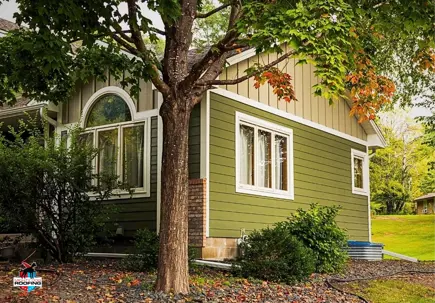
Fall is genuinely the best season to replace siding in Pennsylvania. Mild temperatures, low humidity, and consistently dry conditions make it ideal for nearly every material type on the market — vinyl, fiber cement, engineered wood, and beyond — and most Chester County homeowners already have some sense of this from talking to neighbors or reading a contractor's website. What most don't realize is that the contractors capable of doing quality fall siding work are fully booked by the time September actually arrives, which means the ideal installation season and the ideal booking window are two entirely different points on the calendar, separated by several weeks that most homeowners waste without realizing it.
A siding company near you serving Chester County, Delaware County, and the greater Wilmington DE area typically watches its fall calendar fill in from the inside out — August bookings claim the best dates first, and September callers end up competing for whatever remains once the strongest, most experienced contractors are already committed elsewhere for the season. August is the real window, even though fall is the real season. Here's why acting now is the single smartest scheduling decision a homeowner planning fall siding work can make this year.
Why Fall Is the Best Season for Siding Installation in Pennsylvania
Temperature and Material Performance
Vinyl, fiber cement, and engineered wood siding all install best within roughly a 45°F–80°F temperature range, and fall temperatures across Chester County hit that window consistently from mid-September clear through the end of October, with far less day-to-day variability than spring typically offers in the same region. Cooler, more stable temperatures also reduce the risk of expansion gap miscalculation — a genuinely common installation error that happens more frequently in peak summer heat, when siding panels are already sitting at or near their maximum expanded state before the crew has even begun fastening a single piece. An installer working in July has to guess at how much a panel will contract once winter arrives; an installer working in fall is working much closer to the material's resting state already.
Humidity and Wall Preparation
Lower late-summer and fall humidity translates directly into drier wall surfaces during moisture barrier installation, which matters considerably more than most homeowners assume going into the project. House wrap seams and flashing tape adhesives bond noticeably better against fall's drier conditions than they do against the humidity of a typical July or August installation day, where condensation and ambient moisture can compromise a seal that looks fine on the surface. Fall installation also gives new siding the longest possible settling period before winter stress arrives, rather than forcing the entire system to face its very first hard freeze within weeks of going up on the wall — a genuine advantage when it comes to long-term seal integrity at every seam, corner, and transition point across the exterior.
Why September Is Already Too Late to Book Quality Work
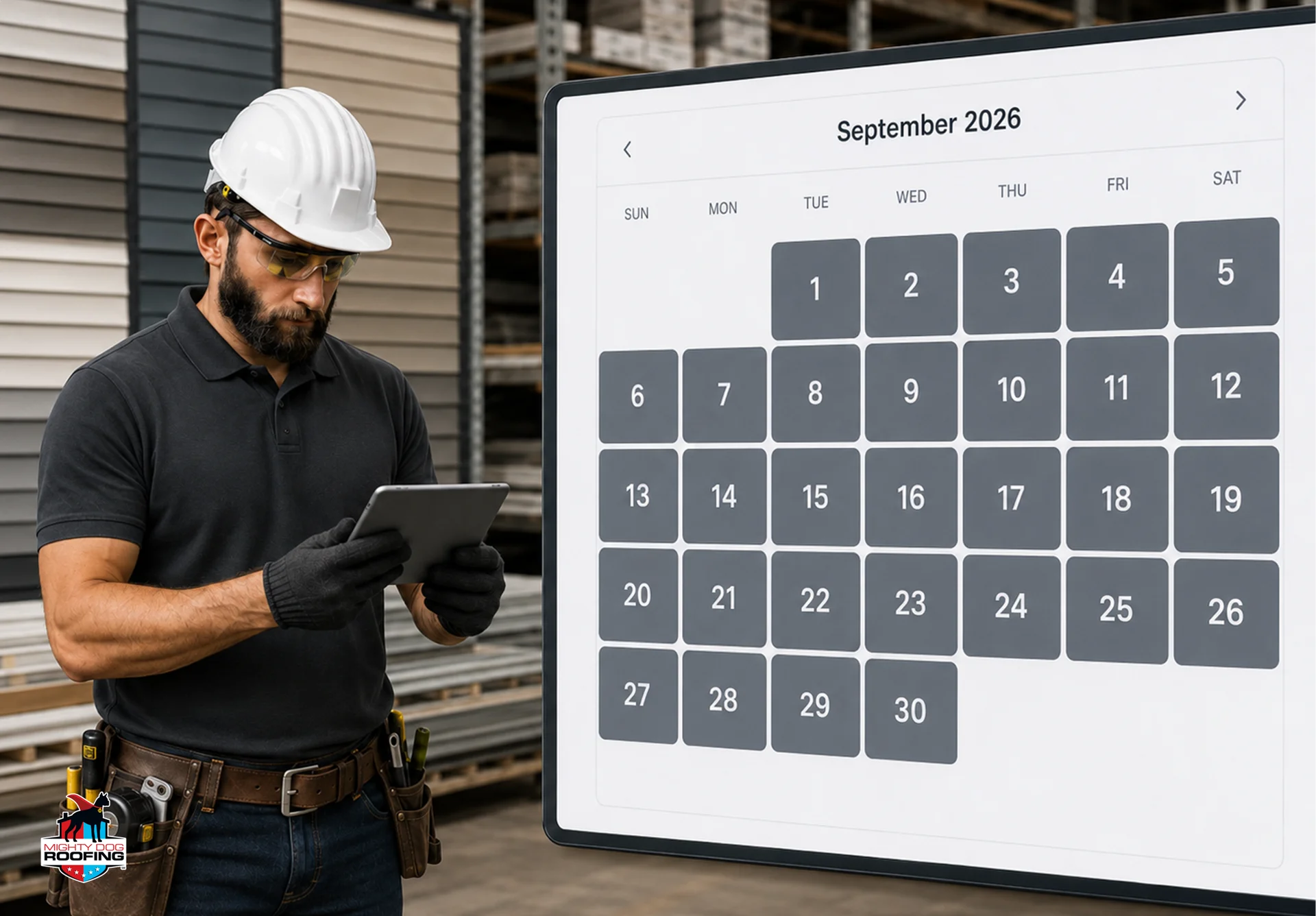
How the Fall Scheduling Crunch Actually Works
September is, without any real competition, the single busiest month for exterior contractors across all of Chester County. Roofing crews, siding crews, and gutter crews all compete for the exact same fall window at the exact same time, pulling from the same limited pool of skilled labor and the same limited number of good-weather workdays. That competition means the strongest contractors — the ones with the longest track records and the strongest workmanship warranties, the ones homeowners actually want doing the job — fill their calendars first, frequently before September has even officially begun on the calendar.
What "Booked Out" Actually Means for Homeowners
Waiting until September to start calling contractors often means an actual project start date lands in November or December, not the October most homeowners were originally picturing when they started their search. Cold-weather siding installation carries genuine, well-documented risk: expansion gaps miscalculated for lower temperatures, adhesives that don't cure fully before the first hard freeze sets in, and moisture barriers installed against wall surfaces that are already damper and colder than ideal for a proper bond. Some contractors will still take on these late-season jobs simply to keep crews working through the winter, but a November or December start date creates meaningfully more installation risk across the board than an October start would have offered the same homeowner just a few weeks earlier.
What Booking in August Actually Gets You
Your Pick of Scheduling Windows
Booking in August secures first choice of both September and October installation dates, well before the crunch actually hits the rest of the calendar. It also creates time for a proper pre-job wall assessment and adequate material ordering lead time — which genuinely matters, since fall material lead times can run anywhere from two to four weeks depending on the specific product line, color, and manufacturer backlog at that particular point in the season.
Better Pricing Conversations
Contractor pricing responds directly to demand, and August is a meaningfully better negotiating moment than October, when contractors already know full well that homeowners have far fewer remaining options left on the calendar and less leverage to walk away. Booking early also opens the door to bundling siding work together with soffit, fascia, or gutter replacement in a single coordinated project — something considerably harder to arrange once contractors are already scrambling to squeeze in one more late-season job before the weather turns against them. The lowest quote received in September is rarely the best overall value, once a homeowner accounts for exactly what tends to get skipped or rushed in order to hit a compressed deadline.
Time for a Proper Pre-Job Assessment
An August booking allows for something a rushed September booking often doesn't: a genuinely full wall inspection completed before scheduling even begins, rather than squeezed in as an afterthought once a date is already locked in. Findings from that assessment directly shape scope, material selection, and final project cost — issues like hidden moisture damage or soft sheathing that would otherwise surface mid-project, at a point where it's already too late to plan around them without a costly delay. Rushed late-season bookings frequently skip these preparatory steps entirely, and that shortcut matters for long-term performance even when it isn't visible to anyone standing on the sidewalk on the actual day of installation.
What to Do Before You Book
Assess Whether Your Siding Actually Needs Replacement
- Look for warping, cracking, or fading that goes beyond what a thorough professional cleaning could reasonably fix on its own
- Check carefully for moisture damage or soft spots concentrated at seams, corners, and around window and door trim, where water intrusion typically starts first
- Weigh the siding's age alongside its actual visible condition — the two considered together tell a far more accurate story than age taken in isolation, since a 20-year-old product in good condition may still have years left
A professional assessment frequently changes the answer a homeowner assumed walking in, either confirming that full replacement really is overdue or revealing that targeted repair is genuinely enough to get through several more seasons.
Know Your Material Before You Call
Deciding between vinyl, fiber cement, and engineered wood before requesting quotes saves real, measurable time during the consultation process itself, since each material comes with its own cost, maintenance, and lead-time trade-offs worth understanding up front. Material lead times affect scheduling directly, since some product lines require ordering weeks in advance of the actual installation date — worth knowing before committing to any particular timeline with a contractor. The experienced siding professionals on our team walk homeowners through these material trade-offs before scope is ever finalized, so there are no surprises once a specific product has actually been ordered and the clock on lead time has started running.
How to Evaluate a Siding Contractor Before Committing

What to Ask Before Signing Anything
- Is tear-off and disposal of the old siding included in the written estimate, or billed separately once the job is already underway?
- Is the moisture barrier being fully replaced, or is it only being patched and repaired in place around the existing material?
- What specific workmanship warranty is provided, and precisely what does it actually cover in terms of years, labor, and materials?
Red Flags That a Fall Booking Isn't What It Seems
- Vague start date ranges offered with no firm, specific commitment attached to an actual week or date
- No pre-job wall assessment included anywhere in the sales or estimating process before a number is quoted
- Single-line quotes with no real itemization of materials, labor, or scope broken out separately
These shortcuts tend to show up later as genuine problems, well after the crew has already packed up their tools and left the job site behind. Schedule a free consultation before the fall slots fill and the choice of contractor stops being much of a choice at all.
Fall siding installation across Chester County starts filling in during August, not September. The homeowners who act now get the contractors they actually want, the scheduling window they need, and enough lead time built in to have the job done right the first time. The ones who wait until fall get whoever still happens to be available.