
Pennsylvania throws everything at your home's exterior — freeze-thaw punishment from November through March, oppressive humidity by June, sideways rain during spring storms, and relentless UV bombardment through July and August. Your cladding absorbs every bit of that punishment, and not all materials absorb it the same way. Mighty Dog Roofing works across Chester County and Delaware County year-round, so we observe exactly how each option weathers these conditions. Below is a frank breakdown of how vinyl, fiber cement, and wood hold up — no exaggeration, no favoritism.
What Pennsylvania Weather Actually Does to Siding
The Four Stressors Every Material Faces Here
Chester County logs roughly 60–80 freeze-thaw transitions each cold season, and every single one flexes joints, stresses seams, and chips away at paint adhesion. Then summer arrives with UV that bleaches pigment, degrades surface coatings, and drives thermal expansion across all exterior panels. During the shoulder months — April, May, October, November — rain, ambient humidity, and ground-level splash-back keep moisture levels elevated against your walls. Finally, spring and summer convective storms hurl branches, roofing granules, and hail directly at exposed facades.
Why This Climate Is Harder Than Most
Pennsylvania occupies a climatic middle ground — not cold enough to stay frozen and not warm enough to stay dry. A single week in March can swing from 22°F overnight to 58°F by Thursday afternoon, and that kind of rapid cycling fatigues siding materials Chester County homes depend on far more aggressively than a stable northern freeze ever would. Consequently, products marketed as suitable for "all climates" behave unpredictably here.
Key factors that make PA conditions uniquely demanding:
- Overnight freezes followed by 50°F+ daytime highs create repeated thermal shock that accelerates fatigue
- Summer humidity layered onto harsh winters produces twelve months of moisture stress
- Precipitation arrives in every form — ice, sleet, prolonged downpours — sometimes within the same week
- Long transitional seasons extend the window for damaging wet-dry oscillation
Given this combination of overlapping threats, the best siding for Pennsylvania weather hinges on how a material handles several hazards at once — not its performance against any single one.
Vinyl Siding in Pennsylvania — Honest Performance
Where Vinyl Holds Up Well
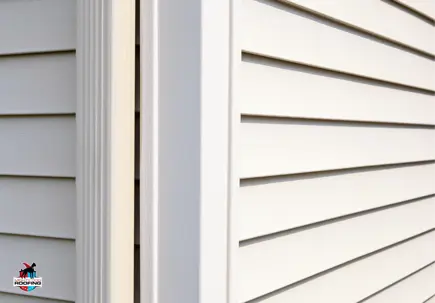
This material never needs a fresh coat of paint or a stain application, which genuinely appeals to homeowners who want minimal weekend obligations. Moisture beads off the surface rather than soaking in, so water absorption is essentially a non-issue at the panel face. On top of that, mid-tier products represent a practical entry point for residential siding replacement — solid performance at a price that doesn't strain a typical Chester County renovation budget.
Where Vinyl Struggles in PA Conditions
Thermal movement is the headline weakness here. South- and west-facing walls collect enough heat to cause visible buckling and waviness across panel runs. Once temperatures drop below 40°F, the material stiffens and becomes prone to fracturing on impact — a single airborne branch during a January storm can shatter an entire section. Budget-grade panels also lose their original color surprisingly fast, with noticeable UV-driven fading showing up within five to seven years. In our experience across Delaware County and Chester County, heavy-gauge insulated products hold up respectably, but contractor-grade panels rarely survive a full decade without issues.
Fiber Cement Siding in Pennsylvania — Honest Performance
Where Fiber Cement Excels in This Climate
Dimensional stability sets fiber cement apart most dramatically. While other materials swell and shrink through each freeze-thaw transition, fiber cement barely moves — its composite structure resists thermal distortion almost entirely. That same density also absorbs hail and storm debris far better than the alternatives. Moreover, factory-baked finishes on quality fiber cement boards typically endure 15–20 years before they need recoating, which dwarfs what wood can deliver. When homeowners investigate vinyl vs fiber cement siding Pennsylvania performance, this longevity gap often tips the decision.
Where Fiber Cement Has Limitations
Weight is the first practical hurdle — these panels are substantially heavier than competing options, so your wall framing and sheathing must be structurally sound before installation begins. Every cut made on-site exposes a raw edge, and if the installer fails to seal it immediately, that edge becomes a moisture entry point. The initial investment also runs noticeably higher than lighter alternatives, though the extended service life typically compensates for that premium within 12–15 years.
What happens when maintenance falls behind:
- Neglecting repaints beyond the 15–20 year mark lets water migrate through the finish and reach the cement core
- Absorbed moisture then freezes and expands, triggering hairline cracks and surface delamination
- Failed caulk at joints and butt seams opens direct pathways for water intrusion behind panels
- What starts as a simple repaint job escalates into a partial replacement project — at several times the cost
A siding contractor near you with fiber cement experience will seal every factory-cut and field-cut edge at the time of install — that single discipline prevents the majority of long-term moisture failures.
Wood Siding in Pennsylvania — Honest Performance
Where Wood Still Makes Sense
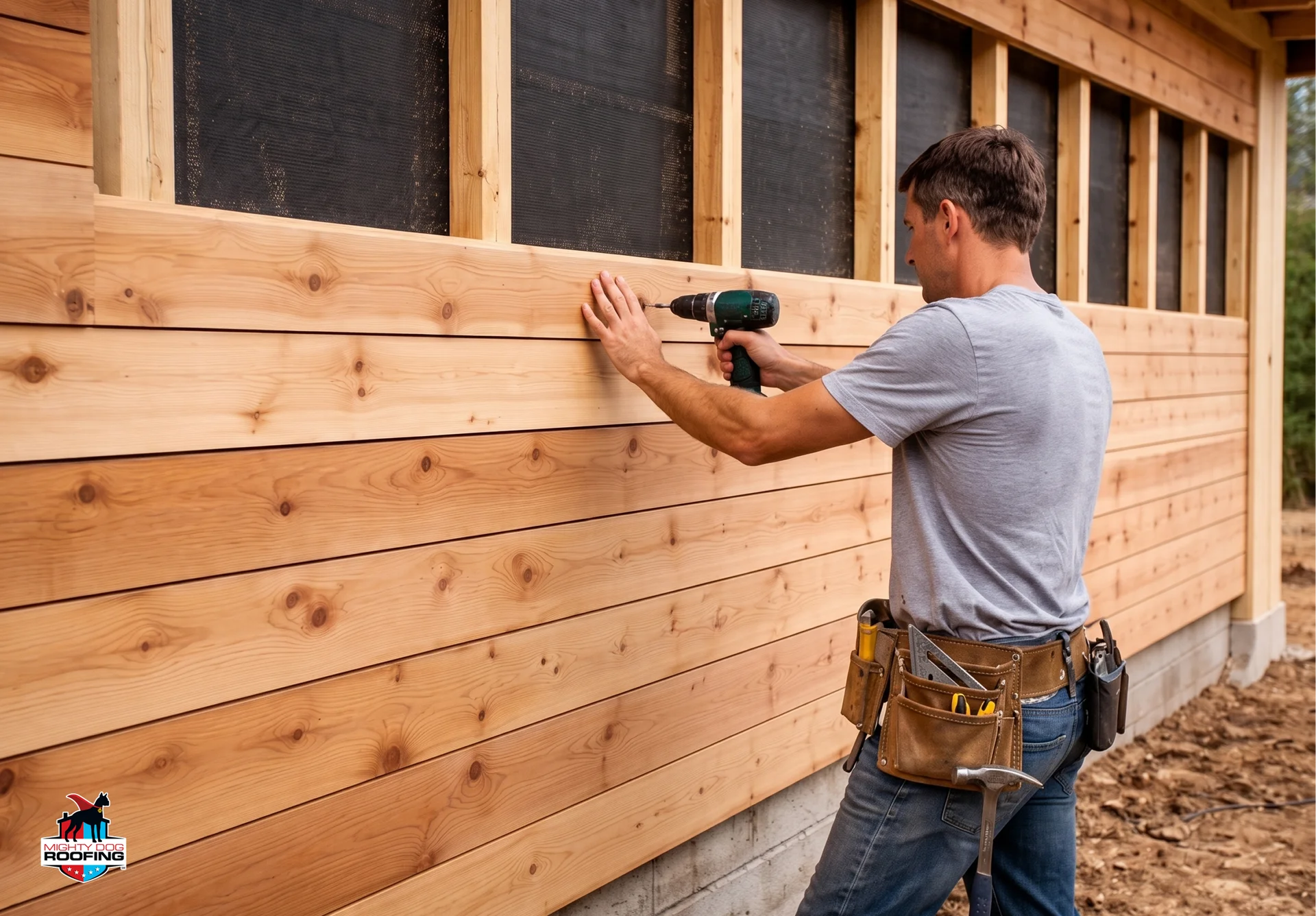
Nothing manufactured replicates the depth and character of real wood on a home's facade, particularly on the historic properties scattered throughout Chester County. Mighty Dog Roofing continues to install wood on heritage restorations where architectural authenticity outweighs convenience. Damaged individual boards swap out cleanly without the color-mismatch frustrations that plague other materials. And when an owner commits to consistent upkeep, wood siding Pennsylvania durability stretches to 30–40 years — a lifespan that rewards dedication.
Where Wood Struggles Here
Pennsylvania's moisture load is relentless, and wood feels every drop. Between the spring rains, summer humidity, and winter freeze cycles, no other exterior cladding demands as much ongoing care — plan on fresh paint or stain every three to five years at minimum. North-facing elevations and walls shaded by mature trees hold dampness chronically, which fast-tracks rot and encourages mold colonies beneath the surface. Engineered "low-maintenance" timber products dial down some of these risks but never eliminate them, and most fall short of traditional cedar in both visual warmth and field repairability.
Side-by-Side: How Each Material Handles Specific PA Conditions
Freeze-Thaw Performance
Each thermal cycle forces vinyl panels to lengthen and shorten, gradually loosening fastener connections and opening gaps at overlap seams. Fiber cement, by contrast, demonstrates the most consistent dimensional behavior — measurable movement is negligible even after hundreds of cycles. Wood's resilience in freeze-thaw conditions depends almost entirely on its protective coating; a sound paint or stain layer shields the grain effectively, but any breach lets moisture in, and the next freeze does the damage.
Summer Heat and UV
Prolonged sun exposure drives color loss and surface distortion on high-exposure walls clad with vinyl — dark shades suffer most noticeably. Fiber cement retains its factory color and finish integrity under UV far more reliably, which explains why it needs recoating so infrequently. Wood falls on the opposite end of the spectrum: ultraviolet radiation breaks down protective coatings fastest on this material, forcing reapplication every three to five years on south- and west-facing elevations. Across any siding comparison Pennsylvania homeowners conduct, UV resilience draws the sharpest contrast between these three options.
Storm and Impact Damage
Severe weather strips away marketing language and exposes real-world durability. Vinyl fractures in cold conditions and dents in warm ones, earning it the weakest impact rating across all four seasons. Fiber cement absorbs blunt force without cracking or warping under most storm scenarios, giving it a clear advantage in impact resistance.
Impact damage breakdown by material:
- Vinyl: shatters below 40°F; dents and deforms above 80°F; panel-level replacement is often the only fix
- Fiber cement: tolerates moderate hail and windblown debris; damage stays localized when it occurs
- Wood: mid-range impact tolerance, but individual board replacement is fast, affordable, and seamless
Homeowners searching for the best siding Chester County conditions require should weigh impact performance heavily — a single April thunderstorm can launch enough airborne debris to damage multiple wall sections in one evening.
How to Choose Based on Your Specific Situation
Questions That Should Drive Your Decision
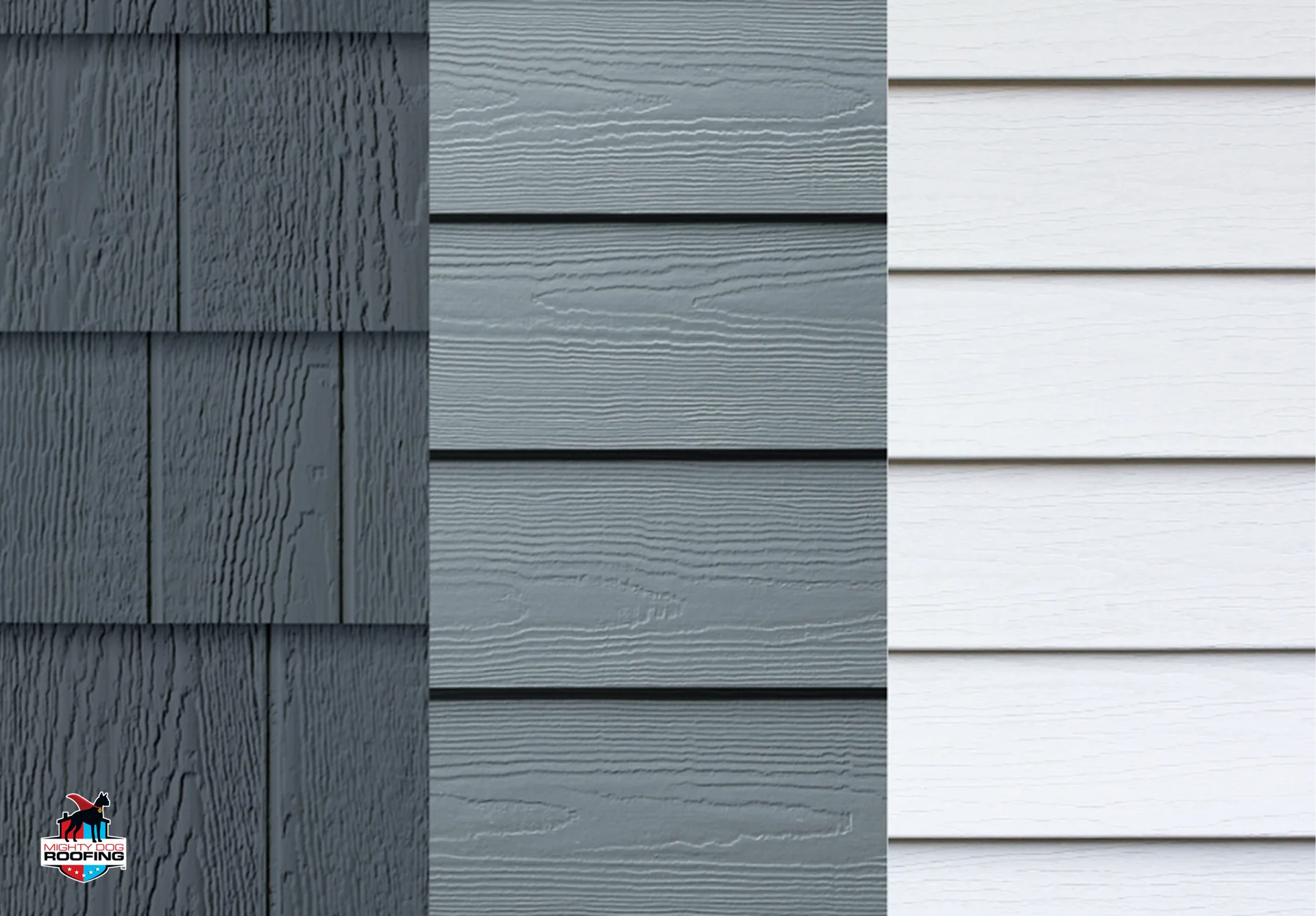
Three straightforward questions will narrow your options faster than any product brochure. First — how much upkeep are you realistically prepared to perform over the next 10–20 years? If periodic repainting or staining sounds like a burden, wood exits the conversation. Second — what does your home's exposure profile look like? Dominant sun angles, prevailing wind direction, and canopy shade all determine which material weaknesses will actually manifest on your walls. Third — how do you want to allocate your budget? A lower initial outlay on one material often leads to higher cumulative expense when maintenance and replacement cycles are factored across two decades.
What a Professional Assessment Adds
Your wall condition, structural framing capacity, and any pre-existing moisture problems all dictate which material will perform best on your particular home. Mighty Dog Roofing's certified siding professionals assess each of these variables before suggesting a product — because even the highest-rated material underperforms when installed over compromised sheathing or deteriorated housewrap. Schedule a siding inspection with Mighty Dog Roofing before committing to a material, and base your decision on your home's actual field conditions rather than general marketing claims.