
Every product on the market arrives with an impressive number printed on its packaging. Yet those figures rest on a set of assumptions — flawless installation, mild weather patterns, diligent upkeep, and absolutely no physical impact. Here's what each material genuinely delivers under Pennsylvania conditions — and which factors push that number up or drag it down in practice. At Mighty Dog Roofing, we think homeowners earn the right to see honest siding lifespan by material data before committing thousands of dollars to their exterior.
Why Manufacturer Numbers Don't Tell the Whole Story
What "Lifetime Warranty" Actually Means
The vast majority of lifetime warranties apply exclusively to the original purchaser and carve out exceptions for labor, color degradation, and weather events. Actions as routine as ventilation changes, third-party touch-ups, or power-washing can quietly invalidate your coverage. Perhaps more critically, the duration stamped on a warranty document and the actual functional life of a product represent two separate realities. A half-century guarantee translates to a prorated credit governed by narrow fine print — not a promise that your walls will perform for 50 years.
What Pennsylvania Climate Does to Every Material
Grasping how long does siding last Pennsylvania starts with appreciating just how punishing our regional weather truly is. Chester County offers exterior cladding no mercy — each season introduces a fresh round of stress that compounds over time.
Key climate stressors affecting siding longevity Pennsylvania:
- Homes across Chester County withstand between 60 and 80 freeze-thaw transitions every year, forcing panels to repeatedly stretch and compress
- Intense summer ultraviolet rays break down pigment and weaken structural bonds, while spring and fall humidity saturates every exposed joint
- Extended damp periods during transitional seasons hold trapped water behind panels far longer than arid regions would permit
- Nor'easters push wind-driven rain sideways into seams and gaps that homes in gentler climates never contend with
When you stack Pennsylvania's wild temperature swings against its persistent humidity and powerful UV output, the result is one of the toughest environments for any exterior material in the eastern United States. National performance averages simply don't translate to local reality here.
Vinyl Siding — The Real Numbers
What the Label Says vs. What Happens
Packaging suggests the vinyl siding lifespan Chester County residents should anticipate falls somewhere between 20 and 40 years. On the ground, most homes extract 15–25 years of dependable service before noticeable decline sets in. Builder-grade options begin showing visible UV color loss within just 5–7 years, and resistance to physical impact drops sharply once panels pass the 15-year mark. South- and west-facing elevations bear the heaviest ultraviolet load and tend to deteriorate first.
What Extends or Shortens Vinyl's Life
The grade of the product itself outweighs every other variable. Thicker, UV-stabilized premium panels dramatically outperform economy alternatives over time. After material selection, craftsmanship during installation — precise nail positioning, correct overlap dimensions, and appropriate expansion gaps — governs whether panels flex naturally through temperature shifts or warp under thermal strain. Washing the exterior every 12–18 months clears mildew buildup and organic residue that slowly eat away at surface integrity.
Fiber Cement — The Real Numbers
What the Label Says vs What Happens
Published ratings place fiber cement siding durability between 25 and 50 years. Across Pennsylvania, well-cared-for fiber cement consistently reaches 30–40 years — an impressive track record. Its dimensional stability gives it a clear advantage over vinyl during freeze-thaw transitions, since it neither stretches nor compresses to the same degree.
Why upkeep dictates fiber cement's true functional life:
- Postponing scheduled recoating lets water work its way into the cementitious body within 8–10 years
- Unprotected edges wick dampness inward, triggering cracking, swelling, and delamination along seams
- After water infiltrates the core, each freeze-thaw event compounds the structural harm exponentially
- A single section of failed paint can draw wetness laterally into neighboring panels through capillary action
Even so, fiber cement stands out as one of the most reliable choices available to Chester County and Delaware County property owners — as long as they honor the recoating schedule the product requires.
What Extends or Shortens Fiber Cement's Life
A fresh coat of paint every 7–12 years represents the one maintenance commitment that determines whether fiber cement thrives or fails prematurely. On top of that, caulk surrounding windows, doorframes, and trim connections demands regular review and renewal before it dries out and separates. From the installation perspective, a poorly executed weather barrier behind the panels can slash expected performance by half. Mighty Dog Roofing routinely traces early failures back to missing or incorrectly overlapped housewrap concealed behind otherwise solid exteriors.
Engineered Wood — The Real Numbers
What the Label Says vs What Happens
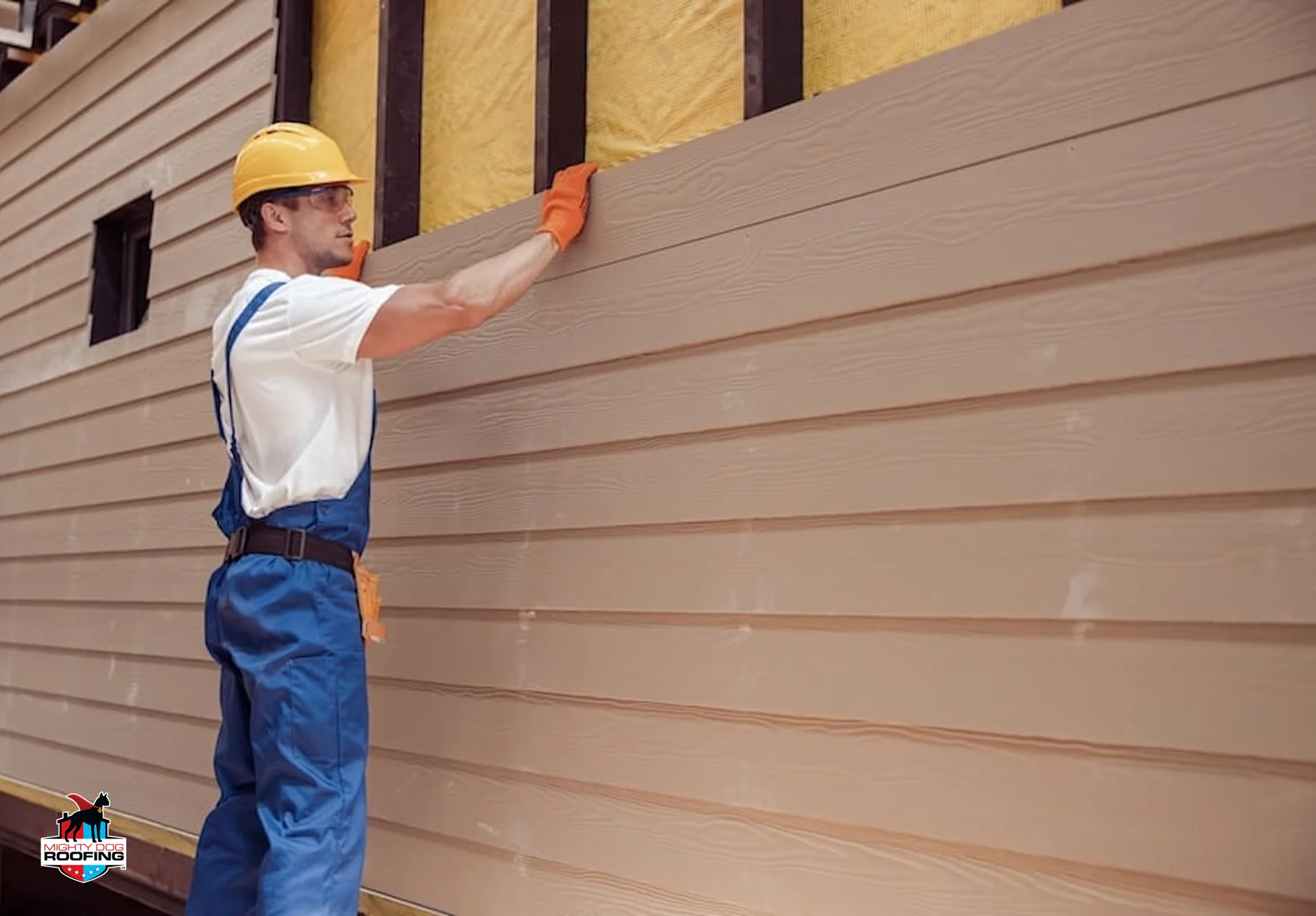
Published expectations for engineered wood fall in the 20–30 year range, but actual results across PA swing wildly depending on workmanship. No other category reacts as dramatically to installation precision. When persistent dampness finds a path to the wood-fiber core — via compromised flashing, insufficient drainage planes, or direct earth contact — breakdown accelerates at an alarming pace. We've documented homes failing before the decade mark alongside others where careful detailing carried the product well past 25 years.
What Extends or Shortens Engineered Wood's Life
Proper flashing design and drainage execution at the time of installation carry outsized importance. Each penetration, material transition, and horizontal seam requires meticulous water-management planning from the very start. Maintaining paint and protective coatings matters even more here than it does with fiber cement, because the composite substrate draws in liquid aggressively the moment its surface coating breaks down. Adequate ground clearance also plays a vital role — contact with vegetation, soil splash, and mulch banked against the base introduces relentless dampness that this material has zero tolerance for.
Wood and Cedar — The Real Numbers
The Honest Lifespan Range
Cedar that receives faithful attention delivers 20–40 years of strong performance. Neglected cedar? Frequently less than 15. Of all available materials, natural wood offers the most generous return on consistent care — applying stain and sealant every 3–5 years preserves both appearance and structural soundness for decades. Abandon that rhythm, however, and water intrusion, fungal decay, and pest damage gain ground rapidly. Anyone selecting cedar must embrace the maintenance commitment it demands, because the performance gulf between attentive and neglectful ownership is staggering.
Where Wood Fails Fastest in Pennsylvania
North-facing elevations deteriorate quickest because restricted sunlight extends drying intervals after every rain and snowfall. Zones beneath dense canopy cover and perpetual shade intensify the problem — wetness persists, mildew colonizes surfaces rapidly, and rot follows close behind. Lower portions of walls exposed to splash from soil beds, mulch, and paved surfaces also degrade well ahead of schedule. Understanding when to replace siding crafted from natural wood typically hinges less on calendar age and more on which specific exposures a given wall endures year after year.
What Cuts Every Material's Lifespan Short
Installation Errors That Shorten Life Regardless of Material
Regardless of what product hangs on your walls, substandard workmanship undermines every performance promise. As a residential siding contractor near you serving Greater Chadds Ford, Mighty Dog Roofing encounters the same avoidable mistakes behind premature failures in every material category.
Common craftsmanship errors that slash cladding performance:
- Absent or incorrectly overlapped weather barriers permit bulk water entry behind panels, spawning concealed rot and mold colonies
- Over-driven fasteners eliminate necessary room for thermal expansion, producing buckling, fractures, and visible panel distortion
- Inadequate caulking around windows, doorframes, and wall penetrations opens direct pathways for water intrusion
- Deficient flashing at material transitions, roofline junctions, and intersecting wall planes invites long-term hidden damage
None of these problems announce themselves right away. Instead, they generate slowly compounding harm that typically escapes notice until remediation costs have ballooned far beyond what early intervention would have required.
Maintenance Neglect — the Accelerator
Hairline cracks and minor gaps addressed promptly represent minimal expense. Ignored, they grant water a clear route behind the exterior envelope — and once it contacts sheathing or structural framing, deterioration radiates outward to every neighboring section with surprising speed. A single compromised panel can cascade into an entire failing wall. Annual homeowner walk-arounds paired with professional evaluations every 3–5 years constitute the maintenance cadence that meaningfully prolongs cladding performance across every material type.
When to Start Planning for Replacement
Signs You're Past the Repair Window
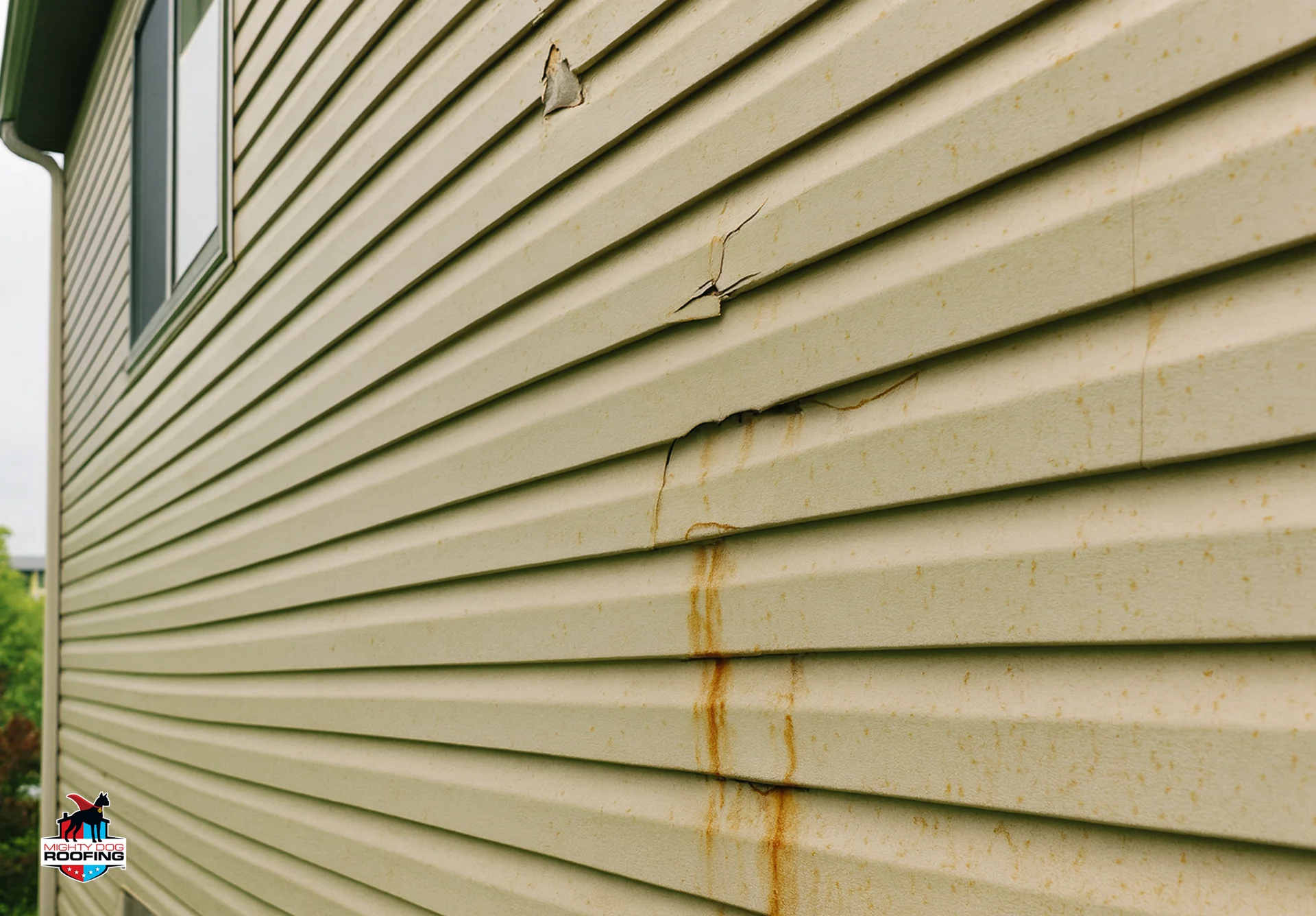
A single cracked panel or one loose section typically calls for a targeted repair. But when several areas exhibit failure at the same time, the siding replacement timeline has clearly arrived. Recurring water infiltration behind the cladding, widespread warping or buckling visible from the curb, and irreversible color loss affecting your home's overall presentation all indicate that patchwork fixes can no longer deliver meaningful results. At that stage, complete replacement emerges as the smarter financial decision.
Getting an Honest Assessment
A seasoned contractor looks well beyond what's visible on the surface. Mighty Dog Roofing measures trapped water levels behind panels, examines sheathing health, evaluates flashing continuity, and studies how your existing exterior has responded to the unique exposure conditions of your property. Age combined with present condition paints a far more reliable picture than calendar years alone. When you're ready to move forward, entrust installation to an experienced siding team that knows Pennsylvania's climate inside and out.