How cold is too cold for professional shingle installation?
Temperatures below about 40 degrees Fahrenheit can make professional asphalt shingle installation more difficult because shingles become less flexible and sealing strips may not activate promptly. Installation may still be possible when roofers follow manufacturer-approved cold-weather methods and carefully evaluate the product, wind, moisture, surface conditions, and forecast.
Why Does Cold Weather Affect Asphalt Shingle Installation?
Asphalt shingles are designed to provide durable roof coverage, but their handling characteristics change as temperatures fall. In warmer conditions, shingles are generally more flexible and easier to position properly. When temperatures drop below about 40 degrees Fahrenheit, the material may become stiff or brittle, increasing the possibility of cracking or other damage during handling and installation.
Cold temperatures can also affect the adhesive sealing strips found on many asphalt shingles. These strips typically depend on sufficient warmth to activate and create a secure bond between overlapping shingles. When the weather is cold, that bond may form slowly rather than immediately.
A delayed seal does not necessarily mean the roof installation will fail. It does mean that the roofing contractor must account for the conditions and follow the shingle manufacturer’s instructions. Wind is an especially important consideration while newly installed shingles are waiting to seal because unsecured edges may be more vulnerable to lifting.
Can Professional Roofers Install Shingles Below 40 Degrees?
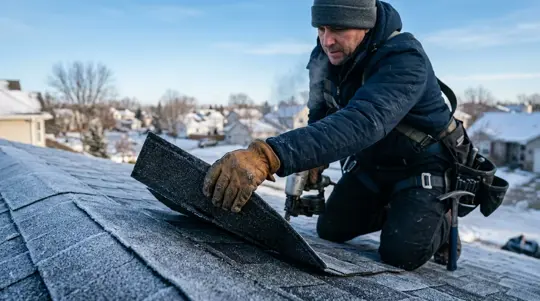
Professional roofers can sometimes install asphalt shingles when the temperature is below 40 degrees Fahrenheit. The temperature alone does not determine whether work should proceed. The roofing team must also consider the specific product, roof surface, wind, moisture, available daylight, and expected weather after installation.
Cold-weather installation may require manufacturer-approved procedures for storing, handling, fastening, and sealing the shingles. Materials may need to be kept in suitable conditions before they are moved onto the roof. Shingles should also be handled carefully to reduce stress on cold, less-flexible material.
When sealing strips are unlikely to activate promptly, the manufacturer may specify an approved supplemental sealing method. These requirements can vary between products, so a roofer should not rely on a single cold-weather technique for every roof.
In practical terms, weather below about 40 degrees makes shingle installation more demanding, but it is not always an automatic stopping point. A qualified contractor should determine whether the roof can be completed correctly under the actual conditions rather than making a decision based only on the air temperature.
What Weather Conditions Should Be Evaluated Before Installation?
Temperature is only one part of determining whether conditions are appropriate for roof installation. Before starting work in Ridgefield, Connecticut, a professional roofer should evaluate the complete weather picture.
Relevant conditions include:
The temperature of both the air and roof surface
Wind speed and the possibility of stronger gusts
Rain, snow, frost, ice, or other moisture
The condition and flexibility of the selected shingles
The manufacturer’s installation requirements
The expected weather during and after installation
A cold but dry, calm day may present different installation conditions than a slightly warmer day with moisture or strong wind. Frost, snow, and ice can affect the roof surface and create safety concerns, while moisture may interfere with proper installation. Rapidly changing weather can also make it difficult to keep exposed portions of the roof protected.
For homes in Fairfield County, seasonal conditions can vary throughout the day. A contractor may adjust scheduling around the most suitable installation window or recommend waiting when the combined conditions do not support safe, manufacturer-compliant work.
How Should Homeowners Evaluate a Cold-Weather Roofing Plan?
Homeowners should ask how the contractor plans to protect the roofing materials and follow the manufacturer’s cold-weather instructions. The roofer should be able to explain how temperature, wind, moisture, and sealing requirements affect the proposed work.
Useful questions include:
Is this shingle product approved for installation under the expected conditions?
How will the shingles be stored and handled before installation?
Will supplemental sealing be required?
What conditions would cause the work to be postponed?
How will exposed areas be protected if the weather changes?
Will the installation method remain consistent with warranty requirements?
Clear answers can help homeowners distinguish between a carefully planned cold-weather roof installation and work that proceeds without adequate consideration of the conditions. The goal is not simply to complete the project during cold weather. It is to install the roofing system correctly while protecting the materials, property, and workers.
FAQ
Will asphalt shingles seal immediately in cold weather?
Not always. Cold temperatures can delay activation of the shingles’ sealing strips, so the manufacturer may require an approved supplemental sealing method under certain conditions.
Can shingles crack during cold-weather installation?
Yes. Asphalt shingles may become less flexible as temperatures fall, making careful storage, handling, positioning, and fastening especially important during installation.
Does wind matter during a cold-weather roof installation?
Yes. Wind can affect worker safety and may lift newly installed shingles before their sealing strips have formed a secure bond.
Should roof installation stop when temperatures fall below 40 degrees?
Not automatically. A professional roofer should evaluate the shingle manufacturer’s requirements, roof conditions, wind, moisture, safety, and forecast before deciding whether installation can proceed.
How cold is too cold for professional shingle installation?
Temperatures below about 40 degrees Fahrenheit can make asphalt shingle installation more difficult because shingles may become less flexible and sealing strips may not activate promptly. Professional roofers can sometimes work in colder conditions using manufacturer-approved handling and sealing methods, but weather, wind, moisture, and the specific product must all be considered.
Conclusion
Temperatures below about 40 degrees Fahrenheit can complicate asphalt shingle installation, but they do not always make professional work impossible. The appropriate decision depends on shingle flexibility, sealing requirements, wind, moisture, roof conditions, safety, and the product manufacturer’s instructions.
Homeowners planning roofing work in Ridgefield can ask Mighty Dog Roofing of Fairfield County to assess the conditions and explain whether the roof installation should proceed, be adjusted for cold weather, or be scheduled for a more suitable time.