What is the weakest part of a roof?
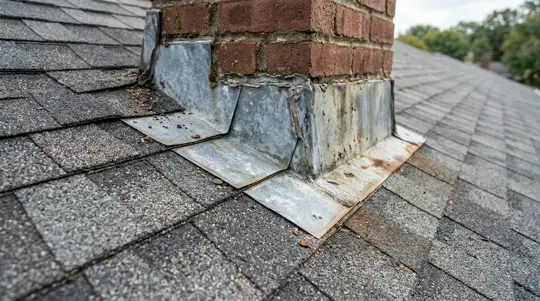
Usually the flashing. Flashing is the metal (or sometimes rubber) that seals the joints where a roof meets a chimney, wall, dormer, skylight or vent pipe, and it lines valleys where two roof slopes meet. The right decision depends on the roof materials, the location of the problem, and the condition found during an inspection.
Why roof details are vulnerable
The weakest part of a roof is often a transition rather than the open field of shingles. Valleys concentrate runoff from two slopes. Flashing must guide water around chimneys, walls, and skylights. Pipe boots and other penetrations interrupt an otherwise continuous covering. Each of these locations depends on correct layering and drainage, so an installation mistake or failed seal can allow water into the assembly even when nearby shingles appear sound.
Valleys and concentrated water
A roof valley carries water from a larger area than a typical strip of shingles. Debris collecting there can slow drainage, while improperly cut or fastened materials can create entry points. The valley covering and adjacent shingles need to direct water downhill without sending it beneath the roof surface. When a leak appears below a valley, an inspection should look at both the visible valley materials and the surrounding roof layout rather than simply adding surface sealant.
Flashing around walls and chimneys
Flashing is a system of metal pieces that overlaps roofing and adjoining surfaces. Step flashing along a wall must be layered with shingles so water sheds over each piece. Chimneys and other large penetrations need carefully detailed transitions. Caulk alone is not a substitute for correct flashing. If sealant cracks or the metal pulls away, the exposed joint can become vulnerable, particularly during wind-driven rain or snowmelt.
Penetrations, edges, and workmanship
Vent pipes, exhaust outlets, skylights, roof edges, and ridges each create their own detailing challenges. A pipe boot may deteriorate while the surrounding roof remains in good condition. At an eave, ice or backed-up water can test the underlayment and edge protection. Poor fastening or incorrect overlaps can turn a minor detail into a repeated leak. A sound roof depends on the entire assembly working together, not on shingles alone.
How to prioritize inspection
If water appears inside, note the weather and the room where it appears, but do not assume the roof opening is directly overhead. Water can travel along framing or under roofing before becoming visible. A roofer can examine likely pathways, inspect flashing and valleys, and check the condition of adjacent materials. Targeted maintenance of these transitions may prevent small defects from developing into damage to decking or interior finishes.
What this means for Ridgefield homeowners
For a Ridgefield, Connecticut home, snowmelt and wind-driven rain can reveal weaknesses at valleys, chimneys, and roof penetrations. Those locations deserve attention during routine roofing inspections even when the main shingle surfaces look uniform. Photos of the transition details can make a repair recommendation easier to understand.
On a Ridgefield roof, a useful inspection should follow the actual direction of runoff. Water moving down a valley, around a chimney, or beside a wall should always be directed onto the next lower layer. The roofer can explain where an overlap is missing or where a detail has pulled apart. That explanation is more informative than simply describing a section as the weak spot.
FAQ
Why do valleys leak?
The weakest part of a roof is often a transition rather than the open field of shingles. Valleys concentrate runoff from two slopes. Flashing must guide water around chimneys, walls, and skylights.
Can caulk replace flashing?
A roof valley carries water from a larger area than a typical strip of shingles. Debris collecting there can slow drainage, while improperly cut or fastened materials can create entry points.
Are pipe boots weak points?
Flashing is a system of metal pieces that overlaps roofing and adjoining surfaces. Step flashing along a wall must be layered with shingles so water sheds over each piece. Chimneys and other large penetrations need carefully detailed transitions.
Can water travel before a stain appears?
Vent pipes, exhaust outlets, skylights, roof edges, and ridges each create their own detailing challenges. A pipe boot may deteriorate while the surrounding roof remains in good condition. At an eave, ice or backed-up water can test the underlayment and edge protection.
What is the weakest part of a roof?
Usually the flashing. Flashing is the metal (or sometimes rubber) that seals the joints where a roof meets a chimney, wall, dormer, skylight or vent pipe, and it lines valleys where two roof slopes meet. These spots handle heavy water flow or interrupt the shingles, so they are where most leaks start, often before the shingles themselves fail.
Conclusion
The weakest part of a roof is often a transition rather than the open field of shingles. Targeted maintenance of these transitions may prevent small defects from developing into damage to decking or interior finishes. For Ridgefield homeowners, a roof inspection can help match the next step to the actual condition.