
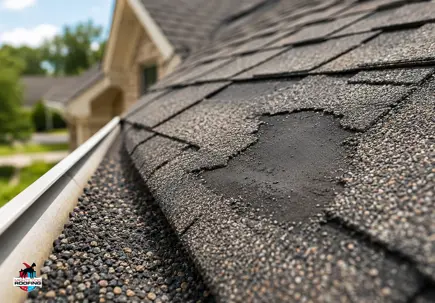
Summer is when most Chester County homeowners stop thinking about their roof almost entirely. No leaks to chase, no ice to worry about, no obvious signs of damage anywhere visible from the yard — it genuinely feels like the safest stretch of the year to do nothing at all and simply enjoy the season. But summer is exactly when UV damage quietly accumulates on the shingle surface, when moss establishes itself in shaded corners nobody checks, when storm damage goes completely undetected for weeks at a stretch, and when small flashing issues gradually become genuinely structural ones without anyone noticing along the way until it's too late to catch cheaply.
This is precisely the kind of gradual, invisible damage a roofing contractor near you sees turn into an emergency service call almost every single November — damage that actually started back in July and simply had months of uninterrupted time to get worse before anyone finally noticed it from the inside, usually as a stain spreading across a ceiling. Here's what a full summer of skipped maintenance actually costs a homeowner in real dollars, and exactly what it takes to avoid that outcome entirely.
Why Summer Is the Worst Season to Ignore Your Roof
The "Nothing Is Leaking" Assumption
The absence of a visible leak doesn't mean the absence of real damage underneath the surface — it usually just means the damage hasn't yet reached the ceiling where anyone would actually notice it happening. Summer damage accumulates invisibly, layer by layer, and reliably surfaces later as a fall or winter problem, following a fairly predictable and well-worn timeline that plays out on countless Chester County roofs every single year: damage begins quietly in July, a visible leak appears by October once enough rain accumulates, and an emergency service call follows shortly after by November when the ceiling finally shows it.
What Summer Actually Does to a Roof Without Maintenance
- UV degradation continues progressing steadily with no inspection or treatment in place to catch it while the damage is still minor and cheap to address
- Moss and algae establish themselves fully in July's humidity, long before anyone happens to notice the growth from ground level or thinks to look up at all
- Storm damage from August thunderstorms goes completely unassessed for weeks at a time, quietly worsening with every subsequent rain event that follows the original storm
The Cost of Skipping a Summer Inspection
What a Summer Inspection Finds That Homeowners Miss
A proper summer inspection reliably catches lifted flashing at chimney, skylight, and pipe boot penetrations well before it develops into an active, visible leak point somewhere inside the home. It catches early-stage moss growth before that growth turns into a full removal and shingle repair project spanning multiple sections of the roof. And it identifies hail and wind damage from summer storms that's completely invisible from ground level but becomes obvious the moment someone with training gets up close enough to actually look at it directly.
What Catching These Issues in Summer Costs vs. in November
Issue | Caught and Addressed in Summer | Discovered After Fall or Winter |
Lifted flashing | $150–$300 to reseal properly | $800–$2,500+ after sustained water entry |
Early moss growth | $200–$500 to treat directly | $1,500+ for full removal plus shingle repair |
Minor storm damage | $300–$600 to repair promptly | $2,000+ after a full winter freeze-thaw cycle |
The pattern across every single category listed here is consistent and worth sitting with for a moment: the cost of catching an issue while it's still small in the middle of summer is a genuine fraction of the cost of discovering that same issue after an entire season of neglect and continued weather exposure has made it considerably worse. None of these are edge cases — they're the routine findings on nearly every summer inspection Mighty Dog Roofing performs across Chester County.
What Accumulates Over a Summer of No Maintenance
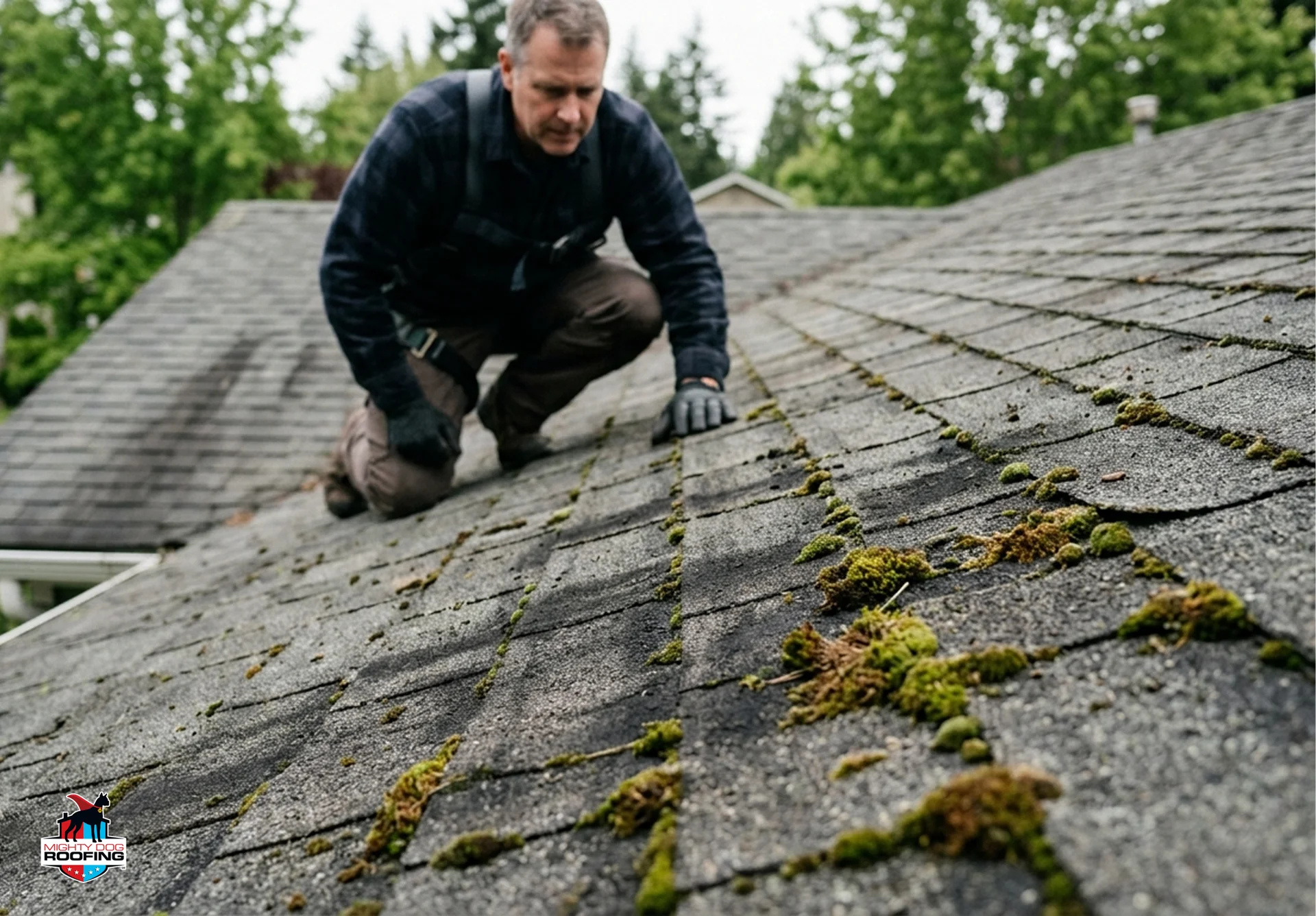
Moss and Algae — From Cosmetic to Structural
Algae establishes itself on north-facing roof planes and shaded sections steadily through July and August, often going completely unnoticed at first because it begins as a subtle discoloration rather than an obviously visible growth pattern that jumps out from the street. Moss is considerably more aggressive in comparison — its root system actively breaks down shingle adhesive bonds over the course of a single summer season alone, without needing a full year to do meaningful damage. A roof that looked entirely fine in May can show clearly visible growth by September with absolutely no intervention having taken place anywhere in between those two points.
Valley and Gutter Debris
Summer debris steadily accumulates in roof valleys throughout the season — seed pods, organic material, and shingle granules all settle together at exactly the same low points along the roofline. Compacted debris disrupts normal water flow and traps moisture directly against the shingle surface underneath it for extended periods, well beyond what the shingles were designed to tolerate. Gutters already full of summer debris, combined with the fall leaves that arrive on top of it shortly after, create the single worst possible clog scenario of the entire year for the whole drainage system.
Undetected Storm Damage
Chester County averages several genuinely significant storms between June and August in most years, each one a real opportunity for hail or wind damage that goes unchecked. Hail damage that's gone 60 days or more without any inspection becomes measurably harder to document accurately for an insurance adjuster and harder to successfully claim through homeowner's insurance as a result. Insurance claims filed for summer storm damage get considerably more complicated to process when the damage itself isn't reported reasonably promptly after the actual storm event occurred, since adjusters look closely at timing.
The Maintenance Tasks That Actually Matter in Summer
What Takes Under an Hour and Prevents Expensive Problems
- A ground-level inspection after any storm involving hail or sustained winds over 40 mph, walking the full perimeter of the home
- A gutter check and thorough flush, clearing out summer debris before fall leaves have a chance to add an entirely new layer on top
- An attic check for any signs of moisture or condensation — roughly 15 minutes of work with a simple flashlight and no special equipment required
What Requires a Professional
- Flashing inspection and resealing at every roof penetration point around vents, pipes, and chimneys
- Moss and algae treatment, which requires proper product selection and correct application technique to avoid damaging the shingles themselves
- Post-storm damage assessment, especially important following any hail event regardless of how the roof looks from below
- A full ventilation check, particularly critical if attic temperatures have run unusually high at any point this summer compared to prior years
How Skipped Summer Maintenance Affects Your Roof Warranty

What Enhanced Warranties Require
Most manufacturer-backed enhanced warranties require documented annual inspections as an explicit condition of continued coverage — a detail many homeowners never read closely at the time of the original installation, buried in the fine print of the warranty paperwork. A skipped summer inspection creates a real gap in that documentation record, and missing records can seriously undermine coverage a homeowner assumed they had all along, a gap that's typically discovered only once an actual claim is filed years down the road and the manufacturer asks for proof.
How to Protect Warranty Coverage Through Summer
A properly documented summer inspection typically includes a full written report alongside the physical visual assessment itself, and that report is often just as valuable as the inspection when it eventually comes time to file a warranty claim with the manufacturer. The certified roofing professionals on our team provide exactly the kind of thorough documentation that warranty claims genuinely require, so coverage isn't quietly compromised by a gap in the record that nobody noticed until the moment it actually mattered.
What to Do Right Now
The Late-Summer Roof Priority List
- If you haven't inspected your roof following any storm this summer, do it this week without further delay
- If moss or algae is visibly noticeable from the ground, schedule treatment before fall arrives and conditions change further in its favor
- If your roof is over 15 years old and hasn't been inspected at all this year, don't wait for the fall rush to finally get it looked at properly
Getting a Professional Assessment Before the Season Changes
A summer roof inspection at Mighty Dog Roofing of Greater Chadds Ford covers flashing condition, ventilation, storm damage, and biological growth all in a single visit, rather than requiring separate appointments for each concern. Late July and August inspection appointments book up faster than most homeowners expect once fall demand really starts building across the region — schedule a free inspection before fall demand hits in full and the calendar fills up around you.
A summer of skipped maintenance doesn't feel like an active decision while it's happening — it feels like nothing at all is going on, which is exactly what makes it so easy to put off. By November, it looks like a repair list that could have been a single inspection back in August. The cost difference between those two outcomes is rarely close.