
A new roof can be a gut-punch.
Even when you know it is coming, the estimate can still create sticker shock. So it is no surprise one of the most common budget questions we hear is:
“Can you just put the new shingles over the old ones?”
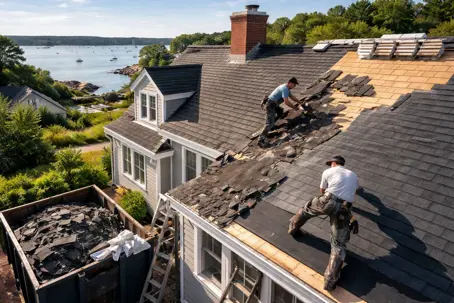
That approach is called a roof overlay (or “roof-over”). It means nailing a new layer of shingles on top of the existing layer instead of tearing the old roof off down to the wood deck.
It can sound like a smart shortcut.
In Rhode Island and the rest of New England, it can also be a weather trap.
Below is the honest, homeowner-first breakdown.
The big appeal: why people ask for a roof overlay
A roof overlay can look attractive because it:
- Skips most of the messy demolition
- Reduces dump fees and disposal costs
- Can lower the initial estimate
- Can feel faster and less disruptive
If you are trying to keep the project affordable, those benefits are real.
But they come with tradeoffs that matter a lot in Rhode Island.
The New England weather trap: heat in summer, ice dams in winter
Rhode Island roofs do not live in a mild climate.
We get humid summers, strong sun, coastal wind-driven rain, and winters that can create ice dams.
Summer problem: double layers can run hotter
A second layer adds mass and can reduce how efficiently the roof system sheds heat.
Hotter shingles can mean:
- Faster aging
- More brittleness over time
- Shorter real-world life compared to the same shingle installed on a clean deck
Winter problem: you lose the chance to rebuild the ice and water protection correctly
Ice dams are not just “a gutter issue.” They are a roof system issue.
A proper tear-off lets you:
- Inspect the deck for rot or soft spots
- Install ice and water barrier correctly at the eaves and in vulnerable areas
- Correct flashing details that leak under wind-driven rain
With an overlay, you are building on top of unknowns.
And in Rhode Island winters, unknowns are expensive.
The warranty dead end: overlays limit the best long-term protections
This is the part most homeowners do not hear until it is too late.
Top-tier manufacturer warranty options are designed around a full roofing system installed on a clean, fully inspected deck.
As an Owens Corning Platinum Preferred Contractor, we can offer enhanced warranty options when the roof is built to the manufacturer system requirements.
An overlay can severely limit those options because:
- The deck cannot be fully inspected
- Underlayment and ice/water details may not meet current requirements
- Hidden moisture damage can remain trapped
If you are paying for a premium shingle because you want premium protection, an overlay often defeats the purpose.
The “double tear-off” penalty: the bill you hand to Future You
Even if an overlay holds up for a while, it creates a guaranteed cost later.
The next time the roof needs replacement, the contractor has to remove:
- Layer 1 (old shingles)
- Layer 2 (overlay shingles)
That usually means:
- More labor
- More debris
- More dump fees
- More time
So the money you “save” today can turn into a bigger bill at the next replacement.
The flip factor: why overlays show up on investor renovations
If you are buying a home (or planning to sell soon), pay attention to roof overlays.
On some quick renovations, a second layer is used to make the roof look new from the street while keeping the project fast and the upfront cost lower.
The problem is that the next owner often inherits the expensive part:
- You may not know the deck condition because it was never fully exposed and inspected.
- Ice and water barrier details may not be rebuilt the right way for Rhode Island winters.
- The next replacement can require a double tear-off (two layers of shingles), which usually means more labor and higher dump fees.
To be fair, not every overlay is an investor move. But it is common enough that buyers should treat it as a due-diligence item.
If you are under contract on a home, ask your inspector and roofer:
- How many layers are on the roof right now?
- Is there evidence of soft decking, sagging, or past leaks?
- Are there signs of ice dam leakage at the eaves or in the attic?
So when does an overlay make sense?
There are situations where an overlay can be a reasonable choice.
For example:
- A short-term ownership plan (such as a quick real estate flip)
- A roof with a single existing layer that is lying flat
- No signs of moisture issues, sagging, or ventilation problems
- A clear understanding that warranty and long-term performance are limited
Even then, it should be evaluated carefully.
The verdict for Rhode Island homeowners staying put
If you plan to stay in your home, a full tear-off to a clean deck is usually the only way to:
- Confirm the deck is solid
- Install ice and water barrier correctly
- Correct flashing and ventilation details
- Qualify for the best manufacturer-backed warranty options
- Build a roof system designed for Rhode Island weather
That is why, for long-term homeowners, we recommend a full system approach (for example, our Gold Package level scope) rather than a roof overlay.
If you are considering an overlay because of budget, you are not alone.
Let us take a look first.
Mighty Dog Roofing of Rhode Island will inspect your roof and help you understand what is happening underneath the shingles - including the condition of the roof deck and the details that matter for ice dams and long-term performance.
Call (401) 425-4108 or visit our Contact Us page to schedule a free inspection.
FAQ
Can you put new shingles over old shingles in Rhode Island?
Sometimes, yes, depending on the existing roof condition and local requirements. But Rhode Island weather makes overlays riskier because you cannot fully inspect the deck or rebuild ice and water protection the same way as a full tear-off.
Is a roof overlay cheaper than a tear-off?
It can be cheaper upfront because it reduces labor and disposal costs. But it can cost more long-term because the next replacement requires removing two layers.
Does a roof overlay void the shingle warranty?
It can limit or reduce warranty options, especially for enhanced manufacturer-backed warranties that require a clean deck and full system installation details.
Why do ice dams matter when replacing a roof in Rhode Island?
Ice dams can force water under shingles. A full tear-off allows proper ice and water barrier placement and flashing corrections, which helps reduce leak risk.