
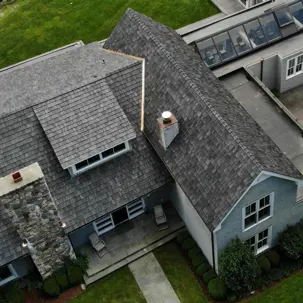
Rhode Island architecture is rooted in historic charm. From coastal estates in Newport to traditional farmhouses in Lincoln and Cumberland, the rustic texture and silver-gray patina of a cedar shake roof has defined New England luxury for generations.
But owning a natural wood roof in southern New England can become a maintenance-heavy, capital-intensive cycle. Humidity, shaded microclimates, and freeze-thaw swings put stress on organic materials in ways asphalt and engineered composites do not.
For property owners who refuse to sacrifice the classic cedar look but want modern engineering permanence, premium synthetic composite shake has become a serious option.
The structural liability of natural cedar
Natural wood is organic and porous. It absorbs atmospheric moisture, expands, and then contracts as it dries. Over time, that movement can create predictable failure patterns.
Splitting and curling
Long-term UV exposure combined with winter snow and ice can cause cedar to cup, curl, and split along the grain. Once the surface deforms, water can reach fastener lines and underlayment more easily.
The moss and microclimate trap
Shaded or north-facing slopes in wooded areas can stay damp for extended periods. That moisture supports moss and algae growth, which can hold water against the wood and accelerate deterioration.
Hidden deck risk
When moisture gets trapped behind aging shakes, it can stress the roof deck and underlayment before obvious interior leaks appear.
Insurance and fire considerations
Some insurers treat natural wood roofs as higher risk. Depending on the carrier and product, homeowners may face coverage limitations or requirements for ongoing treatments. Always confirm requirements with your insurer before investing in a wood roof.
The engineering of synthetic composite shake
Premium composite shake systems are molded to replicate the look of hand-split cedar, including grain texture, thickness variation, and shadow lines.
From a material standpoint, the goal is to keep the aesthetic while removing the vulnerabilities of organic wood.
Low or zero water absorption
Composite shakes are non-porous compared to natural wood. That means they are far less likely to rot, warp, split, or support moss growth the way cedar can in damp microclimates.
Impact and wind performance
Many premium synthetic systems carry high impact ratings and are engineered for strong wind performance when installed to the manufacturer specification.
Fire ratings
Many composite shake products are available with Class A fire ratings. For some properties, that can be a meaningful safety upgrade and may help with insurance eligibility.
The financial equation over time
Synthetic composite shake typically costs more upfront than asphalt, and sometimes more than certain wood scopes. The difference is lifecycle cost.
Natural cedar often requires periodic cleaning, moss mitigation, and localized repairs. In New England conditions, wood roofs can also see earlier replacement timelines depending on exposure, maintenance, and installation quality.
A premium synthetic system is designed to reduce ongoing maintenance, resist UV fading, and deliver long service life. Many products are backed by long warranties (often marketed as 50 years), but warranty terms vary by manufacturer and installation requirements.
If you plan to hold the property long-term, lifecycle cost and risk reduction can matter more than the initial number.
Thinking about replacing your cedar shake roof? Contact Mighty Dog Roofing of Rhode Island today for a professional roof inspection and explore durable, low-maintenance synthetic shake roofing options for your Rhode Island home.
Rhode Island Service Locations:
Ashaway, Barrington, Bradford, Bristol, Carolina, Central Falls, Charlestown, Chepachet, Clayville, Coventry, Cranston, Cumberland, East Greenwich, East Providence, Exeter, Forestdale, Foster, Glendale, Greene, Greenville, Harrisville,Hope,Hope Valley, Hopkinton, Jamestown, Johnston, Kenyon, Kingston, Lincoln, Little Compton, Manville, Mapleville, Middletown, Narragansett, Newport, North Kingstown, North Providence, North Scituate, North Smithfield, Oakland, Pascoag, Pawtucket, Portsmouth, Providence, Riverside, Rockville, Rumford, Saunderstown, Shannock, Scituate, Slatersville, Smithfield, Tiverton, Wakefield, Warren, Warwick, West Greenwich, West Kingston, West Warwick, Westerly, Wood River Junction, Woonsocket, Wyoming
FAQ Section
Does synthetic cedar shake look realistic up close?
High-tier composite manufacturers use multi-tone color blends and molds taken from real cedar textures to replicate grain and shadow lines. The best products look very convincing from the curb and up close.
Can synthetic shake roofs be cleaned safely?
Composite materials are generally more chemically resilient than wood. Many can be cleaned with low-pressure washing methods, but the safest approach is to follow the manufacturer cleaning guidance.
Do you need to reinforce a roof structure for synthetic shake?
Most premium synthetic shakes are engineered to be lightweight compared to slate or concrete tile. In many cases they are similar to cedar and asphalt weights, so structural reinforcement is not typically required. A contractor should still verify the specific product weight and the existing framing condition.