Can you install a metal roof in winter?
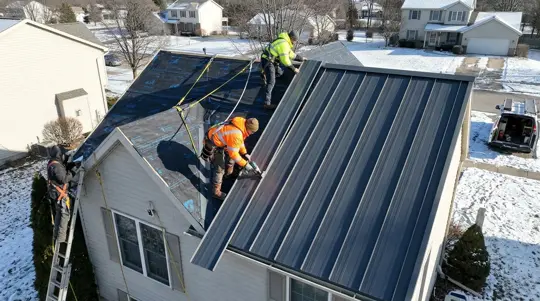
Yes, a metal roof can be installed in winter when weather conditions are safe and the roofing materials meet the manufacturer's installation requirements. Metal roofing panels generally tolerate cold temperatures better than asphalt shingles, but underlayment, sealants, snow, and ice can affect when installation can safely proceed.
Cold-weather installation limits
Winter doesn't automatically mean a metal roof installation needs to wait until spring. Unlike asphalt shingles, which often rely on warmth to activate their adhesive sealing strips, metal roofing panels don't depend on that same sealing process.
However, cold-weather installation involves more than choosing the right roofing material.
The roof needs to be safe for workers, the surface must be properly prepared, and every component must be suitable for the temperatures and conditions expected during installation.
Snow, ice, freezing precipitation, and strong winds can make roofing work dangerous or interfere with proper installation. If conditions aren't suitable, a professional roofing contractor may recommend postponing the project until the weather improves.
Metal panels versus supporting materials
One important consideration is that metal panels are only one part of a complete roofing system.
While the panels themselves generally tolerate cold temperatures, materials installed beneath and around them may have specific installation requirements.
For example, certain roofing underlayments need a dry, properly prepared surface. Adhesive-backed products and sealants may also have minimum application temperatures established by their manufacturers.
Fasteners, flashing, and closure materials need to be installed correctly to help prevent moisture intrusion.
This is why a metal roof shouldn't be installed based on the outside temperature alone. The contractor needs to verify that every component can perform as intended under the installation conditions.
Weather windows and roof preparation
Before installing a metal roof in winter, a roofing contractor needs to evaluate the weather forecast and the condition of the existing roof.
Snow and ice shouldn't be trapped beneath new roofing materials. The roof deck needs to be properly prepared, and the crew must have safe access to the work area.
If the project requires removing existing roofing materials, timing becomes especially important.
Once the old roof is removed, exposed decking needs protection from rain, snow, and other precipitation. A contractor should have a plan for keeping the home protected if weather conditions change before installation is complete.
Shorter daylight hours and unpredictable winter weather may also extend the project schedule.
For homeowners, this means a winter installation could take longer than expected, even when the actual roofing materials are suitable for cold weather.
Expansion, seams, and detailing
Another consideration with metal roofing is how the material responds to temperature changes.
Metal naturally expands as temperatures rise and contracts as temperatures fall. Because of this movement, roofing panels and fastening systems must be installed according to the manufacturer's specifications.
Proper installation allows the roofing system to accommodate temperature-related movement without putting unnecessary stress on its components.
Seams, flashing, ridge details, and areas around roof penetrations also need careful attention.
These areas help protect the roof from water intrusion, and rushing their installation during a short weather window can create problems later.
Winter installation should follow the same quality standards as installation during warmer months.
Questions for a winter roofing estimate
If you're considering a metal roof installation during winter, asking the right questions can help you understand whether the project is appropriate for your home.
Start by asking whether the proposed metal roofing system and its supporting materials can be installed under the expected temperatures.
You should also ask how the contractor handles snow, ice, and unexpected weather changes during the project.
Other useful questions include how exposed roof areas will be protected, whether the installation schedule accounts for weather delays, and what conditions would require work to stop.
In Ridgefield, Connecticut, winter weather can change quickly. A contractor should be able to explain how those conditions may affect installation and what precautions will be taken.
The goal isn't simply to finish the roof during winter. It's to make sure the installation can be completed safely and according to the roofing system's requirements.
What this means for Ridgefield homeowners
For homeowners in Ridgefield, Connecticut, winter metal roof installation may be possible without waiting for warmer weather.
However, the decision depends on the roof's condition, the materials being installed, and the weather expected during the project.
Cold temperatures alone don't necessarily prevent metal roofing installation. Snow-covered surfaces, unsafe working conditions, or materials that cannot be properly installed in the cold may require a delay.
A roofing contractor can evaluate the existing roof and explain whether the proposed installation is appropriate for the season.
If winter conditions prevent proper installation, waiting for a suitable weather window may be the better decision.
Frequently Asked Questions
Do metal panels tolerate cold weather?
Yes. Metal roofing panels generally tolerate cold temperatures and can often be installed during winter. However, the entire roofing system must meet manufacturer installation requirements, and snow, ice, or unsafe weather conditions may require work to be postponed.
What products have temperature limits?
Certain roofing underlayments, adhesives, and sealants have manufacturer-specified temperature requirements. Some products also require dry, properly prepared surfaces. A roofing contractor should verify these requirements before beginning a winter installation.
Should snow be left beneath a new roof?
No. Snow and ice should not be trapped beneath new roofing materials. The roof deck needs to be properly prepared according to the roofing system's requirements to help prevent moisture-related problems and installation failures.
What should I ask a winter installer?
Ask whether the proposed roofing materials are approved for installation in the expected temperatures, how the crew handles snow and ice, and how exposed roof areas will be protected if weather conditions change. You should also ask what circumstances would require delaying the project.
Can you install a metal roof in winter?
Yes, in many cases. Metal panels aren't as sensitive to cold as asphalt shingles, whose seal strips may not bond well until warmer weather. The appropriate response depends on the roof condition and whether the underlying cause has been identified. An inspection can confirm whether conditions allow proper installation.
Conclusion
A metal roof can be installed in winter when the weather is safe and all roofing materials can be installed according to their manufacturer's requirements.
Although metal panels generally tolerate cold temperatures, underlayment, sealants, roof preparation, and changing weather conditions can influence when installation should proceed.
For Ridgefield homeowners, the most important consideration isn't the season itself. It's whether the roofing system can be installed properly under the conditions at the time.