
Two houses on the same street. Same builder, same shingles, same year. One holds strong at 18 years. The other needed a complete overhaul at 12. If you've ever wondered why your neighbor's covering outlasts yours — or why contractors offer such wildly different longevity estimates — Mighty Dog Roofing breaks down the real answer here. The material itself is only one piece of a much larger puzzle. The real roof lifespan factors Chester County homeowners should grasp go far deeper than what's visible from the curb.
Why Material Is the Least Important Variable
What Shingle Grade Actually Controls
Many homeowners believe that premium shingles automatically mean decades of worry-free protection. However, architectural shingles on a compromised deck frequently deteriorate faster than basic 3-tab products placed on a solid, carefully prepared substrate. Manufacturer warranties assume ideal conditions — balanced ventilation, precise nail placement, and thorough underlayment — that roof installation quality in everyday practice rarely matches.
What shingle performance actually depends on:
- Deck integrity and moisture condition at the time work begins
- Ventilation balance between intake and exhaust pathways
- Correct fastener placement per manufacturer guidelines
- Underlayment coverage that meets or exceeds code minimums
Therefore, two identical shingle products can behave very differently based on what sits beneath them. That disconnect between warranty assumptions and jobsite reality explains why roofs age differently Pennsylvania homeowners observe across their neighborhoods.
The Four Real Variables That Determine Lifespan
Four elements drive roof longevity factors more powerfully than material choice: craftsmanship, ventilation, upkeep history, and exposure conditions. Each one directly shapes the others. Poor ventilation, for instance, accelerates shingle breakdown regardless of how precisely the work was performed. Likewise, outstanding craftsmanship cannot offset a decade of neglected maintenance. One weak link compromises the entire system — and that chain reaction is precisely why identical structures produce such divergent outcomes.
Installation Quality — the Biggest Differentiator
What a Proper Installation Actually Involves
Quality craftsmanship begins with correct starter strip placement along eaves and rakes, followed by a manufacturer-specified nail pattern and precise shingle overlap. Valley flashing deserves particular attention because valleys funnel the highest water volume — making them the most common origin point for leaks. On top of that, ice and water shield coverage often separates adequate projects from truly resilient ones. Building code establishes minimums, but seasoned contractors extend protection to vulnerable zones that code alone overlooks.
Common Installation Shortcuts That Shorten Lifespan
Workmanship shortcuts almost never reveal themselves right away. They tend to emerge years later as leaks, premature wear, or structural compromise that seems unconnected to the original crew's decisions. A Mighty Dog Roofing team professional serving Chester County homeowners should never accept these tradeoffs — yet budget-focused teams regularly do.
Shortcuts that slash service life:
- Layering new shingles over existing material rather than performing a complete tear-off
- Driving nails too high, too low, or at an angle — weakening shingle seal strips
- Reducing or skipping underlayment in areas concealed from ground-level view
- Omitting proper flashing work at transitions and penetrations
Each of these shortcuts stays hidden during a casual visual check. By the time visible damage emerges, the underlying issue has already migrated well beyond its starting point.
Ventilation — the Hidden Lifespan Factor
What Poor Ventilation Does to a Roof
Excessive heat trapped in an unventilated attic essentially cooks shingles from underneath, speeding up granule loss and material degradation. At the same time, accumulated moisture without sufficient airflow slowly destroys decking — triggering rot and delamination that undermines the whole structure. As a result, a home can deteriorate from the inside out while the exterior still appears perfectly fine. This concealed breakdown is one key reason inspectors across Pennsylvania consistently document surprising aging discrepancies.
Signs Your Ventilation Is Shortening Your Roof's Life
Several telltale indicators suggest ventilation deficiencies. Shingles that curl or cup prematurely on a relatively new system point toward excessive attic heat. Ice dams appearing every winter — with no apparent explanation — signal warm air leaking through the deck unevenly. On top of that, if your attic temperature climbs dramatically above outdoor air during summer months, your ventilation likely cannot move enough air to preserve roof maintenance lifespan expectations.
Sun Exposure and Orientation
How Roof Pitch and Direction Change Everything
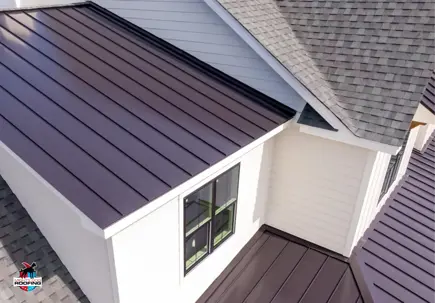
South and west-facing slopes absorb considerably more UV radiation and thermal energy throughout the day. Consequently, the same shingle product can wear down three to five years faster on a south-facing pitch compared to a north-facing one. Properties with complex rooflines experience strikingly uneven aging — one section may demand attention while another remains perfectly serviceable. Mighty Dog Roofing assesses each slope separately for exactly this reason, because evaluating a complex structure as one uniform surface produces misleading conclusions.
Tree Cover — Protection and Risk
Canopy shade measurably slows UV degradation on covered sections. On the other hand, persistently shaded zones also foster moss, algae, and organic debris buildup — all of which hold moisture directly against the shingle surface. Chester County's abundant tree coverage generates distinct aging patterns that shift by neighborhood and even by individual lot position. A residential roofing company near you should understand these localized conditions and weigh them into any longevity assessment.
Maintenance History — What Gets Ignored Until It's Too Late
What Regular Maintenance Actually Prevents
Scheduled inspections detect lifted flashing before water finds its way underneath. Keeping valleys and gutters clear before debris piles up stops water backing and overflow damage. Most critically, spotting granule loss at an early stage serves as the primary warning sign of shingle end-of-life — giving homeowners adequate time to arrange a roof replacement Delaware County families can plan and budget for rather than confront as a crisis.
What Skipped Maintenance Looks Like After 10 Years
A system that should have eight years of functional life remaining can demand full replacement today solely due to deferred care. One overlooked flashing failure permits water intrusion that quietly destroys the decking beneath — transforming a modest repair into a significant structural undertaking. Mighty Dog Roofing encounters this scenario repeatedly across Chester County.
Maintenance tasks that prevent expensive failures:
- Annual flashing inspection and resealing at penetrations and transitions
- Biannual gutter and valley clearing to sustain proper drainage
- Granule loss monitoring beginning around year eight of service
- Prompt attention to any lifted, cracked, or absent shingles
Each task on this list generally costs around $200. Neglecting them consistently leads to repairs surpassing $8,000 — an enormous gap that regular attention eliminates with ease.
What This Means for Your Roof Right Now
How to Assess Where Your Roof Actually Stands
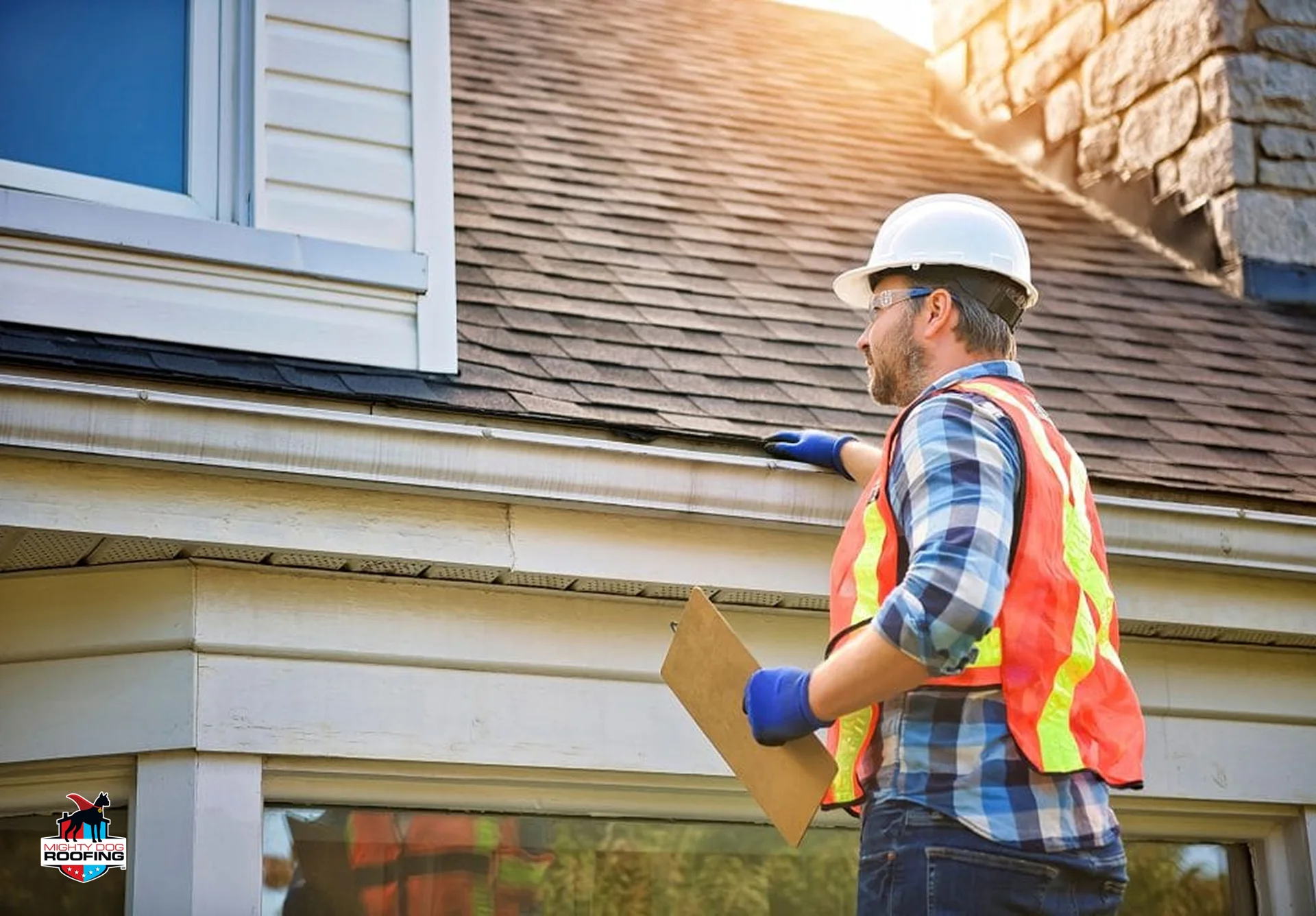
Age by itself tells an incomplete story. Condition paired with age paints the accurate picture. Watch for indicators of accelerated aging: granule buildup in gutters, curling edges, dark streaks, and sagging spans between rafters. Two structures of identical age can legitimately call for entirely different action timelines. Mighty Dog Roofing advises homeowners to evaluate based on observable performance markers — not merely the date printed on a receipt.
Getting an Honest Evaluation
Mighty Dog Roofing team examines well beyond surface appearance during every assessment. A comprehensive 25-point evaluation pinpoints which specific variables — ventilation, workmanship, exposure, and maintenance gaps — are actively eroding your remaining service life. Instead of estimating, we quantify. Contact our roofing experts today for a candid assessment that clarifies exactly where things stand and which steps genuinely make sense moving forward.