
What Type of Roof Insulation Is Best for Homes in Franklin Lakes, NJ?
When homeowners in Franklin Lakes, New Jersey think about energy efficiency, they often focus on windows, HVAC systems, or appliances. But one of the most important — and most overlooked — factors is roof insulation. Roof insulation works hand-in-hand with the rest of your roofing system, which is why many homeowners start with a professional roof inspection before upgrading insulation.
The right roof insulation doesn’t just help keep your home warm in the winter and cool in the summer. It plays a major role in lowering energy bills, preventing moisture problems, and protecting the long-term performance of your roofing system.
In Bergen County, where homes experience cold winters, humid summers, and frequent seasonal temperature swings, choosing the best roof insulation for your home can significantly improve comfort and efficiency year-round.
This guide explains:
- Why roof insulation matters for Franklin Lakes homes
- The most common types of roof insulation
- Which insulation works best for different roof designs
- How insulation improves energy efficiency
- When it’s time to upgrade or replace insulation
Why Roof Insulation Matters for Franklin Lakes Homeowners
Roof insulation acts as a thermal barrier between your living space and the outdoors. Without proper insulation, heat escapes in winter and enters in summer — forcing your HVAC system to work harder and driving up energy costs.
In many New Jersey homes, up to 25% of heat loss occurs through the roof, especially in older properties with outdated insulation.
Key benefits of proper roof insulation include:
Improved Energy Efficiency
Insulation reduces heat transfer, helping maintain stable indoor temperatures and lowering monthly utility bills.
Moisture and Condensation Control
Proper insulation limits condensation buildup, which helps prevent mold growth, wood rot, and hidden water damage in the attic and roof structure.
Extended Roof Lifespan
By reducing thermal stress and moisture exposure, insulation protects shingles, underlayment, and roof decking from premature deterioration.
Noise Reduction
Well-insulated roofs help dampen outside noise, a valuable benefit in quiet residential communities like Franklin Lakes.
Increased Home Value
Energy-efficient homes with upgraded insulation are often more attractive to buyers and may qualify for energy efficiency incentives.
In many cases, insulation issues are discovered during roof repair or roof replacement projects, especially in older Franklin Lakes homes.
Common Types of Roof Insulation Used in New Jersey Homes
There is no single “best” insulation for every home. The right choice depends on your roof design, attic configuration, budget, and long-term efficiency goals.
Here are the most common roof insulation types used in Franklin Lakes and across Bergen County.
1. Fiberglass Insulation
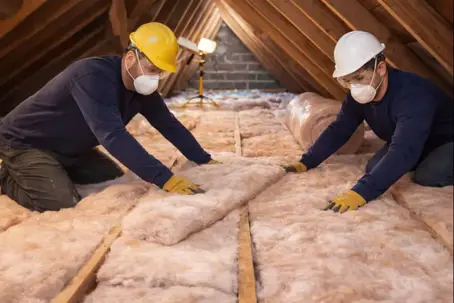
Fiberglass insulation is one of the most widely used materials in residential homes. It’s made from fine glass fibers and typically installed as batts, rolls, or loose-fill.
Best for:
Attics, ceilings, and between roof rafters
Advantages:
- Cost-effective and widely available
- Fire-resistant and pest-resistant
- Available in multiple R-values
Considerations:
- Must be installed carefully to avoid gaps
- Loses effectiveness if exposed to moisture
Fiberglass remains a popular option for homeowners looking for a reliable, budget-friendly solution. Fiberglass insulation is often installed during attic upgrades or as part of a larger residential roofing project.
2. Spray Foam Insulation
Spray foam insulation expands after application, creating an airtight seal that blocks air leaks and moisture intrusion.
Best for:
Roof decks, attic floors, and hard-to-reach areas
Advantages:
- Excellent air sealing and energy performance
- Helps strengthen the roof structure
- Reduces moisture-related issues
Considerations:
- Higher upfront cost
- Requires professional installation
Spray foam is often chosen for its long-term energy savings and superior sealing performance. Spray foam is frequently recommended during roof replacement projects where the roof deck is fully exposed.
3. Rigid Foam Board Insulation
Rigid foam boards offer a high R-value per inch and are commonly used in flat or low-slope roof systems.
Best for:
Flat roofs, cathedral ceilings, and new construction
Advantages:
- High thermal resistance
- Moisture- and pest-resistant
- Durable and lightweight
Considerations:
- Precise installation is critical
- Higher material cost than batts
This insulation is common in modern roofing systems where space efficiency is important. Homes with low-slope or specialty roof designs may benefit from insulation strategies similar to those used in commercial roofing systems.
4. Cellulose Insulation
Cellulose insulation is made from recycled paper products treated with fire retardants, making it an eco-conscious option.
Best for:
Attics and older homes
Advantages:
- Environmentally friendly
- Effective at sealing small air gaps
- Good sound insulation
Considerations:
- Can settle over time
- Sensitive to moisture if ventilation is inadequate
Cellulose is often used when upgrading insulation in older Franklin Lakes homes.
5. Mineral Wool (Rock Wool) Insulation
Mineral wool is made from natural stone or recycled materials and is known for fire resistance and durability.
Best for:
Attics, walls, and fire-prone areas
Advantages:
- Non-combustible and fire-resistant
- Water-repellent yet breathable
- Excellent soundproofing
Considerations:
- Heavier than other insulation types
- Higher cost than fiberglass
How to Choose the Right Roof Insulation for Your Home
Choosing the best insulation involves more than just material preference. Consider these key factors:
R-Value Requirements
The R-value measures insulation’s resistance to heat flow. For homes in Bergen County, attic insulation is typically recommended in the R-49 to R-60 range, depending on home design. Insulation performance also plays a role during severe weather, which is why it’s often reviewed after storm damage roof repair assessments.
Roof Type
- Flat roofs: Rigid foam boards or spray foam
- Pitched roofs: Fiberglass, cellulose, or mineral wool
- Cathedral ceilings: Spray foam or foam board
Moisture and Ventilation
Proper ventilation is critical to prevent condensation and protect insulation performance.
Budget vs. Long-Term Savings
While some insulation options cost more upfront, they often provide better energy savings over time.
Environmental Impact
Cellulose and mineral wool are popular choices for homeowners prioritizing sustainability.
How Roof Insulation Improves Energy Efficiency
Upgraded roof insulation can dramatically improve how your home uses energy:
- Reduces heating and cooling costs
- Prevents ice dam formation in winter
- Maintains consistent indoor temperatures
- Reduces HVAC system strain and wear
- Supports ENERGY STAR and efficiency certifications
Many homeowners see noticeable reductions in energy bills after improving insulation.
Signs Your Roof Insulation May Need to Be Replaced
Insulation doesn’t last forever. Common warning signs include:
- Uneven indoor temperatures
- Rising energy bills
- Moisture stains or mold in the attic
- Drafts or cold ceilings
- Ice dams forming along roof edges
If you notice these issues, a professional inspection can determine whether insulation upgrades are needed.
How Roof Insulation Works Within Your Home’s Building Envelope
Roof insulation plays a critical role in your home’s building envelope, which includes the roof, walls, windows, crawl space, and foundation. Together, these components regulate resistance to heat flow, moisture control, and indoor comfort.
When insulation is properly selected and installed, it improves air sealing, limits heat transfer, and helps your home save energy over the long term. This directly affects your energy bills and overall HVAC performance.
Different insulation types offer varying levels of moisture resistance, thermal performance, and durability. Choosing the right type of insulation ensures long-term protection, compliance with building codes, and a more cost-effective home energy strategy.
Improve Home Comfort with Mighty Dog Roofing of Northeast New Jersey
Choosing the right roof insulation is one of the smartest investments you can make in your home’s comfort, efficiency, and long-term protection.
At Mighty Dog Roofing of Northeast New Jersey, we help homeowners in Franklin Lakes and throughout Bergen County evaluate their roofing systems, identify insulation gaps, and recommend solutions tailored to their home’s structure and energy goals.
Our team focuses on:
- Honest assessments
- High-quality materials
- Clear recommendations
- Long-term performance
If you’re ready to improve comfort, reduce energy costs, and protect your roof, contact Mighty Dog Roofing of Northeast New Jersey to schedule a professional inspection today.