
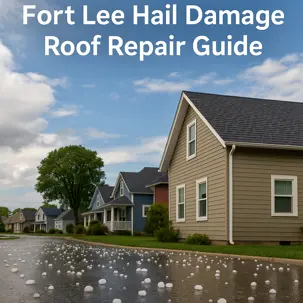
Protecting Your Fort Lee Roof After a Hailstorm: A Homeowner’s Guide to Fast, Compliant Recovery
When New Jersey weather turns violent, Fort Lee homeowners often face hailstorms capable of cracking asphalt shingles, denting gutters, and damaging the roof structure. The good news: with a methodical plan and the help of a trusted roofing company, hail damage can be repaired efficiently and safely.
This roof repair guide explains what to do after a storm—from emergency documentation and insurance claims to upgrading with impact-resistant shingles that can withstand future weather events. Whether you need immediate roof work or want to protect your home for the long term, this guide covers everything you need to know.
Step 1: Inspect for Signs of Damage
Not all hail damage is obvious. Many Fort Lee homeowners discover leaks or granule loss weeks later. That’s why scheduling a professional roof inspection is essential after every severe storm.
Look for These Common Signs of Damage
- Granule loss on shingles roof surfaces exposing dark asphalt spots.
- Circular bruises or soft spots where hailstones hit and displaced the shingle surface.
- Cracks or fractures in existing roofing materials, especially along ridges and valleys.
- Water damage in the attic or on ceiling drywall.
- Roof leaks forming near vents, chimneys, or flashing areas.
- Dented gutters, flashing, or metal roofs near the hail-facing side of the property.
Even if your roof appears in good condition, small hail impacts can shorten the lifespan of asphalt shingles by breaking their weather seal.
Step 2: Document Everything for Your Insurance Claim
The success of your insurance claim depends on your documentation. Start immediately after the storm.
- Take high-quality photos from multiple angles—include a coin or ruler to show hail size.
- Record the date and duration of the hail event.
- Keep receipts for temporary repairs, tarps, or cleanup services.
- Note every room where water damage appears.
This file will help prove your claim’s validity during the claims process, making it easier to secure full coverage for roof repair or replacement.
Step 3: Understand ACV vs RCV (It Determines Your Payout)
Knowing whether your insurance covers ACV vs RCV—Actual Cash Value or Replacement Cost Value—is crucial to understanding your repair cost responsibility.
| Coverage Type | What It Means | Out-of-Pocket Impact |
|---|---|---|
| ACV (Actual Cash Value) | Pays the depreciated value of your roof based on age and condition. | You pay deductible + depreciation. |
| RCV (Replacement Cost Value) | Pays to replace your roof with high-quality new materials of similar kind. | You pay only your deductible after work is completed and proof is submitted. |
If your policy is ACV, your payout covers less. RCV policies reimburse full repair value once the roofing company completes the project and submits invoices.
Tip: Ask your insurer for your coverage type immediately after filing your storm-damage inspection claim.
Step 4: Schedule a Professional Storm-Damage Inspection
Once you’ve documented the storm, schedule a storm-damage inspection with a licensed roofing company. Fort Lee homeowners can’t safely identify hidden fractures or structural issues from the ground.
A professional roof inspection provides:
- Verified photo evidence for your insurance adjuster.
- Assessment of signs of damage to the shingles, flashing, and decking.
- Expert opinion on whether repair or replacement is required.
- Code-compliant recommendations for your roofing system.
Companies like Mighty Dog Roofing of Bridgewater offer comprehensive inspections with written scopes—essential for a smooth claims process and accurate repair estimate.
.jpg.webp)
Step 5: Choose the Right Contractor and Materials
Before signing any repair contract, confirm your roofer is:
- Registered with the NJ Division of Consumer Affairs (Home Improvement Contractor license).
- Fully insured for liability and workers’ comp.
- Experienced in handling hail damage roof repair and insurance claims.
- Certified to install impact-resistant shingles or metal roofs backed by manufacturer warranties.
Selecting a certified installer ensures your roofing system performs as designed and remains eligible for warranty coverage.
Step 6: Upgrade Your Roof—Build Back Stronger
A hail claim is your opportunity to make your roof better than before, not just patched. Consider upgrading to impact-resistant shingles—specifically UL 2218 Class 4–rated materials, the highest standard in hail performance.
Benefits of Impact-Resistant Shingles
- Designed to withstand 2-inch hail impacts without cracking.
- Offer stronger wind resistance for New Jersey weather with gusts over 120 mph.
- Enhanced fire resistance and UV durability.
- Help reduce long-term repair costs and prevent future roof leaks.
- May qualify for insurance premium discounts.
Modern architectural and dimensional shingles use fiberglass mat reinforcement and flexible asphalt compounds to absorb impacts. Mighty Dog Roofing installs these advanced roofing materials on Fort Lee homes to reduce future storm damage and ensure long-term peace of mind.
Step 7: Understand the Warranty and Follow-Up
After the roof work is completed, confirm two warranties are in writing:
- Manufacturer warranty on materials (often lifetime or 30 years).
- Contractor workmanship warranty on installation and labor.
Many warranties require regular roof inspections, especially after storm damage, to keep them valid. Keep your roof in good condition by booking maintenance checks every year or after extreme weather events.
Step 8: File, Follow Up, and Finish Strong
Once the work is complete:
- Submit the contractor’s invoice and photos to your insurer.
- Request the recoverable depreciation (if RCV).
- Keep all documents for future insurance claims or resale proof.
The process can take time, but choosing a reliable roofing contractor simplifies everything—from estimating to final payment release.
Fort Lee Hail Damage FAQ
How do I fix hail damage on my roof?
Always start with a professional roof inspection. DIY repairs risk missing hidden damage. A certified roofer can safely fix hail damage and provide a report for your insurer.
Can small hail really damage asphalt shingles?
Yes. Even small hail can dislodge granules or fracture the surface of asphalt shingles, leading to leaks and water damage over time.
How long does hail damage repair take?
Depending on the type and extent of damage, roof repair or replacement may take 1–3 days once materials are approved and delivered.
Is hail damage covered by insurance?
Usually yes, under your storm damage coverage. Check your ACV vs RCV clause to understand payout terms and deductibles.
What are the best shingles for hail-prone areas?
Impact-resistant shingles or metal roofs perform best. They provide long-term durability, fire resistance, and improved wind resistance.
What if my roof looks fine after hail?
You should still schedule a storm-damage inspection. Many roofs in Fort Lee appear in good condition but hide cracks in the existing roofing layers.
How much does hail roof repair cost in Fort Lee?
Repair cost varies depending on the type of materials, slope, and damage extent. A full inspection from Mighty Dog Roofing gives an accurate, written estimate before work begins.
Protect Your Home with Mighty Dog Roofing of Bridgewater
Recovering from hail doesn’t have to be stressful. With certified inspectors, insurance coordination, and premium roofing systems, Mighty Dog Roofing of Bridgewater makes your roof stronger, safer, and built to last.
We specialize in hail damage roof repair, storm-damage inspections, and full roof replacements using high-quality, impact-resistant shingles engineered for New Jersey weather.
Schedule your professional roof inspection today and get back your peace of mind knowing your Fort Lee roof is in expert hands.