
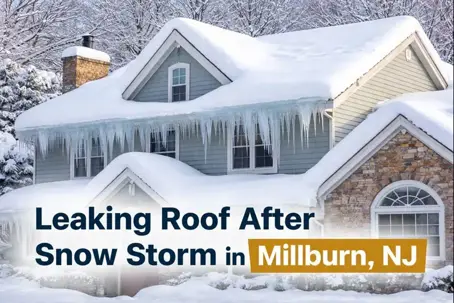
A Local Homeowner Guide to Winter Roof Leaks, Causes, and What to Do Next
Winter storms in Millburn, New Jersey can leave behind more than snow-covered streets. Many homeowners discover a roof leak after snow has melted—sometimes days later—when water works its way into vulnerable areas of the roofing system.
If you’re dealing with a snow roof leak or signs of water inside your home, this FAQ-style guide explains why winter leaks happen, the signs of a leaking roof, how water intrusion can affect your home long term, and when a professional roof inspection may be the right next step.
Why Do Roof Leaks Happen After Snow Storms?
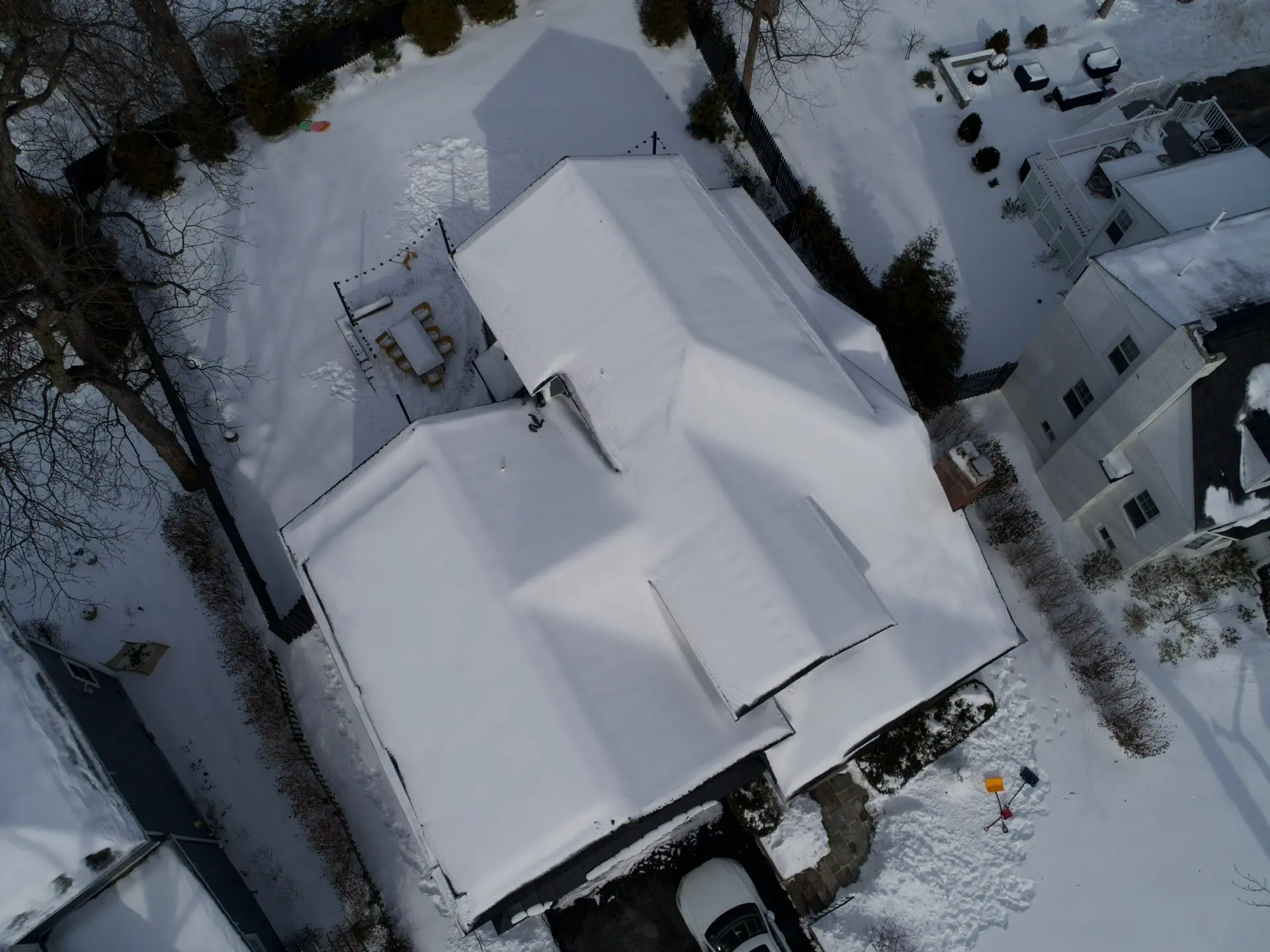
A roof leak after snow is rarely caused by snow alone. The bigger issue is what happens after the storm.
In Millburn, roof leaks commonly occur when:
- Snow melts during the day and refreezes at night
- Water backs up beneath roofing materials
- Damaged shingles or flashing allow moisture through
- Heat loss causes uneven roof temperatures
This freeze-thaw cycle is common during winter storms in Northeast New Jersey and often leads to hidden water leaks.
Signs of a Roof Leak After a Snow Storm
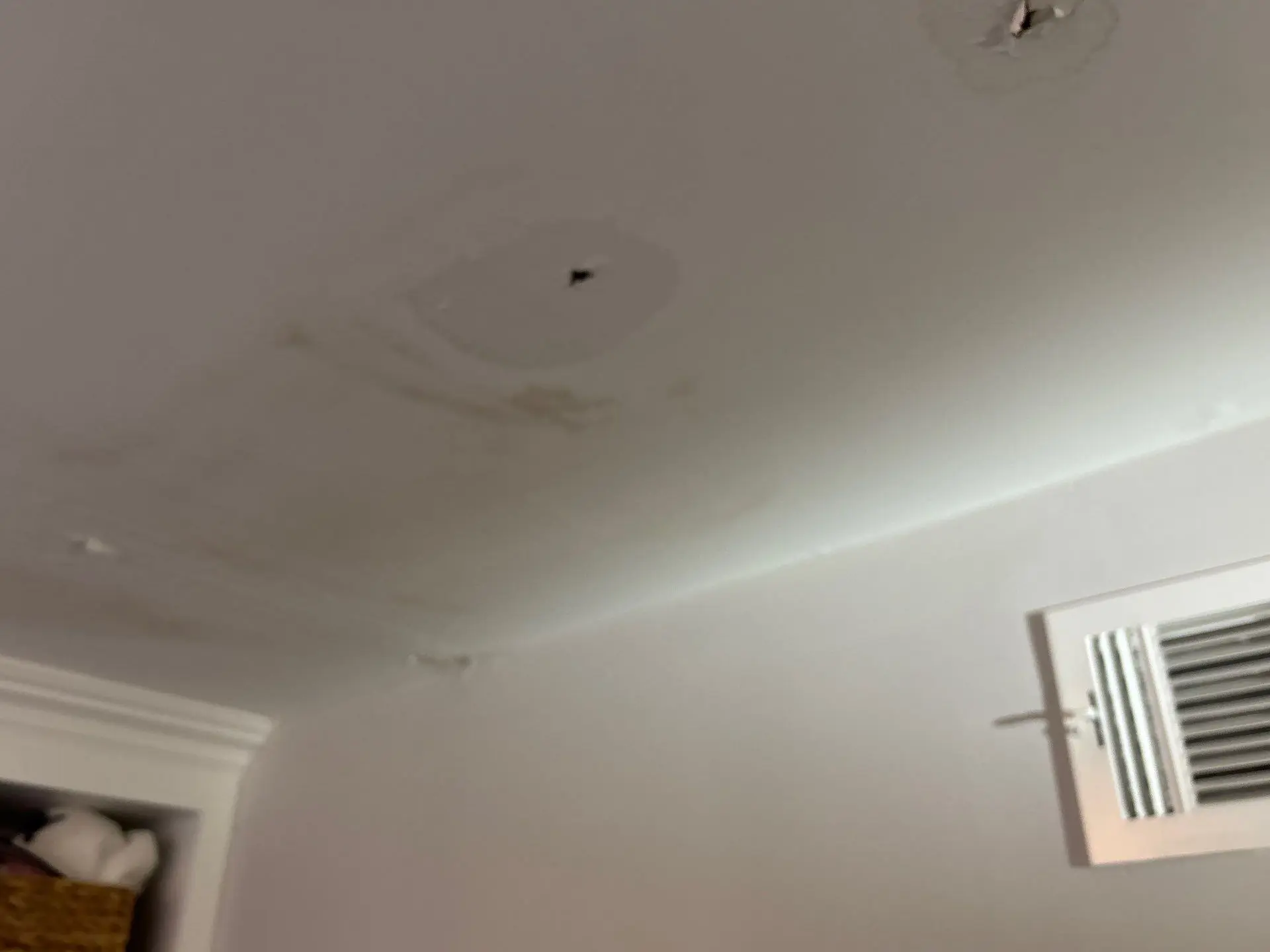
Homeowners often miss the early warning signs. Common signs of a roof leak include:
- Water stains on ceilings or walls
- Dripping or moisture during cold weather
- Peeling paint or bubbling drywall
- Damp attic insulation
- Musty odors from mold and mildew
- Visible affected areas near exterior walls
These are also clear signs of a leaking roof, even if the exterior looks fine.
Why Millburn Homes Are Vulnerable to Winter Roof Leaks
Many Millburn homes feature:
- Older roofing systems
- Complex rooflines and valleys
- Finished or heated attic spaces
- Mature trees that shade roofs
These factors increase heat loss and make ice dam development more likely, which can trap standing water and force moisture into the roof structure.
Over time, repeated winter leaks can lead to structural damage if not addressed.
Can Ice and Snow Damage Roofing Materials?
Yes. Prolonged exposure to snow and ice can compromise roofing materials, especially asphalt shingles.
Common winter-related roof damage includes:
- Lifted or cracked shingles
- Moisture beneath the roofing system
- Saturated insulation
- Rotting roof decking
Even minor water intrusion can escalate into long term issues like mold growth and interior damage.
What to Do If You Notice a Roof Leak After Snow
If you see signs of a snow roof leak, take these steps:
- Contain interior water leaks with buckets or tarps
- Dry the affected area to limit moisture
- Avoid climbing onto icy roofs
- Monitor for spreading stains or dripping
Temporary measures help, but they don’t solve the underlying issue. Professional roof evaluation is often needed to prevent repeat leaks.
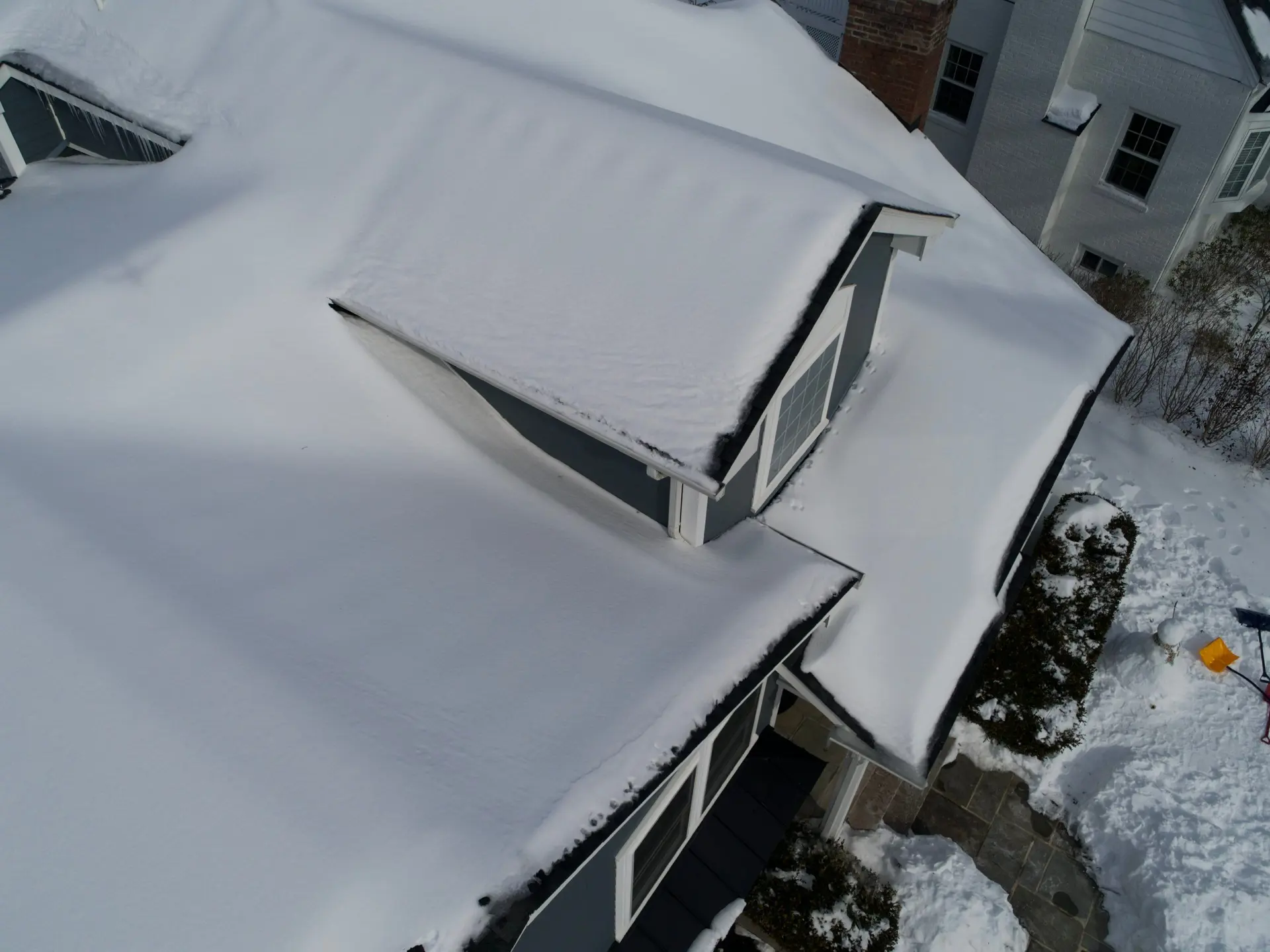
When a Professional Roof Inspection Is Important
A professional roof inspection is recommended if:
- You notice a roof leak after snow melts
- Water stains continue to spread
- Ice buildup formed along roof edges
- The roof is older or has prior repairs
Inspections help determine whether the solution involves repairing or replacing damaged sections—or if a full roof replacement may be needed.
Does Homeowners Insurance Cover Roof Leaks After Snow?
Many homeowners ask whether homeowners insurance cover roof leaks caused by winter weather.
In general:
- Home insurance may cover sudden water damage from snow or ice
- Coverage depends on whether damage was sudden or due to wear
- Long-term neglect may not be covered
If damage is discovered, document everything and contact your insurance company promptly. You may need to file a claim, and understanding your insurance coverage helps avoid delays.
An inspection report can support an insurance claim if required.
Repairing vs. Replacing a Roof After Winter Damage
Not all winter damage requires you to replace your roof. Some issues are localized and repairable.
However, roof replacement may be considered if:
- Damage is widespread
- The roofing system is near the end of its lifespan
- Repeated winter leaks have occurred
A professional evaluation helps determine the safest and most cost-effective path forward.
Frequently Asked Questions About Roof Leaks After Snow in Millburn
Can a small leak cause serious damage?
Yes. Even minor leaks can lead to mold and mildew, insulation damage, and structural issues over time.
Will the leak stop once the snow is gone?
Sometimes, but damage caused by water intrusion can remain hidden.
Should I wait until spring to address a winter leak?
No. Ongoing moisture can worsen and affect more areas of the home.
Can ice cause leaks without visible roof damage?
Yes. Ice dams and trapped water often cause leaks beneath intact shingles.
Protecting Your Home After Winter Storms
Roof leaks after snow storms are common in Millburn, NJ, but early action can limit damage. Monitoring for warning signs, addressing insulation and ventilation issues, and scheduling inspections when needed all help protect your home.
If you’re noticing signs of a roof leak after recent winter storms, a professional roof inspection can help identify the cause and prevent further damage.