
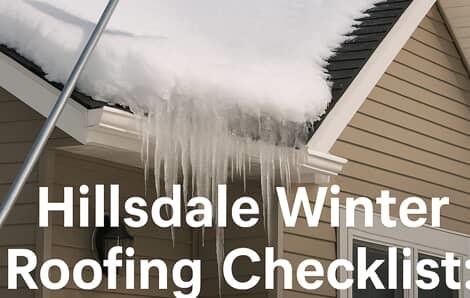
Hillsdale Winter Roofing Checklist: Preventing Ice Dams, Snow Load Damage & Extending Roof Lifespan
Why Hillsdale Homeowners Need a Winter Roofing Plan
Hillsdale winters bring heavy snowfall, high winds, and frequent winter storms that strain every part of a roofing system. When snow and ice accumulate on the roof, warm air from inside the home can cause melting and refreezing, increasing the risk of ice dams, leaks, and structural stress.
A proactive winter roofing plan helps protect your home from:
- Water leaks and ceiling stains
- Structural stress from packed snow
- Premature shingle deterioration
- Mold growth from trapped warm air and moisture
- Costly mid-winter roof repairs
This checklist outlines everything Hillsdale homeowners should do to stay ahead of winter weather damage.

1. Preventing Ice Dams: Your First Line of Defense
Preventing ice dams is one of the most important winter tasks for Bergen County homes. When an ice dam forms, meltwater becomes trapped behind frozen ridges, often seeping under shingles and damaging your roof deck.
How Ice Dams Form
Ice dams develop when:
- Warm air escapes into the attic
- Snow on the roof melts unevenly
- Meltwater runs down to colder eaves
- Water refreezes into a ridge of ice
This backup forces water into small gaps, producing hidden signs of damage that worsen over time.
Early Warning Signs
- Icicles hanging from gutters
- Water dripping behind siding
- Cold ceiling spots or stains
- Ice buildup along roof edges
How Hillsdale Homeowners Can Prevent Ice Dams
- Improve attic insulation to keep warm air from melting roof snow
- Add balanced ventilation (ridge + soffit vents)
- Seal attic air leaks around wiring, vents, and light fixtures
- Clear gutters in late fall to prevent freeze blockages
- Use a roof rake with long handles to remove snow from the first three to four feet of roof edge
These ice-dam prevention steps help prevent ice, protect shingles, and reduce long-term repair needs.
2. Managing Snow Load to Protect Roof Structure
Hillsdale roofs frequently experience dense, wet snow that exerts more weight per square foot than light powder. When snow freezes, refreezes, and compacts, the stress multiplies.
Signs Your Roof Is Under Snow-Load Stress
- Doors or windows suddenly sticking
- New interior cracks
- Sagging ridge lines
- Creaking or popping sounds
- Frost inside attic sheathing
Ignoring these signs of damage can create long-term structural problems.
Safe Snow-Removal Tips
- Use a roof rake from the ground
- Remove snow from the first three to four feet above gutters
- Avoid aggressive snow shoveling that can damage shingles
- Hire a professional roofing company if snow depth exceeds 12 to 15 inches
A well-built roof can handle normal winter weather, but older roofs or those with past leaks require extra attention.
3. Winter Attic and Roof Ventilation Checklist
Proper ventilation is essential for preventing snow and ice problems, improving energy efficiency, and extending shingle life.
Ventilation Checklist for Hillsdale Homes
- Ridge vent is unrestricted
- Soffit vents are clear of insulation
- No condensation on rafters or nails
- No mold or mildew on the roof deck
- Insulation properly pulled back at eaves
- Attic temperature remains close to outdoor temperature
Balanced airflow prevents warm-air pockets, limiting ice dams and moisture-related damage.
4. Inspecting Shingles and Flashing Before Freezing Weather Hits
Hillsdale’s winter storms bring high winds and temperature swings that quickly worsen existing roof weaknesses.
What to Inspect (or Have Mighty Dog Inspect for You)
- Shingle lifting
- Granule loss
- Cracked or cupped shingles
- Loose flashing
- Damaged pipe boots
Addressing these early is cost-effective and prevents emergency winter roof repairs.
5. Gutter, Downspout and Drainage Prep
Good drainage helps prevent ice buildup and stops meltwater from backing into the roof system.
Drainage Checklist
- Clean gutters after fall leaves drop
- Ensure downspouts release four or more feet from the foundation
- Install gutter guards if needed
- Inspect fascia for staining or softness
- Confirm gutters are tightly secured
Proper drainage reduces basement moisture, roof leaks, and long-term structural issues.
6. Why Winter Roof Maintenance Extends Lifespan
Winter stress accelerates shingle wear faster than any other season. Whether you have asphalt shingles, metal roofing, slate, or synthetic materials, seasonal maintenance ensures your roof reaches its full service life.
Typical lifespans:
- Asphalt shingles: 20 to 30 years
- Architectural shingles: 25 to 35 years
- Metal roofing: 40 to 70 years
- Slate roofs: 75 to 100 years or more
- Synthetic roofing: 40 to 50 years
Neglecting winter prep shortens lifespan by allowing moisture into decking, weakening structure, and creating repeated winter storm damage.
7. When Hillsdale Homeowners Should Call a Professional
Call Mighty Dog Roofing of Northeast New Jersey if you notice:
- Persistent ice dams
- Attic frost or condensation
- Leaks after snowmelt
- Sagging roof lines
- Heavy snow accumulation
- Gutter overflow during cold weather
- Water dripping from attic nails
Timely roofing inspection helps confirm whether your roof requires repairs, reinforcement, or snow-load relief.
Protect Your Hillsdale Home This Winter
Mighty Dog Roofing of Northeast New Jersey provides:
- Full winter roofing inspections
- Ice-dam prevention and insulation upgrades
- Snow-load assessments
- Emergency winter roof repairs
- Drone and attic moisture evaluations
- Roof replacements using winter-rated roofing materials
Your roof faces more stress in winter than in any other season. A quick inspection can prevent damage and save thousands long term.
Ready to protect your home?
Schedule a winter roofing inspection or try our Instant Roof Quote Tool for fast, satellite-based measurements.