
When to Replace Your Roof: Key Warning Signs for Hackensack Homes
Understanding Roof Replacement in Hackensack
Hackensack’s changing weather—hot summers, freezing winters, Nor’easters, and heavy rain—puts roofs under constant stress. Over time, this leads to ventilation failure, water intrusion, and roof deck deterioration, which can cause systemic failure across the entire roofing system.
If your roof is approaching 20 or 30 years old or showing visible signs of wear, it’s time to evaluate whether repairing or replacing is the right move. Here’s how to identify when a full roof replacement is the smart, long-term investment in protecting your home.
Exterior Signs Your Roof Needs Replacement
Curling or Cupping Shingles
When shingles curl upward or cup inward, they’ve lost their structural flexibility. This allows water to penetrate the water seal, weakening the roof deck and leading to leaks. Heat buildup and attic humidity often accelerate this wear.
Buckling or Warped Shingles
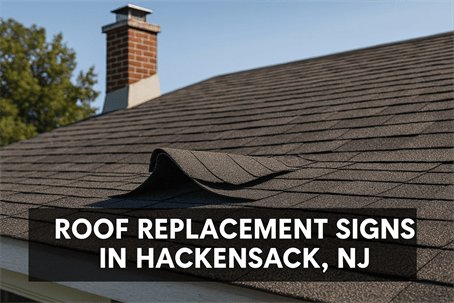
Wavy or rippled roof surfaces signal deeper structural issues—such as a warped roof deck or poor ventilation. Buckling means the roofing system is no longer properly attached, making replacement the only effective solution.
Cracked or Split Shingles
Cracked shingles allow moisture to reach the underlayment and decking. In Hackensack’s high-UV summers, this damage spreads quickly. Once cracking becomes widespread, the asphalt shingle roof has reached the end of its lifespan.
Granule Loss
If you find piles of shingle granules in gutters or near downspouts, your shingles are losing their protective layer. Without granules, the asphalt dries and cracks, making the roof brittle and vulnerable to UV damage. This usually occurs after 20 years of service.
Algae and Moss Growth
Algae creates dark streaks, while moss holds moisture under shingles. Moss growth lifts shingles and breaks the seal, leading to rot and leaks. Modern algae-resistant shingles prevent this common North Jersey problem and should be included in every new installation.
How Hackensack’s Climate Causes Roof Damage
Ice Dams and Ventilation Issues
Inadequate attic insulation or ventilation allows warm air to melt snow on the upper roof. Meltwater refreezes at the cold eaves, forming ice dams that push water under shingles. Repeated ice damming indicates ventilation failure and requires both roof replacement and insulation upgrades.
Wind and Storm Damage
Strong Nor’easter winds can lift or remove shingles, break seals, and expose the deck. Storm damage often causes hidden leaks that worsen over time. When shingles are missing across large areas, a full roof replacement is the most cost-effective and long-lasting solution.
UV and Heat Stress
Excessive attic heat “bakes” shingles from below, while UV exposure from above causes drying and cracking. This combination shortens the life of asphalt shingles dramatically. A properly vented and insulated attic extends lifespan and improves energy efficiency.
Interior and Structural Warning Signs
Ceiling Stains and Active Leaks
Brown or yellow ceiling spots, peeling paint, or damp insulation confirm that water is entering the roof structure. These stains often appear near chimneys, skylights, or valleys—common areas of flashing failure.
Mold and Rot in the Attic
A musty odor or dark patches on attic wood indicate chronic moisture. Once mold forms, it spreads quickly and weakens your home’s structure. At this point, roof work must include both replacement and remediation to remove rot and damaged materials.
Sagging Roof or Soft Deck
Uneven roof lines or sagging spots mean the roof deck has absorbed water and lost structural integrity. Sagging is not cosmetic—it’s a serious red flag requiring immediate replacement.
Rusted Nails and Condensation
If you see rusted nails or droplets on the underside of the roof deck, it’s a sign that warm, moist air is trapped in the attic. This condensation corrodes fasteners and leads to wood rot, confirming ventilation failure.
Flat Roof Problems in Urban Hackensack
Cracked or Blistered Membranes
Flat roofs—common on multi-family and commercial buildings—rely on a single continuous membrane (TPO, EPDM, or Modified Bitumen). Blisters or cracks mean trapped air or heat expansion has separated layers, compromising waterproofing.
Ponding Water
Standing water for more than 48 hours is called “ponding.” It indicates poor drainage or deck deflection. Persistent ponding weakens the structure and shortens the roof’s life. Correcting this usually requires a new deck slope and full roof replacement.
Roof Age, Costs, and Replacement Value
Typical Roof Lifespans in New Jersey
| Roof Type | Average Lifespan | Replacement Trigger | Common Causes of Failure |
|---|---|---|---|
| 3-Tab Asphalt | 12–20 years | 15 years | UV damage, wind uplift |
| Architectural Asphalt | 25–30 years | 22 years | Poor ventilation, ice dams |
| Metal Roofing | 40–70 years | Case-by-case | Thermal expansion |
| Flat Roofing | 15–25 years | 20 years | Ponding water, cracking |
Once a roof reaches 75% of its lifespan, replacement is typically more cost-effective than ongoing repairs.
Repair vs. Replacement: When to Decide
Repairs are ideal for isolated damage covering less than 25% of the roof.
Replacement is best when repairs would cost 50% or more of a full replacement.
Widespread deterioration, water intrusion, or a sagging deck all indicate systemic failure.
Energy Efficiency and Insurance Considerations
An old roof increases heating and cooling costs by allowing uncontrolled air movement. A new, properly installed roof improves ventilation, reduces HVAC strain, and stabilizes indoor temperatures.
Insurance companies often reduce coverage on roofs older than 20 years or switch to Actual Cash Value (ACV) reimbursement. Replacing early ensures full coverage and compliance with modern building codes.
Building Code Requirements in Hackensack
Ice & Water Shield: Required along eaves, extending 24" inside the wall line.
Wind Resistance: Shingles must have a 130-mph wind rating.
Balanced Ventilation: Ridge and soffit vents must provide continuous airflow.
Algae-Resistant Shingles: Strongly recommended for Bergen County humidity.
Roof Replacement FAQ — Expert Answers for Hackensack Homeowners
Q1: How do I know if my roof needs to be replaced or repaired?
If your roof is over 20 years old, has cracked or curling shingles, water stains, or sagging deck areas, it’s time to consider a full roof replacement.
Q2: How long does an asphalt shingle roof last in New Jersey?
Most last 20–30 years depending on ventilation, maintenance, and storm exposure. Poor ventilation or trapped heat shortens that lifespan significantly.
Q3: What causes ventilation failure in a roof system?
Insufficient soffit or ridge vents trap heat and moisture, leading to condensation, rusted nails, and premature shingle deterioration.
Q4: Can algae or moss growth damage my roof?
Yes. Algae and moss trap moisture and damage the water seal. Choose algae-resistant shingles to prevent regrowth in humid conditions.
Q5: What are the signs of roof deck damage?
Soft spots, sagging roof lines, or daylight visible through attic boards all indicate roof deck failure and the need for full replacement.
Q6: How can I prevent water intrusion on my roof?
Maintain clean gutters, sealed flashing, and proper attic ventilation. A properly installed roof includes underlayment and an ice barrier to prevent leaks.
Q7: How much does it cost to install a new roof in Hackensack?
Expect $6–$9 per square foot for asphalt shingles. A 2,000-square-foot home typically costs $12,000–$18,000 depending on materials and labor.
Q8: What’s the difference between repairing and replacing a roof?
Repairs fix isolated damage, while replacement addresses full-system issues like systemic failure, ventilation problems, and deck deterioration.
Q9: When should I schedule a roof inspection?
At least twice a year—once in spring and once in fall—or after major storms. Regular inspections identify signs of damage before leaks start.
Q10: How does roof age affect insurance coverage?
Most insurers reduce coverage or increase deductibles after 20 years. Replacing your roof early ensures full replacement cost coverage.
Q11: What should I look for in a roofing company?
Choose a licensed, insured, local roofing company that installs high-quality shingles, includes ventilation upgrades, and meets code standards for Bergen County.
Q12: Can replacing my roof improve energy efficiency?
Yes. A new roof with proper ventilation and insulation reduces heat transfer, preventing energy waste and extending HVAC system life.
Protect Your Hackensack Home with a Roof Built to Last
When you need professional roof inspection, installation, or replacement in Bergen County, Mighty Dog Roofing of Northeast New Jersey delivers trusted craftsmanship and manufacturer-backed materials.
Our certified team installs roofs designed to handle North Jersey’s climate—complete with ice barriers, ventilation systems, algae-resistant shingles, and high-wind fasteners.
Schedule your roof inspection in Hackensack today and keep your home protected for decades to come.