
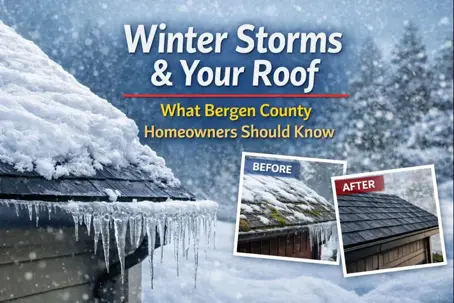
What Bergen County Homeowners Should Know
Winter weather in Northeast New Jersey often brings snow and ice events that place significant stress on residential roofing systems. For Bergen County homes, which frequently experience heavy snowfall, prolonged cold, and strong winds, winter storms can expose existing vulnerabilities that aren’t always obvious right away.
This educational FAQ explains how winter weather affects roofs in Bergen County, what causes winter roof damage, and how homeowners can reduce the risk of winter roof leaks, water intrusion, and costly repairs.
Why Winter Storms Impact Bergen County Homes Differently
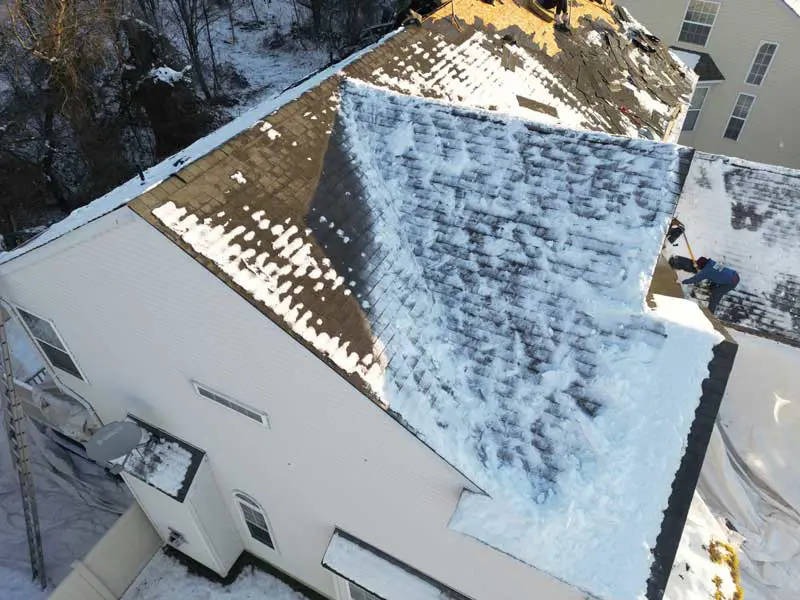
Many Bergen County homes were built decades ago and feature older roofing materials, limited attic ventilation, and roof designs that retain snow longer. Combined with frequent snow or ice accumulation and high winter winds, these conditions increase the likelihood of roof-related problems during a winter storm.
Homes in Northeast NJ are especially vulnerable when:
- Snow remains on the roof for extended periods
- Melting snow refreezes overnight
- Ice builds up along roof edges
- High winds lift or loosen shingles
How Snow and Ice Events Affect Residential Roofs
Snow alone is rarely the main issue. The real risk comes from weight, moisture, and thaw cycle stress.
During snow and ice events:
- Snow accumulates and compresses into heavy layers
- Ice forms on top of snow, increasing roof load
- Melting snow refreezes, creating drainage blockages
Over time, this combination can damage roofing materials, loosen asphalt shingles, and increase the chance of leaks.
What Causes Winter Roof Leaks?
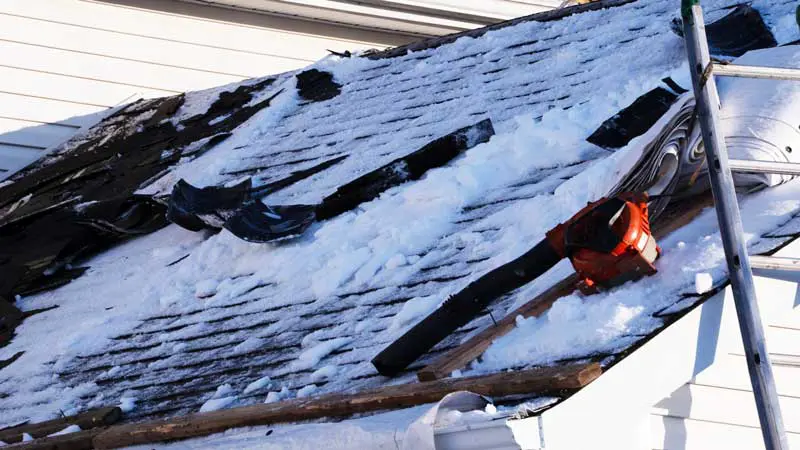
Most winter roof leaks are caused by ice-related drainage problems rather than direct snowfall.
As heat escapes from the attic, snow melts on warmer roof sections. Water flows downward and refreezes near colder edges, where ice dams form. These ice dams prevent proper drainage and force water under shingles and flashing.
This process often leads to:
- Interior water stains
- Insulation saturation
- Hidden wood rot
- Long-term water damage
Are Low-Slope Roofs More Vulnerable in Winter?
Yes. Low-slope roofs and flat roof sections—common on additions and garages—are more susceptible during winter storms.
These roof areas:
- Drain water more slowly
- Hold snow longer
- Allow ice dams to form more easily
Because water does not shed as quickly, low-slope roofs are at higher risk for leaks during freeze-thaw cycles.
How Roofing Materials Perform During Winter Weather
Different roofing materials respond differently to winter conditions.
- Asphalt shingles can become brittle in extreme cold
- A metal roof sheds snow more efficiently but may still experience ice buildup at edges
- Older roofing materials may crack or lift during freeze-thaw cycles
The condition and age of the roof matter more than the material alone.
Does Attic Ventilation and Insulation Matter?
Yes. Proper ventilation and insulation are critical for preventing ice dams.
When attic heat melts snow unevenly, ice dams form near roof edges. Balanced ventilation helps regulate roof temperature and prevents ice from building up excessively.
Good airflow:
- Reduces melting snow on the roof
- Minimizes ice buildup
- Protects your home from leaks
Should Homeowners Remove Snow From the Roof?
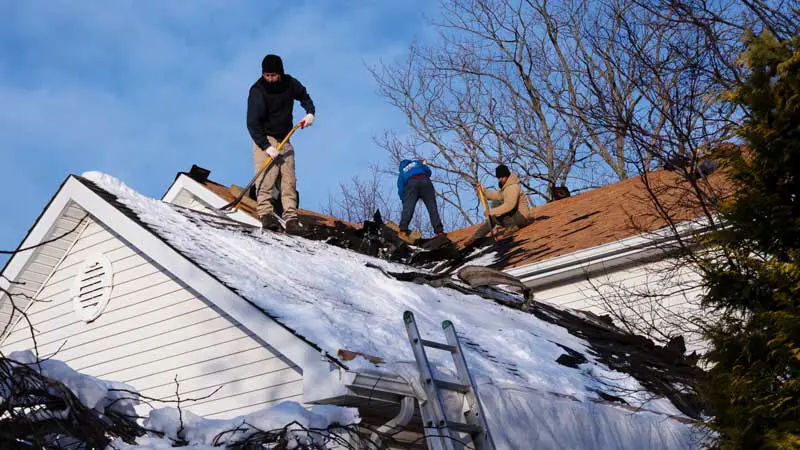
Homeowners should be cautious when attempting roof snow removal.
Climbing onto a snow-covered roof can be dangerous and may damage shingles. Improper snow removal can also worsen leaks.
Instead of trying to remove snow yourself:
- Monitor interior ceilings for water stains
- Watch gutters and roof edges for ice buildup
- Schedule a professional evaluation if snow accumulation is excessive
When Is a Roof Inspection Recommended After a Winter Storm?
A roof inspection is recommended if:
- Your home experienced heavy snowfall
- Ice dams form along the roof edge
- You notice interior water stains or dripping
- The roof is older or has a history of roof repair
Early inspections help prevent minor winter damage from turning into major spring repairs or full roof replacement.
How High Winds Increase Winter Roof Damage
Winter storms often include high winds, which can lift loosened shingles, damage flashing, and drive melting snow beneath roofing materials.
Wind-related damage combined with ice buildup significantly increases the risk of leaks during and after a storm.
Frequently Asked Questions About Winter Roof Damage in Bergen County
Can winter storms cause serious roof damage?
Yes. Repeated snow and ice events can weaken roofing materials and cause leaks, especially on older roofs.
Are ice dams worse than snow?
Yes. Ice dams trap water and force it beneath shingles, leading to roof leaks and water damage.
Does snow removal prevent roof damage?
Professional snow removal can help in severe cases, but improper removal can cause additional damage.
Should I call a roofing contractor after a winter storm?
If you notice leaks, water stains, or ice buildup, contacting a qualified roofing contractor for an inspection is recommended.
Protecting Your Roof During Winter Storms in Northeast New Jersey
Winter storms don’t always cause immediate problems, but they often expose existing weaknesses. Understanding how snow, ice, and freeze-thaw cycles affect roofs helps homeowners act early.
Routine inspections, proper ventilation, and timely roof repair help protect your home during winter weather and reduce the risk of long-term damage.