
What Homeowners Need to Know About Ice & Water Barriers
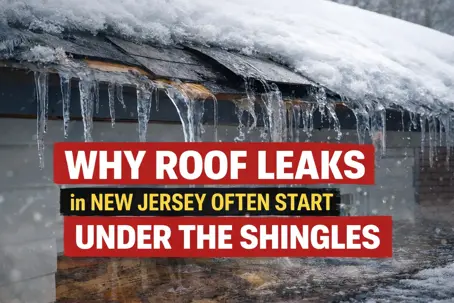
When most homeowners think about roof leaks, they picture missing or damaged shingles. While shingles are the most visible part of a roofing system, many roof leaks in New Jersey actually begin beneath the surface, long before a shingle ever falls off.
Snow, ice, high winds, and seasonal rainstorms common throughout the Garden State create conditions where water can bypass shingles and reach the roof deck. Understanding how this happens—and how ice and water barriers help prevent it—can protect your home from costly water damage.
This guide explains why roof leaks often start underneath the shingles, how New Jersey weather contributes to the problem, and what role ice and water barriers play in modern roofing systems.
How Water Gets Beneath Shingles on New Jersey Roofs
Roofs are designed to shed water, directing rain and melted snow down the slope and into gutters. But that system depends on ideal conditions. In reality, several factors can disrupt water flow and allow moisture intrusion.
Common causes include:
- High winds lifting shingle edges and driving rain underneath
- Ice dams blocking water from draining off the roof
- Clogged gutters causing water to back up beneath shingles
- Standing water in roof valleys or low-slope sections
- Aging or improperly installed roofing materials
Once water gets under the shingles, it can travel along the roof deck, soaking insulation, staining ceilings, and damaging structural components.
Ice Dams: A Leading Cause of Winter Roof Leaks
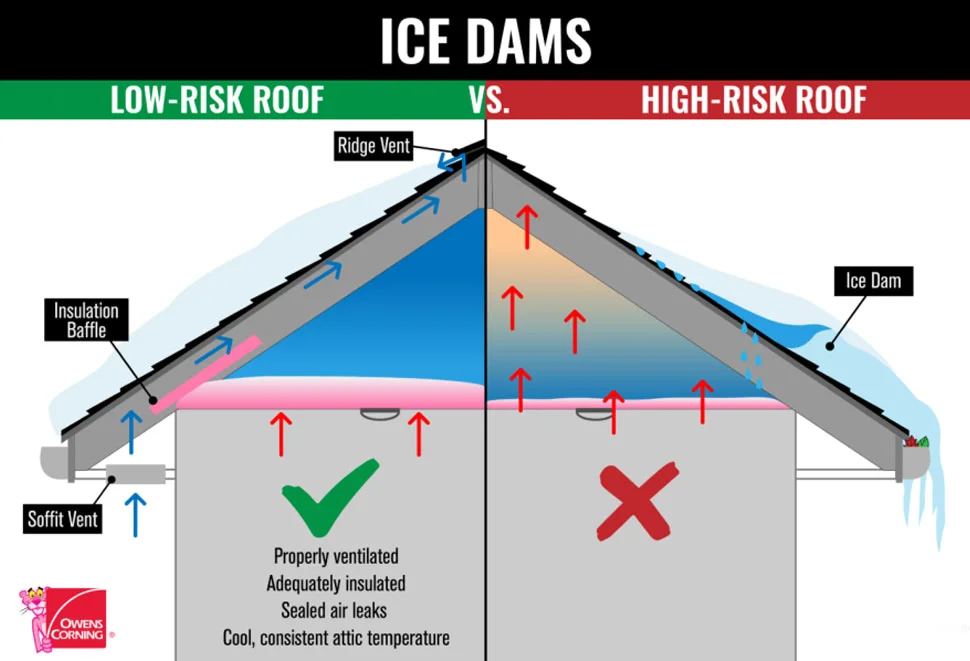
Ice dams are a frequent contributor to roof leaks across New Jersey, especially during long cold spells followed by temperature swings.
Here’s how an ice dam forms:
- Snow accumulates on the roof
- Heat loss from the attic causes snow to melt
- Melted snow flows downward
- Water refreezes at the eaves, forming a solid ice barrier
- Additional melted snow pools behind the ice dam
This trapped water has nowhere to go. Over time, it can work its way under shingles and into the home—even on relatively new roofs.
Why Shingles Alone Aren’t Enough
Shingles are designed to shed water, not seal it out completely. They rely on gravity and proper drainage to do their job. When water moves upward or sideways—due to ice dams or wind-driven rain—shingles alone cannot stop infiltration.
That’s where ice and water barriers become critical.
What Is an Ice and Water Barrier?
An ice and water barrier is a self-adhering underlayment installed directly on the roof deck beneath the shingles. Unlike traditional felt underlayment, these products form a waterproof seal that adheres tightly around nails and fasteners.
Ice and water barriers help:
- Block water from reaching the roof deck
- Seal vulnerable areas where leaks commonly start
- Provide protection when shingles are damaged or lifted
Because they bond directly to the deck, they act as a secondary line of defense when the outer roofing materials are compromised.
Where Ice & Water Barriers Matter Most
Ice and water barriers are especially important in high-risk areas of a roofing system:
Roof Valleys
Valleys collect more water than any other part of the roof. Heavy rain, melted snow, and debris funnel through these areas, increasing the risk of water intrusion.
Eaves and Roof Edges
Ice dams form along the eaves, making this one of the most common leak locations in winter. Barriers help stop water from backing up under shingles.
Roof Penetrations
Chimneys, skylights, vents, and pipes create openings in the roof deck. Ice and water barriers help seal these areas against leaks.
Entire Roof Surface (In Some Cases)
For homes in high-exposure areas—such as coastal New Jersey or homes with low-slope roofs—full-deck waterproofing may provide added peace of mind.
New Jersey Building Codes and Ice & Water Protection
In many parts of New Jersey, building codes require ice and water barriers along roof eaves—especially in areas with consistent winter weather. However, older homes may not have this protection, and some roofs may only have partial coverage.
That means a roof can look fine from the outside while still lacking critical moisture protection underneath.
The Role of Attic Ventilation and Insulation
Ice and water barriers are most effective when combined with proper attic insulation and ventilation.
- Insulation reduces heat loss that causes snow to melt prematurely
- Ventilation helps maintain consistent roof temperatures
- Air sealing prevents warm air from escaping into the attic
Without these components working together, even the best roofing materials can be overwhelmed by winter conditions.
Signs You May Have a Hidden Roof Leak
Because leaks often start beneath the shingles, they’re not always obvious right away. Warning signs include:
- Water stains on ceilings or walls
- Peeling paint or bubbling drywall
- Musty odors or signs of mold and mildew
- Damp insulation in the attic
- Unexplained moisture after storms
If you notice any of these issues, a professional roof inspection can help identify the source before damage spreads.
When a Professional Roof Inspection Makes Sense
Ice dams, wind-driven rain, and winter storms can cause damage that isn’t visible from the ground. A professional roofing contractor can evaluate:
- Roof decking condition
- Ice and water barrier coverage
- Flashing integrity
- Gutter and drainage performance
- Signs of long-term moisture intrusion
This is especially important for older homes, shore properties, or roofs that have experienced severe weather events.
Final Thought
Roof leaks in New Jersey don’t always start with missing shingles. More often, they begin beneath the surface—where ice dams, backed-up water, and inadequate underlayment allow moisture to reach the roof deck.
Ice and water barriers play a critical role in protecting homes from these hidden threats. When combined with proper ventilation, insulation, and professional installation, they help roofing systems perform the way they’re meant to—through winter storms, spring rain, and everything in between.
Homeowners who want clarity on their roof’s condition may choose to schedule an inspection or request an evaluation to better understand what’s protecting their home beneath the shingles.